As CEA expands into new geographies, cost efficiency remains critical in balance with precision control. Prasada Greenhouses is a China-based provider of complete greenhouse and cultivation technology solutions within this landscape. Founded in 2004, the company has grown into a full-scale engineering and manufacturing operation with a 28,000 m² production base and more than 60 national patents.
 © Prasada
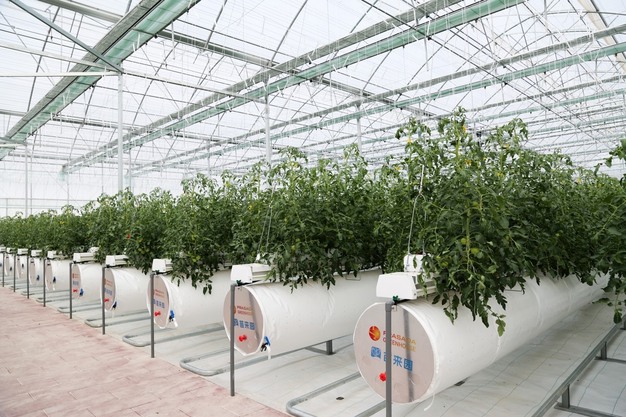
"Our focus has always been on providing complete, technically robust greenhouse solutions that match each customer's climate, crop, and commercial objectives," says Sylvia Lee of Prasada Greenhouses. "Today we offer everything from polyfilm and glass structures to hydroponic systems, climate control, fertigation, and turnkey farm development."
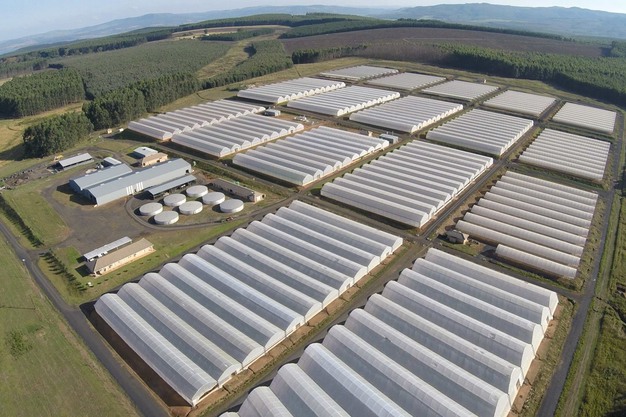
The company has delivered over 700 projects across more than 70 countries, serving commercial growers as well as government-funded agricultural development programs. Its core markets span Southeast Asia, the Middle East, Africa, and Latin America, with a growing footprint in Central Asia and Eastern Europe.
 © Prasada
Semi-closed climate technology reaches film greenhouses
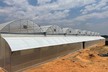
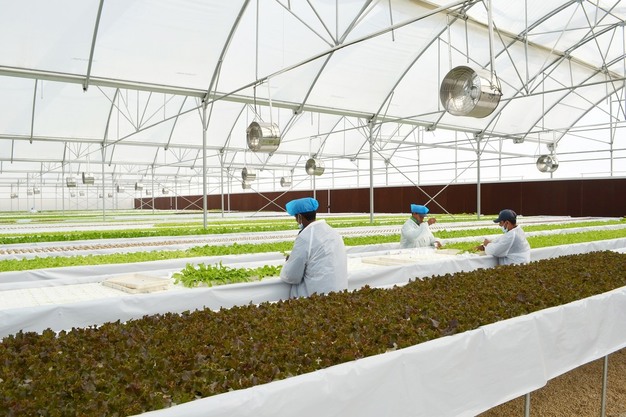
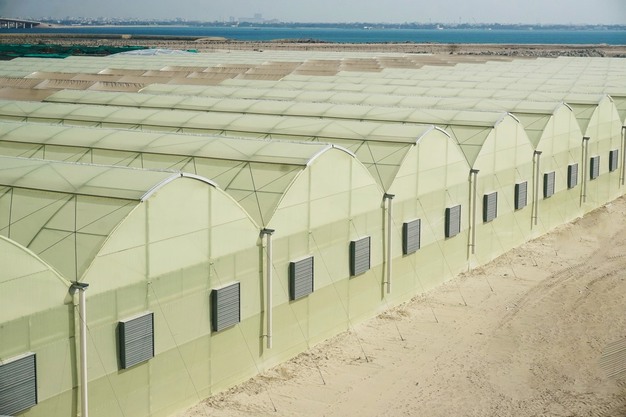
One of the company's standout developments in 2025 is a semi-closed system engineered specifically for film greenhouses, a segment that has historically lacked access to high-end climate control technologies often reserved for glass and polycarbonate structures.
"The goal was to bring precision climate control to a more cost-efficient structure," she explains. "Our semi-closed system regulates temperature, humidity, CO₂, and airflow with far greater stability while reducing energy consumption by around 30%."
 © Prasada
The system combines mechanical and natural ventilation, automated circulation, and targeted pressurization. According to Sylvia, maintaining positive pressure within the crop zone has become a key advantage. "Positive pressure significantly limits the entry of insect vectors and airborne pests, which is crucial for disease prevention in intensive production systems," she notes.
Water-saving performance has also improved. The company reports measurable reductions in evaporative cooling water demand, adding to the operational efficiency of the system.
 © Prasada
Climate-adaptive engineering across diverse regions
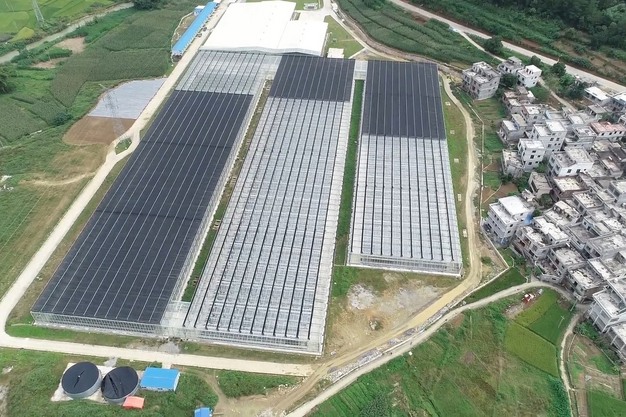
Because Prasada operates heavily in hot, arid, and coastal climates, the company emphasizes rigorous climate adaptation strategies. Projects in the Middle East, including Saudi Arabia, UAE, Bahrain, and Qatar, are a prime example.
"Many people think only of high temperatures when designing greenhouses for the Middle East," she explains. "But coastal humidity and salinity are equally important and often underestimated."
 © Prasada
Solutions for these regions typically include corrosion-resistant structural materials, high-capacity shading and cooling systems, and hybrid ventilation strategies that combine fan-and-pad cooling, high-pressure fogging, and natural ventilation. Water chillers or solar-assisted cooling may also be added depending on crop sensitivity and return-on-investment thresholds.
"Every project is engineered to achieve maximum climate efficiency with minimum operational cost. Our design starts with local climate data, crop requirements, and a clear ROI model."
 © Prasada
AI-driven control to offset labor and energy costs
A common challenge, especially in emerging markets, is minimizing labor requirements while improving consistency in environmental control.
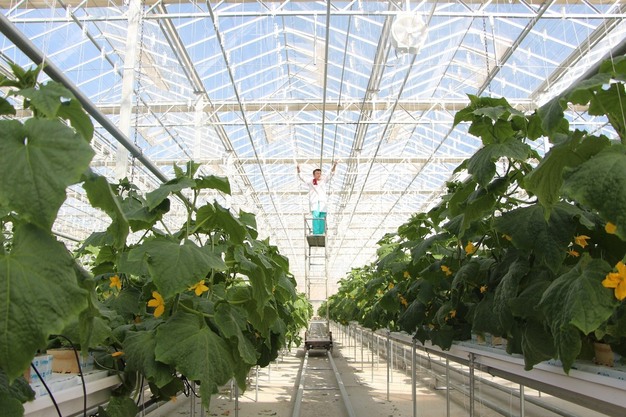
"We see growers struggling with labor shortages and rising energy costs. That's why we are integrating AI-driven climate management, crop monitoring, and irrigation automation into our greenhouse platforms."
Prasada collaborates with Chinese universities, technology companies, and agricultural R&D institutions to advance automation, sensing, and material innovations. The goal, according to Sylvia, is straightforward: "We want growers to achieve higher yields at lower cost, with less dependence on manual labor and more data-driven cultivation decisions."
 © Prasada
Strong global demand and a shift toward smart greenhouses
The company reports robust demand growth across emerging agricultural economies. Countries investing in food security and domestic horticultural industries are increasingly looking beyond basic protective structures.
"We're seeing a clear shift from simple houses to smart, data-enabled greenhouses," she comments. "Growers want integrated solutions that reduce labor and energy while enhancing production predictability."
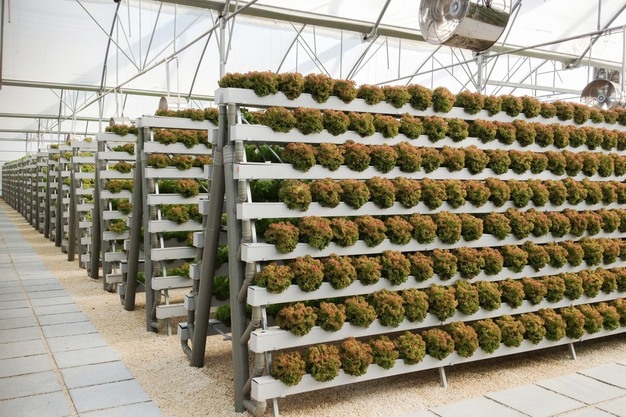
Hydroponic systems continue to gain traction, and she notes increasing interest in nursery automation and logistics systems for tree propagation and landscaping.
 © Prasada
Automation and smart farming products
Prasada plans to accelerate its roll-out of automation technologies in 2026. Key development areas include harvesting automation, integrated AI control systems, and advanced crop-monitoring tools.
 © Prasada
"We are very excited about the next generation of products we'll be introducing. Growers can expect smarter, more interconnected systems that support precision cultivation at scale."
The company will present several of these innovations at GreenTech Amsterdam 2026, where Prasada intends to showcase new concepts in controlled-environment farming.
For more information:
Prasada (Xiamen) Agricultural Engineering
Sylvia Lee
[email protected]
www.prasadaa.com