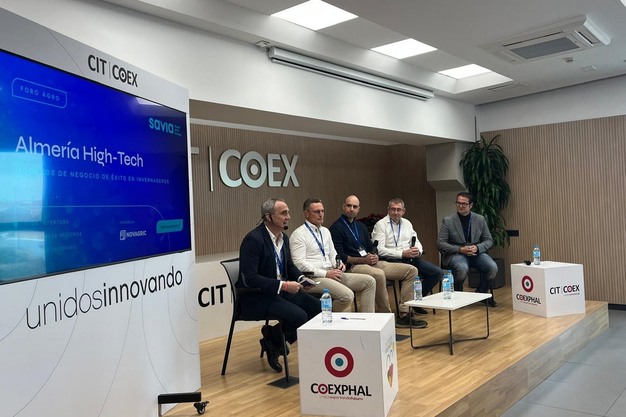
Novagric, the company known for its work in greenhouses, irrigation and technology for intensive agriculture, gathered top leaders of the agri food sector this morning at CIT COEX for a simple but pointed question. How much has high tech actually changed greenhouse production?
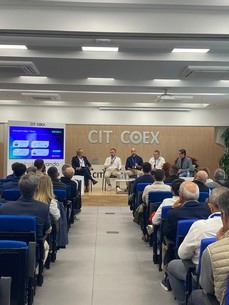
The session was aimed at executives, growers, seed houses, nurseries and greenhouse specialists. The format was an open and energetic roundtable where participants compared real world experiences, results and business models that have helped cement Almeria as a leader in high tech agriculture.
 © Novagric
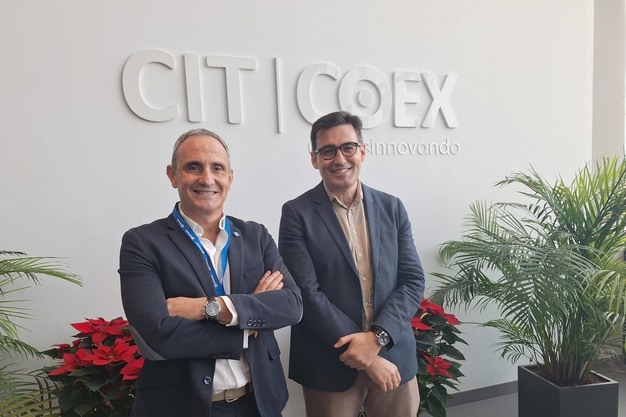
Novagric general manager Jose Martinez Tornero set the tone from the start. The point of the day, he said, was to share successful high tech greenhouse models with the rest of the industry. "We believe there is still room to grow by bringing more technology into Almerian greenhouses and fields, and the best way is to hear it directly from people who are already doing it." He also sketched out his view of the greenhouse of the future in Almeria. "The greenhouse has become a management tool, both for costs and for sustainability. With this technology you gain tightness to fight many of the pests and diseases that are wearing us down. You gain safety to deliver quality. You gain standardization so you can produce the same product throughout the season. That means the market always receives a reliable and high quality reference."
Juan Jose Vazquez, business director at Coexphal, stressed the association's long running bet on innovation. "Everything that improves the competitiveness of farmers is where we want to be. This event is a good example. For us, innovation is the path to more technological greenhouses, more airtight structures, better prepared for pest pressure and above all more productive per square meter. In the end we want our agriculture to be more competitive."
 © Novagric
A program built around innovation
The agenda opened at eleven with institutional greetings and a short introduction before moving into the roundtable, "Successful greenhouse business models."
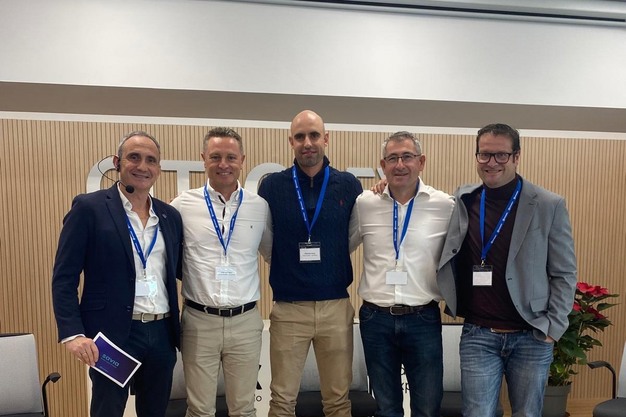
Juan Jose Lopez, general manager at Cualin Quality, framed high tech as a tool for building brand value. "High tech is essential to create a strong brand in fresh produce. Delivering consistent quality without excuses is not optional. It is the basis for standing out. People often confuse the term and think it just means taller greenhouses. In reality the technology goes much further. It means giving the plant the optimal conditions it needs, regardless of weather, and doing it sustainably. In this context Almeria needs to step forward and invest if it wants to compete with northern Europe, using similar systems but with lower energy cost. If we keep trying to fight Africa in winter and Portugal in summer, we lose."
 © Novagric
Alejandro Torres Rodriguez, agronomist and head of the Bionova research center at Enza Zaden, pointed out that advanced technology in greenhouses and tunnels has become a strategic pillar for seed companies. "A large part of our research programs run in highly technical structures that let us automate and monitor climate with precision. We use controlled heating, pad fan systems, smart irrigation trays that adjust water to radiation and drainage, and purification through ozone and ultraviolet light. This guarantees hygienic, efficient and steady production cycles. We also rely on isolation tools such as insect screens, double screens and layouts that limit cross contamination. All of this allows us to maintain stable conditions for every breeding program. The technology is essential to produce uniform, high quality seed and to meet deadlines for an increasingly demanding market. Yes, implementation brings technical and operational challenges, but the effect on productivity, quality and sustainability has been decisive. It has become an indispensable tool for competitiveness."
 © Novagric
Esteban Baeza, R and D specialist at Coexphal, warned that the profitability of Almeria's greenhouses could suffer as costs rise and yields flatten. Prices have been good in recent years, he said, but productivity needs to improve without runaway costs. "The solution is investment in structures with greater volume and better climate control equipment. Automated roof vents, fogging systems, fans and double use screens, combined with simple sensors and controllers. These upgrades can be phased in and supported through Operational Funds. They increase production, improve biological control, extend the crop cycle and reduce dependence on labor. This is what will safeguard future competitiveness."
Juan Miguel Romera, manager at Romenatur and Produccion Integrada Agrolider, explained how technology has allowed them to produce year round. "Used correctly, technology gives you much more room to maneuver. Right now, with the low radiation we are having, working is extremely hard. Betting on innovations that give you ideal climate control, with a more suitable temperature and more precise ventilation, is essential. It stabilizes the plant. We invest in technology so we can produce every month of the year and always supply the same volumes."
The day closed with a networking session and a Spanish style cocktail where participants compared notes, exchanged ideas and enjoyed a more relaxed atmosphere.
For more information: Novagric
[email protected]
www.novagric.com