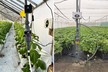
Hydrogen peroxide has become a popular fix for biofilm buildup in greenhouse irrigation lines. But growers do not have to keep stripping their systems clean, instead having the option to build a stable, beneficial biofilm that keeps harmful biofilm from taking hold. When this good layer is established, pipes and drip systems do not need to be cleaned during crop changeovers. Marco Breekweg of Biomicrobes explains how this method works and notes that it is already common practice in North America.
 © Biomicrobes Marco Breekweg
Problems with hydrogen peroxide
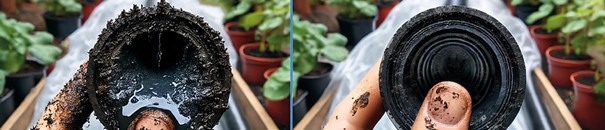
In practice, discussion around the use of hydrogen peroxide in irrigation systems is becoming more common, the microbiologist notes. "Growers see that these products can be useful, but the effects are not always predictable. Reports of pipe wear, inconsistent dripper output and extra maintenance are prompting many companies to re-evaluate their water-quality strategy. On top of that, there is growing attention on the use of oxidizing agents and stabilizers. Trading partners and certification bodies are increasingly asking for transparency regarding dosage and application."
Marco knows from growers who use stabilized peroxide products that dosing and mixing aren't always optimal in practice. "This can lead to unwanted precipitation of iron or manganese, especially at too high a pH. Overly aggressive cleaning also removes beneficial microorganisms, making pipes more susceptible to instability. Growers indicate that continuous correction and monitoring is very time-consuming."
Different approach
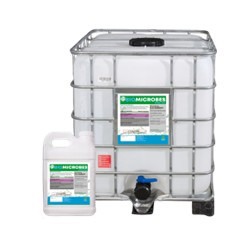
More and more companies are choosing a different approach: building up a stable and beneficial biofilm inside their irrigation lines. To do this, they use Biomicrobes Drip Line, a Biomicrobes product that supports this strategy with carefully selected bacterial strains. These strains attach to the inner wall of the pipes and help establish a balanced microflora.
"When Biomicrobes Drip Line is applied from the very start of the crop cycle, a stable biofilm develops that supports proper water flow and reduces the need for frequent chemical adjustments. The bacteria that travel along with the irrigation water can also establish themselves around the roots, where they contribute to a more balanced microbial environment."
 The importance of good pH management
Biomicrobes Drip Line works purely biologically and has no direct effect on inorganic deposits, the experienced microbiologist from the Netherlands emphasizes. "Good pH management therefore remains important. When the pH is too high, oxidation can occur inside the lines. It is advisable to measure the pH both at the inlet and at the end of the irrigation lines."
Growers using Biomicrobes Drip Line report that their irrigation lines stay clean longer and require less maintenance, Marco adds. "In many cases, the lines run through an entire crop cycle without significant blockages or variations in flow rate. This saves labor and materials, and it gives the irrigation system far more stability."
For more information:
Biomicrobes
[email protected]
www.biomicrobes.com