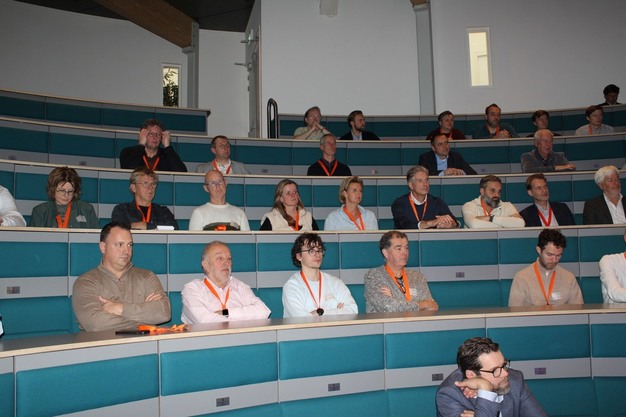
Visitors to the Dutch Future Trends & Innovations event were treated to a small time-travel session on Tuesday afternoon. With the help of several now-grey pioneers, the audience, filled with companies from the greenhouse technology sector, was taken back to the 1970s for a moment. After that nostalgic look back, the presentation of the Dutch HortiPower innovation program and a keynote by Ruud Koornstra shifted the focus firmly toward the future, looking ahead to 2030.
Future Trends & Innovations is an annual event organized by AVAG, Hortivation, TNO and GreenTech. This year marks the 10th anniversary of Hortivation, a milestone that was also highlighted during the event's time-travel theme, which centered on collaboration throughout the horticultural supply chain.
 © Annet Breure | HortiDaily.com
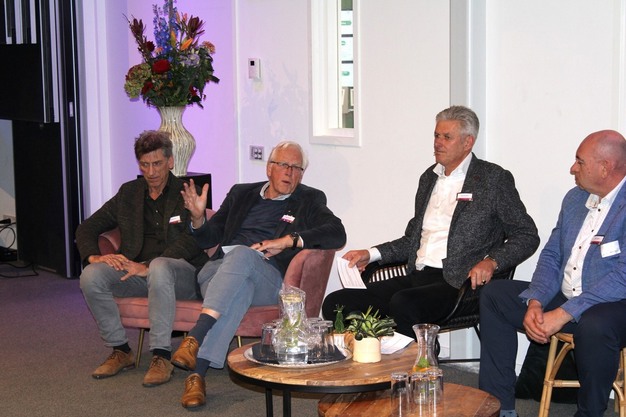
Hans 't Hart, Willem Snoeker, Dave Fennema, and Theo Sanders were on the panel for a bit of history
Storm damage
Willem Snoeker was the first to take the audience back in time, recalling the enormous number of damaged greenhouses after the storms of 1972 and 1973. In hindsight, those turbulent years triggered an industry-wide discussion about quality standards for Dutch greenhouse construction. This eventually led to the creation of a NEN standard, which later became the foundation for a European standard. The result was that Dutch greenhouse builders took the lead in raising the quality benchmark for the entire sector.
Another milestone came with the launch of CASTA/Kassenbouw. Hans 't Hart from TNO showed an early promotional photo in which his very young daughter was already "engineering" greenhouses at a drafting table. At the time, the provocative slogan was that everyone would eventually work with this software, and that prediction did indeed come true.
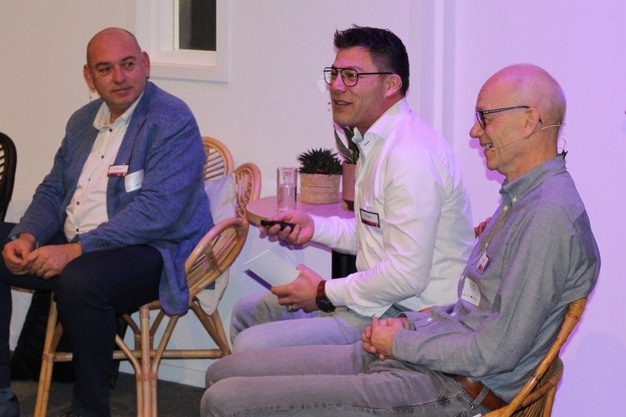 © Annet Breure | HortiDaily.comRon Arensman and Martin Steentjes reflected on 2024 and 2030 from the panel
Strategy
Hortivation was founded in 2015, and this year the organization is celebrating its anniversary. Theo Sanders reflected on that moment. At the time, the Dutch greenhouse construction sector, already working with very high quality standards, decided it no longer wanted to compete on quality within the Netherlands. Instead, those high standards became the foundation for international expansion. This marked the start of a new phase, one in which Dutch companies actively took on rising competitors, including greenhouse builders from China. From that point forward, discussions were no longer limited to technology, but also included long-term strategy.
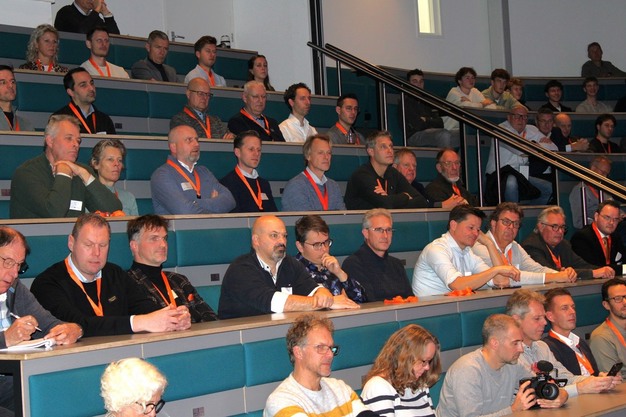
After a brief look back at the development of the Hortivation Design Software, explained by Martin Steentjes, the stage went to Ron Arensman, the chair of Hortivation, who presented a new plan. He did so with plenty of jokes and playful comments. At one point, Ron appeared in a photo shaking hands with Donald Trump. "Great to see the world embracing horticulture," he joked, to much laughter from the audience.
 © Annet Breure | HortiDaily.com
Getting innovations to the market faster
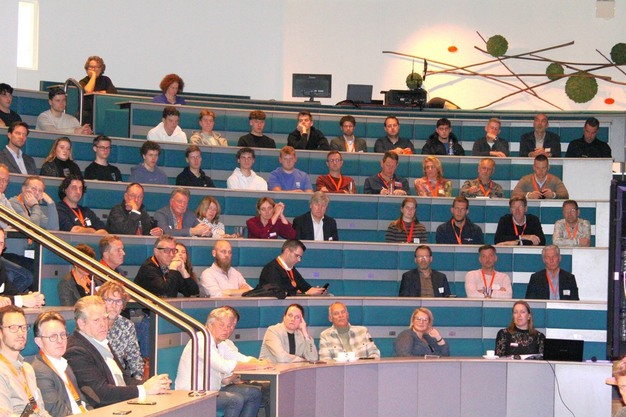
But after the laughter, things quickly became serious, especially when a very serious number appeared on the screen. A new innovation program has been launched under the name Dutch HortiPower. For the years 2026 to 2030, the partners mentioned earlier, together with Wageningen University & Research and the WUR's Club of 100, have submitted a funding proposal totaling 27.5 million euros.
The program ties in with the updated industrial policy in the Netherlands. The long-running Top Sector policy is being phased out, and in its place comes a new innovation policy focused on the markets where the Netherlands has the strongest growth potential. According to everyone gathered on Tuesday, the horticultural technology sector clearly belongs in that category.
The proposal still needs approval from The Hague, but Ron and the audience were already looking ahead at what they hope to achieve. The central message was that innovations must actually reach the market. That final step is often where progress stalls today. Ron expressed the ambition for the program to deliver three working prototypes of fully automated greenhouses, and there is also a strong commitment to developing energy-neutral greenhouse concepts, making them practical and ready for growers to use in real operations.
 © Annet Breure | HortiDaily.com
Courage
After Ron's presentation, in which he encouraged companies to participate financially and to be willing to share data and IP for the greater good, it was time for keynote speaker Ruud Koornstra to take the stage. He also sprinkled his talk with jokes, yet his message was unmistakably serious. In short, he urged the audience not to wait for The Hague, Washington, Beijing or Moscow to act, but to take the initiative themselves, keep emphasizing that they are the best and back that confidence up with real action.
By the time Ruud reached his story about the introduction of LED lighting in the greenhouse, his speaking slot was already up. A pity, because this was precisely where a concrete example showed how innovation can make the leap into real-world practice. While many people believed it would never work, LED technology still found its way into greenhouse production. Ruud gave credit to pioneers such as Rob Baan and several other entrepreneurs who dared to take the risk. That sense of courage, combined with knowledge, entrepreneurship and investment capacity, all of which are abundant in the Netherlands, is what Ruud believes makes the audience members part of a sector with a strong future. "This matters now more than ever, so keep going," he said.
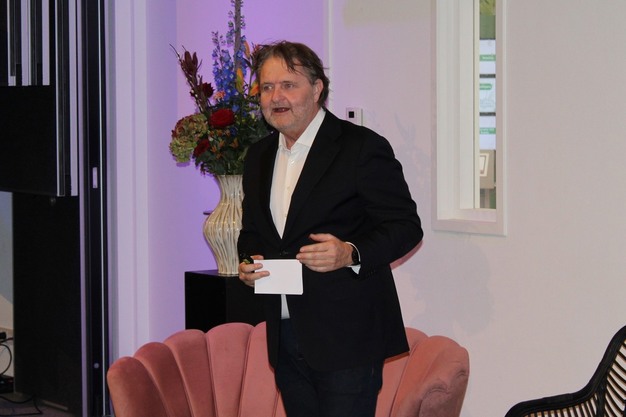 © Annet Breure | HortiDaily.comRuud Koornstra would have wanted to present for longer, but the rest of the program followed.
How do Harvest House growers view innovation?
The second part of the program consisted of several parallel sessions. One of the most popular sessions focused on introducing innovations from the grower's point of view. Eric Dortmans and Lienemijn Verploeg, who work on this every day at Harvest House, explained the practical challenges growers face when new technology enters the greenhouse. One major issue is that many innovations are not yet ready for large-scale application, even though that is exactly what growers need. On top of that, last-minute modifications to the greenhouse are often required before an innovation can actually function as intended.
Someone in the audience asked whether Harvest House could use part of its growers' combined greenhouse area, more than 1,200 hectares, as a dedicated "innovation greenhouse." According to Eric and Lienemijn, this is not as simple as it sounds, because at Harvest House the growers themselves are ultimately in the lead, and not everyone is eager to fill an entire greenhouse with technologies that are not quite ready for real commercial practice.
Even so, growers who are willing to take the plunge and test new technology are crucial. A good example is Lans and their work with a harvesting robot for tomatoes. This case also appeared in Harvest House's presentation. It has required time and persistence, but the robot is now delivering real labour savings for the grower.
Recently, the grower shared their experiences with fellow growers. That kind of knowledge exchange is something Harvest House actively wants to support, as became clear when another audience member asked what the organisation can offer that an individual grower cannot do alone. "We bring growers together," they answered. And that, ultimately, is how the sector moves forward, just as the organisers of Future Trends & Innovations brought the greenhouse technology chain together on Tuesday afternoon under the theme of collaboration.
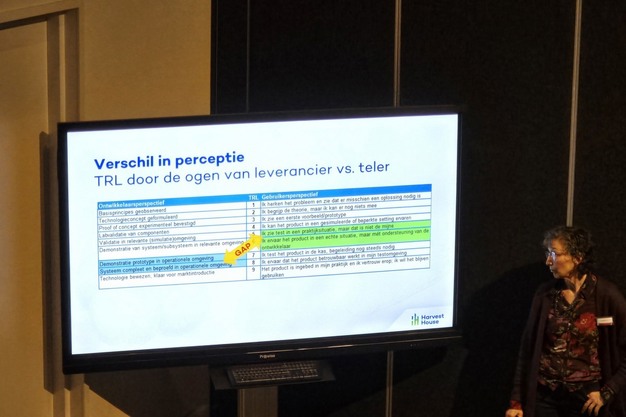 © Thijmen Tiersma | HortiDaily.comHarvest House often observes a difference in perception between the technology party and the grower during the introduction of innovations
 © Annet Breure | HortiDaily.com