Sign up for our daily Newsletter and stay up to date with all the latest news!

Subscribe I am already a subscriber

You are using software which is blocking our advertisements (adblocker).

As we provide the news for free, we are relying on revenues from our banners. So please disable your adblocker and reload the page to continue using this site.
Thanks!

Click here for a guide on disabling your adblocker.

Sign up for our daily Newsletter and stay up to date with all the latest news!

Subscribe I am already a subscriber

This year's evolving battle against ToBRFV

As 2025 draws to a close, the global tomato industry continues to adjust to shifting regulatory, biosecurity, and production conditions linked to Tomato Brown Rugose Fruit Virus (ToBRFV). Key developments this year, including the European Union's reclassification of the virus, Australia's decision to end eradication efforts, and multiple new detections across production regions, have shown the ongoing challenges of managing a highly transmissible pathogen.

At the same time, growers and suppliers have advanced a range of responses, from strengthened hygiene protocols and sanitation technologies to the release of new resistant varieties. Together, these updates reflect an industry moving toward long-term management strategies while contending with continued production pressures and market impacts.
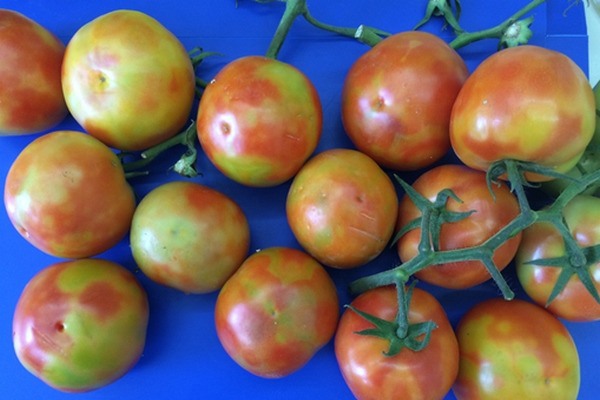
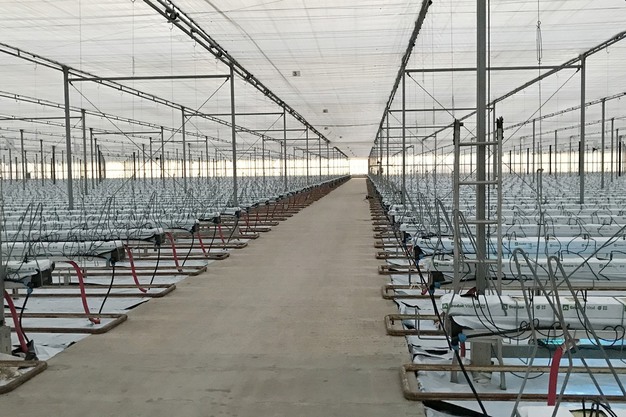
ToBRFV is no longer considered a quarantine pest in the European Union. As of 1 January 2025, the status of ToBRFV changed to a Union-regulated non-quarantine pest (RNQP) with a zero-tolerance threshold, mandating specific controls for affected plants and seeds.

The regulation also updates inspection frequencies for imported consignments based on origin. Sampling rates are set at 20% for all third-country consignments, increasing to 50% for those from Israel and 100% for China due to higher interception rates.

Tomato brown rugose fruit virus (ToBRFV) has been detected at a tomato glasshouse facility in Victoria in seedlings recently moved from South Australia.

Victoria's Chief Plant Health Officer, Dr. Rosa Crnov, confirmed that quarantine controls are in place at the property and that Agriculture Victoria is working closely with the business to prevent the spread of the virus and ensure its eradication.

"After national agreement on a pilot protocol to support trade, tomato seedlings were moved without authorization from a decontaminated production nursery in South Australia to the Victorian business in mid-December 2024," Dr. Crnov said.

Ecofarm Storti, an Italian company specializing in ozone systems, develops innovative solutions to improve biosecurity in growing environments. "Our systems combine sustainability, effectiveness and cost-efficiency," says a company release.

"These systems have many advantages. They are sustainable because the ozone is produced from oxygen and consumes little energy. They are effective, because ozone is effective against viruses, bacteria and fungi in greenhouses and growing systems. Tests show it is effective against ToBRFV when used properly. And they are cost effective because the systems operate automatically, use little energy, and require no additional materials."

The tomato brown rugose fruit virus has caused a significant reduction in the fall and winter tomato production, something that has been aggravated by the impact of constant rains and falling temperatures. As a result, prices are on the rise.

"The tomato season has been affected by the spread of the ToBRFV virus, which has led to significant losses in production. Because of this, as well as the drop in temperatures and adverse weather, there has been a shortage of produce," says Ana Lucía Méndez, corporate officer at Grupo Perichán.

© Rijk Zwaan

The tomato industry has faced a turbulent journey over the past several years, with one of its biggest hurdles being the outbreak of the Tomato Brown Rugose Fruit Virus (ToBRFV). Since 2015, this highly contagious virus has devastated crops worldwide, forcing growers to rethink their strategies and seed companies to fast-track innovation. Now, after years of uncertainty, a new chapter is unfolding—and with it comes bold new varieties that are resistant and robust. Rijk Zwaan has introduced the first ToBRFV-resistant portfolio in December 2022 under the Rugose Defense label and continues to release new varieties.

Their latest one, Ferguson RZ F1, is a high-tech beef tomato offering drawing attention recently due to its size and yield.

© Arlette Sijmonsma | HortiDaily.com

The Australian National Management Group (NMG) agreed at its meeting on 29 May 2025 that it is no longer technically feasible to eradicate tomato brown rugose fruit virus (ToBRFV) from Australia. This decision is based on the technical considerations of the Consultative Committee on Emergency Plant Pests (CCEPP) and engagement with production nursery, capsicum, processing and fresh tomato industries on the potential to manage the pest as part of their normal business operations.

© Nova Genetics

It is important to emphasize that even when using resistant varieties, it is crucial to follow prevention strategies, whether intermediate or not. The ToBRFV virus spreads by contagion and circulates in the air. Prevention strategies aim to prevent contagion and spread. These strategies include avoiding carrying tools and equipment from one greenhouse to another, as well as taking measures such as changing boots. "The goal is to adopt strategies that prevent the spread of viruses in general, not just ToBRFV," explains Luigi Ciavorella. There are also pathogenic bacteria, as in the case of bacteriosis, which necessitate the adoption of strategies to reduce contagion between greenhouses.

© Bayer

Bayer has developed new tomato varieties that provide growers with advanced solutions in their fight against tomato brown rugose fruit virus (ToBRFV). These will launch this year in every major glasshouse tomato segment and provide multi-stacked virus-resistant genes for more durable protection against ToBRFV mutations.

© Jahmaican | Dreamstime

The New Zealand tomato sector expresses apprehensions over Biosecurity measures concerning the tomato brown rugose fruit virus (ToBRFV). In August of last year, Biosecurity New Zealand imposed limitations on tomato imports from Australia following detections of the virus in South Australia. However, Simon Watson of NZ Hothouse emphasized the virus's impact on capsicums and chillies, noting, "The MPI has not banned imports of these products from Australia."

© The Rootstock Company

Although ToBRFV resistance in the rootstock may not be essential for every grower, rootstock specialist The Rootstock Company is seeing significant interest in this new product line. "Our demo in Berkel en Rodenrijs was well attended from start to finish. We received at least ten different nationalities" says Commercial Manager Arnoud Roozen. "Even though the heads were taken out weeks ago, I am still receiving requests for visits. And so far, 100% of those visits have resulted in trials with this new material."

Related Articles → See More