The tomato russet mitecan appear in dry autumn weather and in spring, and it does not enter diapause. Optimal conditions for its development are 27 °C and 30% relative humidity, which allow it to complete a very fast cycle of 6 to 7 days as long as an adequate food source is available.
This is a pest that appears in localized hotspots although it can affect a large part of the crop. It attacks all green parts of the plant. In tomato the first damage shows up in the lower part of the plant and then moves up through leaves and stems. As it climbs, the lower part dries out.
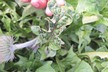
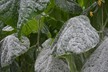
It feeds on the epidermal cells of plant tissues, injecting saliva and absorbing the contents of the cell. At first the affected organs take on an oily green look and then shift to silvery tones which turn bronze as they dry.
In the province of Almeria it is present in every municipality and in more than half of the sampled greenhouses that are in the fattening stage or starting harvest, showing up in 1 of every 14 plants compared to 1 of every 20 in the previous sampling.
Preventive and cultural measures
- In greenhouses install mesh screens minimum 10 × 20 threads per square centimeter on side vents roof vents and doors, and monitor and maintain their condition especially those aligned with prevailing winds.
- In greenhouses check regularly for tears in the plastic.
- Remove weeds and crop residues since they can serve as reservoirs for the pest.
- Do not abandon crops at the end of the cycle.
- Remove plants that are heavily affected.
- Space out new plantings over time.
- Take care not to spread the pest through routine crop operations or through clothing footwear and tools.
- Disinfect tools with a 10% trisodium phosphate solution before and after use.
- Carry out crop rotations.
- If applying manure make sure it is well fermented and free of pests.
- Avoid excess foliage on the plant.
- Support the growth of beneficial insect populations by using plant protection products rationally.
- Avoid spreading the pest through machinery irrigation water animals footwear and farm equipment, and so on.
Source: juntadeandalucia.es