Sign up for our daily Newsletter and stay up to date with all the latest news!

Subscribe I am already a subscriber

You are using software which is blocking our advertisements (adblocker).

As we provide the news for free, we are relying on revenues from our banners. So please disable your adblocker and reload the page to continue using this site.
Thanks!

Click here for a guide on disabling your adblocker.

Sign up for our daily Newsletter and stay up to date with all the latest news!

Subscribe I am already a subscriber

10 pepper growers making headlines in 2025

Of all the articles we publish, we love growers' stories the most. That's why we're happy to highlight the remarkable ones that made headlines in 2025 in this special edition. Today, we've selected 10 stories from pepper growers around the world.
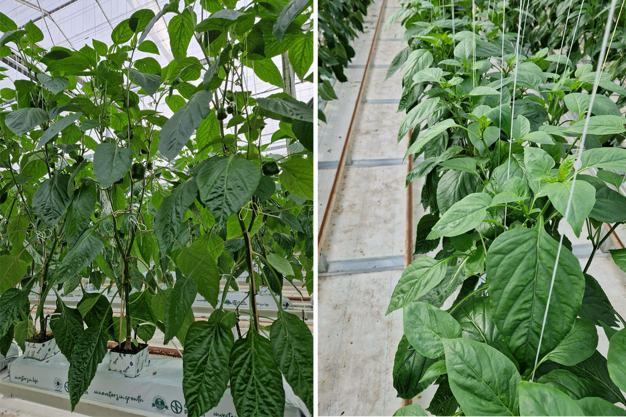
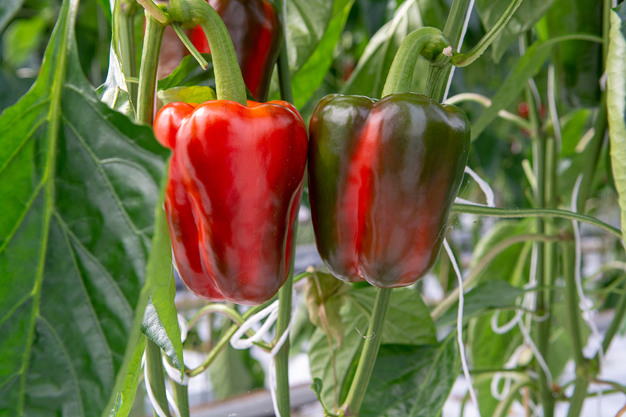
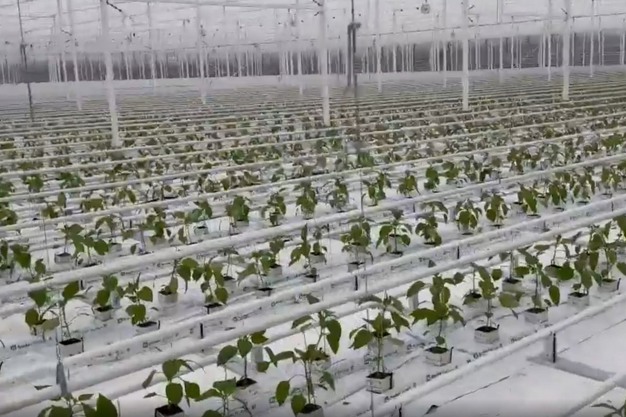
At BestPeppers, root problems in pepper cultivation were still manageable, but partly due to the consequences he observed at fellow growers, Wilfred van den Berg decided to switch to an organic substrate as well. He chose 100% coco substrate from Dutch Plantin. "We dare to grow again," says the owner of nursery BestPeppers.

© Barmalini | Dreamstime

Thrips parvispinus continues to be a major challenge for pepper producers in the province of Almeria, Spain. "Originating in Southeast Asia, this species was first detected in Spain in 2020, in ornamental plants. Currently, it represents a danger due to the serious damage it causes," Asaja Almeria explained in January of this year. "The damage that it causes the fruits is mainly aesthetic, affecting their appearance and reducing their commercial value. However, it does not compromise their quality or food safety. Despite that, the economic consequences are significant, as consumers often reject products with visible imperfections."

The failure problems in sweet pepper in recent years have led to adjustments in cultivation. Two distinct approaches can be identified: cultivation on organic substrate and cultivation on rootstock with grafted plants. One of the growers who opted for the latter is Rainbow Growers Group. In its newest 5-hectare greenhouse in Middenmeer, the Alzamora variety on Skyborn rootstock was planted on stone wool substrate on 12 December.

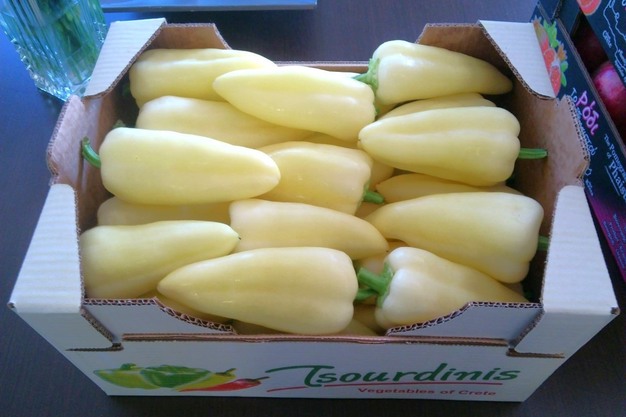
The weather in Crete has not been very cold so far, enabling greenhouse peppers to yield about 45 tons per hectare. According to Mr. Nikos Tsourdinis, owner of the Cretan packing company Tsourdinis S.A., it seems that production will remain close to these levels—albeit slightly lower—for quite some time. "I don't expect a significant decrease in production—if it happens at all—in the coming weeks. We will maintain similar supply volumes. What concerns me is water availability. Despite the fact that December was rainy enough, the dams are still not full. We need more rain to ensure water security for the whole season."

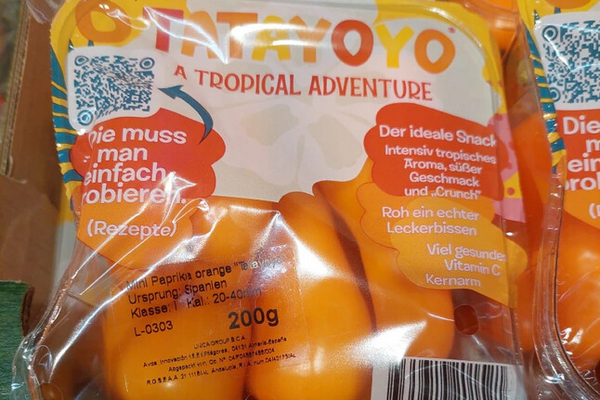
"Tatayoyo is not just a pepper; it's a versatile innovative ingredient that can transform dishes," says Andrea Alvarez from fresh produce company UNICA. Since last year, the award-winning pepper is also being sold at retailer LIDL. "We highly value the close cooperation with Rijk Zwaan and UNICA to bring this to our shelves," says Boyd Muijs, Vice President of Fresh Purchasing International at LIDL. Innovation and collaboration are just two reasons why Andrea and Boyd are so enthusiastic about this new concept.
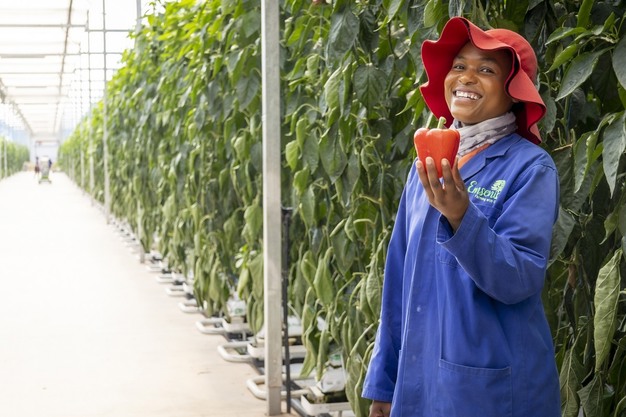
© Emseni Farming

Emseni Farming, located near the rural town of Kranskop in KwaZulu-Natal's Valley of a Thousand Hills, is growing world-class peppers while focusing on change, community development, and the latest agricultural practices.

As CEO at Emseni, Dietmar Joosten's journey with the operation spans more than four decades. "I came here in 1981," he recalls. "We started with small tunnels, planting directly into the ground. It wasn't always productive, but we were learning."

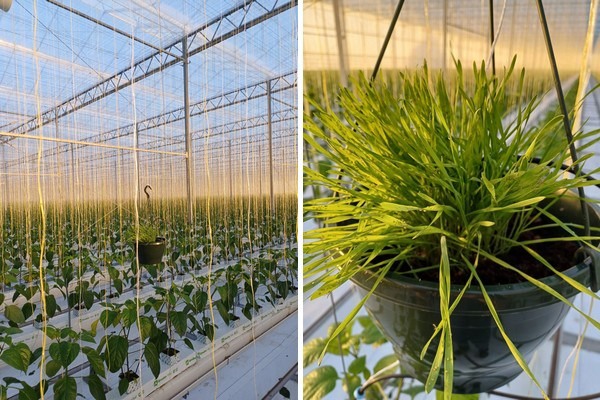
Aphids have been one of the biggest pests in peppers in recent years. This year, pepper grower Noordland Paprika started a trial to preventively release aphids (grain aphids) in the greenhouse using grain pollen. "These are a different type of lice than the peach aphid that are active in the pepper crop, so harmless. However, they do serve as 'hosts' (food) for our natural controllers: the parasitic wasps," explains on LinkedIn. "As a result, we build up a good population of natural controllers (parasitic wasps) in advance, which can take credit, should it be necessary against the peach aphid."

Ten years ago, Hacienda North Farms began cultivating peppers in its first greenhouse. Since then, the Ontario-based grower has steadily expanded to cover 160 acres and last year, the company was acquired by Mucci Farms. Despite challenges with crop failures, which are common for Canadian growers, the company remains resilient. By investing in ozone technology and switching to coco substrate, it aims to cultivate healthier bell peppers free from root issues.

Kwekerij De Wieringermeer, a large-scale pepper grower in the Netherlands, used the Market Introduction to Energy Innovations in Glasshouse Horticulture (MEI) grant to install an innovative heat system.

"We wanted to heat our new greenhouse with existing heat flows from geothermal heat. For this you need a slightly different installation than we already had," Arco Vreugdenhil says in an RVO article on Kas als Energiebron. He is the financial director of nursery De Wieringermeer and is responsible for energy consumption.


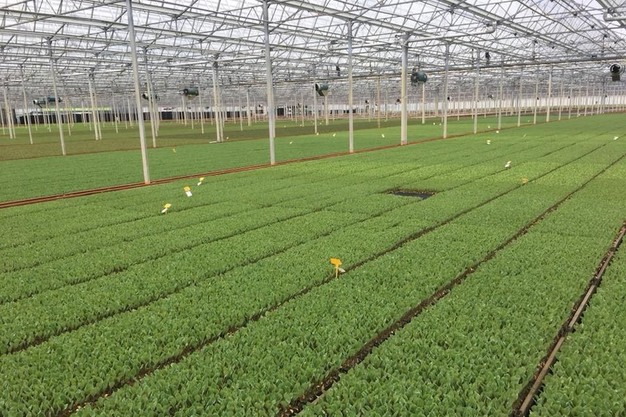
Sowing lines are restarted and new orders are being taken again. That is the result of the restart of Dutch propagator West Plant Group under the name WPG, which was announced on Tuesday evening. Initially, the focus of the new shareholder Erik Gubbels and a new management team will be on the greenhouse location in greenhouse horticulture area Siberia, in the south of Netherlands, and on supplying cabbage plants and strawberry plants. There was temporary uncertainty about this after the bankruptcy. With this positive news, they want to remove that uncertainty.

Related Articles → See More