Albert Heijn is joining forces with Eneco, its strategic partner Bakker Barendrecht, and Dutch growers to accelerate the reduction of CO₂e emissions in horticulture. Together, they have set the ambitious goal of achieving a 70 percent CO₂e reduction by 2030 compared with 2018 for greenhouse-grown fruit and vegetables supplied to Albert Heijn. With this collaboration, the partners aim to show that sustainability and food security can strengthen one another.
Dutch horticulture plays a crucial year-round role in ensuring the availability of fresh fruit and vegetables. To secure that role for the future, further electrification of greenhouse operations is essential. At the supermarket's request, Bakker Barendrecht and AgroEnergy, a subsidiary of Eneco, conducted a study that shows many businesses can take sustainable steps in the short term and do so profitably. This means locally grown produce can remain fresh, high-quality, and still affordable.
For Albert Heijn, this marks an important move toward achieving its broader goal of a 45 percent CO₂e reduction across the entire supply chain by 2030 compared with 2018.
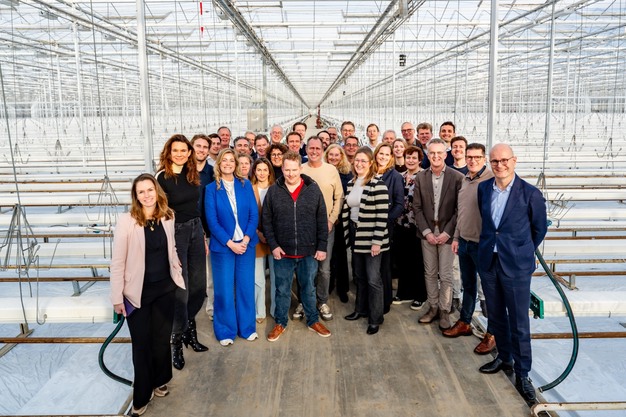 © Albert Heijn
Grower Jan Reijm hosted a stakeholder meeting on Monday, November 24, where Albert Heijn engaged in discussions with growers, industry organizations, NGOs, research institutions, businesses, and the government about the opportunities and challenges of the energy transition in the sector, conveying the message: it is possible.
Collaboration in the chain
Within this collaboration, each partner strengthens the others by contributing their own expertise. Bakker Barendrecht, together with Eneco, has worked with nearly all growers to map out which sustainability measures are feasible for each operation. Eneco provides the technical knowledge and hands-on guidance that help growers optimise and decarbonise their energy use, even in regions where grid congestion creates challenges. Albert Heijn supports growers through long-term partnerships that form the foundation for joint development throughout the supply chain. Innovation, sustainability, and transparency are central to this approach, ensuring that product quality, affordability, availability, and environmental performance all move forward together.
Concrete action plan for growers
At the core of this approach is the AgroEnergy Groenplan, a step-by-step roadmap that gives growers insight into their current energy use and shows which sustainable solutions are technically and financially feasible for their specific operation. By managing energy consumption more intelligently, sustainability measures become realistically achievable. Growers are also guided in making full use of available subsidy schemes, which allows them to modernise without putting pressure on the affordability or availability of locally grown produce.
Rob Heesen, Director of Partnerships & Business Development, explains that Albert Heijn's mission, "Making better food accessible. For everyone." is built on the belief that collaboration is essential for positive impact, not only for customers but also for partners throughout the chain. He adds that they can be proud of showing that it is indeed possible to advance sustainability while protecting food security.
Dick Velings, Director of Strategic Growth at Eneco, says that Eneco has a strong commitment to horticulture. Through its subsidiary AgroEnergy, the company has spent more than fifteen years working closely with growers to make the sector more sustainable. Thanks to the partnership with Albert Heijn, this transition can now accelerate significantly, enabling Eneco, Bakker Barendrecht, and the growers to move together toward a CO₂-neutral future.
Sector-wide movement
The government also recognises the sustainability transition in horticulture as a major opportunity. The Dutch cabinet is investing 200 million euros to help the sector move toward climate neutrality by 2040. During a stakeholder meeting hosted by cucumber and sweet pepper grower Reijm & Zn on Monday, 24 November, Albert Heijn met with growers, industry organisations, NGOs, research institutes, businesses, and government representatives to discuss both the opportunities and the challenges surrounding the sector's energy transition. The main message was simple: it can be done.
Sophie Hermans, Minister for Climate and Green Growth, explained that horticulture is not only an important sector, but also one with enormous potential for sustainability gains. She added that it is encouraging to see Albert Heijn, Bakker Barendrecht, and Eneco committing themselves to more sustainable fruit and vegetable production. According to her, initiatives like these show that the sustainable and prosperous economy of the future is something we are already building together today.
Source: AH