The rapid spread of Thrips parvispinus in Almeria has raised serious concerns in the fruit and vegetable industry. Growers' organizations such as Coexphal have suggested implementing a widespread biological shutdown in Almeria's greenhouses to stop the pest's progress. The idea—closing down production for a month to break the insect's life cycle, along with treatments and drastic measures—has been frequently discussed in technical meetings and internal debates. However, its practical implementation is far from feasible, as Roque García, vice-president of UPA Andalucía, explains.
"Proposing a month-long halt in production seems simple in theory, but it's practically unfeasible. This is because the industry isn't uniform; each grower has unique crop cycles, production schedules, varieties, and commercial obligations. What appears to be an easy solution on paper is, in reality, impossible for us to implement," he stated.
 © Ruud Morijn | Dreamstime
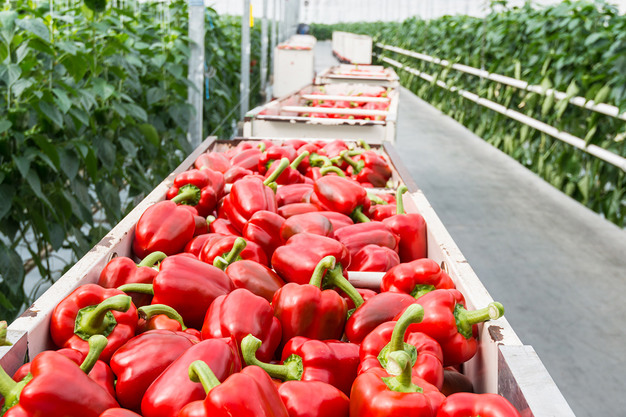
The very idea of halting cultivation across thousands of hectares of peppers, cucumbers, courgettes, tomatoes, and aubergines for one month requires the coordination of simultaneous disinfection treatments; an effort that no organization can guarantee. A biological shutdown involves more than just stopping; it includes solarization, managing farms without cultivation for 15 days or more, and a series of actions that must occur simultaneously. To our knowledge, such an integrated approach has never been carried out in Almeria, not even within the same cooperative," García said.
However, UPA somewhat agrees with the spirit of the proposal. For years, the organization has recommended solarization and fallow periods on farms as part of integrated management, especially on worn-out soils. But making these practices a collective requirement is a different matter. "We can request, advise, or recommend it, but implementing it across Almeria and Granada is impossible from a technical, economic, and operational standpoint."
García confirmed that Thrips parvispinus is now widespread across nearly all cultivation areas. "100% of farms have observed some level of pest presence," he said. Despite this, the production losses have been lower than expected, with only 10-15% of the fruit being unsellable. "To date, we haven't lost market share, but it is true that, because of this issue, prices are lower, which is also being observed in other affected countries."
According to UPA, the key is to strengthen biological control efforts. "What we need now is to refine management strategies, determine the most effective predators, select suitable protocols, and implement them accurately. Almeria's sector has demonstrated its ability to completely reinvent itself when necessary. We achieved this in 2008, and that transformation was far greater than the challenges we face today," they stated.
Biological control houses, cooperatives, and agricultural organizations are already collaborating under a shared protocol, which is being revised to address T. parvispinus specifically. García expects quick adaptation: "I believe that by next season, everyone will be functioning smoothly. We are not dealing with a structural issue that threatens production, and luckily, we have the resources and knowledge needed to face it."
Regarding aid, UPA Andalusia's Vice-President believes that specific measures are likely to be implemented for those affected by the pest, both to compensate for losses and to enhance the use of biological control.
The final message is clear: there's no need to panic, but technical discipline is crucial. García sums up, "It's not a production emergency; we have fruit, the capacity to supply the market smoothly, and room for maneuver." He stressed that what is needed now are precision, coordination, and fine adjustments in biological management. "I am confident that by working in this way, we will soon control the pest effectively."
For more information:
Roque García
UPA Andalusia
Email: [email protected]
https://www.upa.es/upa-andalucia/inicio/