In the Sandıklı district of Afyonkarahisar, an area renowned for its geothermal resources and significant seasonal temperature fluctuations, several greenhouse operations have adopted Enorpa heating systems to enhance efficiency, lower costs, and stabilize production.
"Greenhouse operators increasingly expect systems that balance energy efficiency with operational simplicity," Bulut Güneş, Mechanical Engineer at Enorpa, notes. "Our goal is to ensure stable climate control while reducing long-term heating expenses."
Tekinler Greenhouse: Stable temperatures and reduced fuel costs
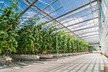
Tekinler Greenhouse operates a 20,000 m² tomato production facility, built with modern infrastructure and designed for continuous, high-yield output. Before adopting Enorpa's solution, the greenhouse relied on a coal-fired boiler, but the system produced low energy efficiency and required intensive maintenance.
The company switched to an Enorpa pellet-fuel system to improve sustainability and operating costs. "Pellet-based systems have become increasingly attractive because they provide both economic and environmental gains," Bulut says. He explained that locally manufactured systems support faster service response times and easier access to spare parts.
After installation, Tekinler reported approximately 30% lower energy costs, along with markedly more stable temperature distribution. This translated into higher product quality and improved overall yield. The operators highlighted the automatic control panel, which allows real-time monitoring of temperature, pressure, and flow with minimal maintenance requirements. They shared that Enorpa's technical team also provided fast and comprehensive post-installation support.
"Stable heat distribution is often the most immediate improvement growers notice," he explains. "When temperature variation decreases, both the plants and the energy budget benefit."
 © HortiDaily
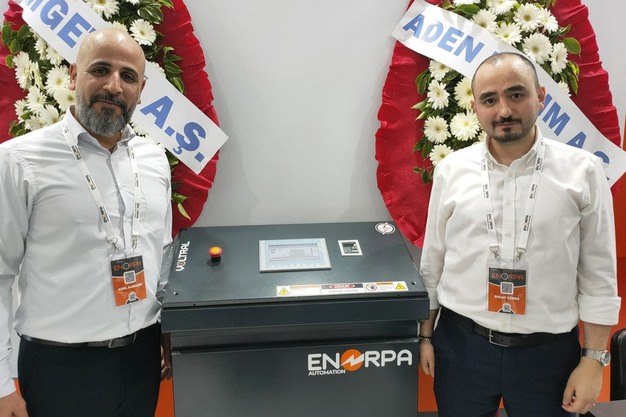
Adel Alekasir and Bulut Gunes from Enorpa at GrowTech Antalaya 2025
Tamagro Nursery: Extending the production season
Tamagro manages a 15,000 m² seedling nursery, cultivating fruit and vegetable seedlings for regional growers. The facility previously used geothermal heating, but variable temperatures and rising operational costs triggered the search for a more controllable alternative.
The company selected Enorpa's modular biomass-and-pellet system primarily for its high energy efficiency and scalability. The ability to expand capacity later was a significant advantage for a rapidly growing nursery. According to the Tamagro team, energy expenses dropped noticeably once precise, automatic temperature control was introduced.
"The nursery sector especially depends on consistent, homogeneous temperatures," Bulut notes. "Seedlings are highly sensitive to micro-climate fluctuations, so automation plays a key role in uniform development."
The staff reported that the system is easy to operate and maintain, requiring only planned routine checks after initial training. Technical support was described as fast, proactive, and solution-oriented. One of the most valuable outcomes was the extension of the production period, allowing the nursery to reduce seasonal dependency and operate throughout the year.
3B Greenhouse: Integrated heating for cold-climate resilience
3B Greenhouse cultivates blackberries, raspberries, and currants across 10,000 m² in Sandıklı. The operation relied solely on geothermal heating until extreme cold spells repeatedly prevented the greenhouse from reaching target temperatures.
To ensure stable heating, Enorpa installed an LNG-based system integrated with the existing geothermal setup. After the transition, the growers reported that they could finally achieve homogeneous heating, which improved both fruit quality and kilogram-based yield.
Bulut emphasized the value of combined systems in regions with fluctuating geothermal output. "Integrated solutions give growers flexibility," he said. "They protect operations from temperature deficits and eliminate dependence on a single energy source."
The Enorpa team provided on-site training, and the operators described the system as easy to use from the first day. Over the year of active operation, they reported responsive service "just a phone call away", with immediate intervention whenever needed. The integrated setup also reduced operational risks during periods when geothermal flow was insufficient.
A growing trend toward efficient, supported heating solutions
Across all three greenhouse operations, several common themes emerged: reduced energy costs, more stable climate control, improved product quality, and highly accessible technical support. The diversity of fuel types, pellet, biomass, and LNG, also highlights the system's adaptability.
"Every greenhouse has unique climate demands, crop sensitivities, and fuel access. Our priority is to match each facility with a heating solution that delivers efficiency, reliability, and long-term value."
For more information:
Enorpa
Bulut Güneş, Mechanical Engineer
[email protected]
enorpa.com