Blueberry cultivation in Egypt has become a strategic investment, though growers face a fair share of challenges due to the crop's very specific growing needs.
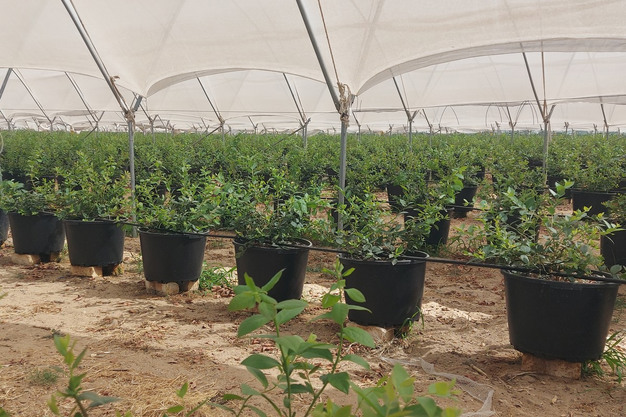 © AZUDBlueberry farm in Egypt.
"This plant is especially sensitive to changes in water quality and irrigation management. Keeping a stable and balanced environment is essential to prevent root stress and ensure consistent production," the team at AZUD explains.
"For years, these tasks were handled manually, with constant adjustments and strict monitoring. That approach did not always give the plants the uniformity they require. This was particularly evident in one of the country's flagship projects, developed by Pico Agriculture, which needed a system that could deliver precision and day to day stability to the crop."
The transition to automated fertigation
AZUD QGrow marked a turning point. "The system takes irrigation and nutrition management out of the manual realm and turns it into an automated, stable, trackable process. It continuously adjusts water parameters and executes highly segmented irrigation programs that would be nearly impossible to run without technological support."
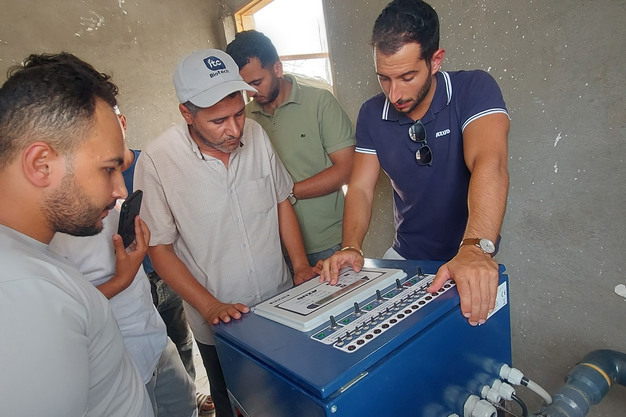 © AZUDInstallation of AZUD QGrow fertigation equipment.
In the project with Pico Agriculture, engineers point out that the biggest change is operational peace of mind. The crop no longer relies on constant correction and instead grows under uniform conditions throughout the day, which strengthens plant health and productivity.
Greater stability, fewer interventions and improved yields
Automation also helped significantly reduce fertilizer and energy use, since dosing is adapted precisely to the real needs of the crop. Remote monitoring has freed up time and labor, making it easier to react quickly to any changes.
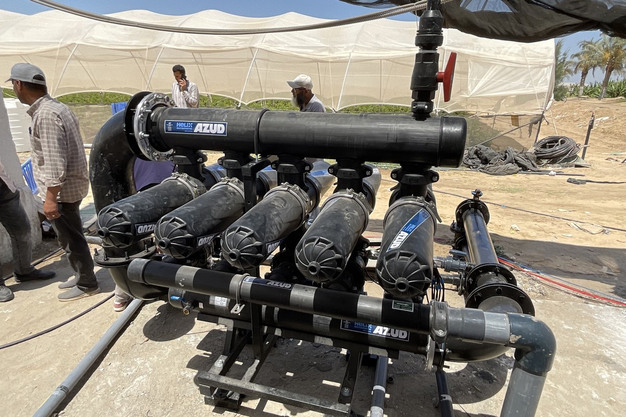 © AZUDAZUD Helix Automatic filtration equipment.
"Plants show more uniform and vigorous growth, which results in more stable production in a crop where even small fluctuations can lead to yield losses."
The installation is complemented by the AZUD Helix Automatic filtration system, which ensures continuous operation even when the water source is a canal, thanks to its self cleaning technology and low energy consumption.
Technology for more efficient agriculture in arid areas
"The use of advanced tools such as AZUD QGrow responds to the need to produce more with fewer resources, especially in regions where water must be managed with maximum efficiency," AZUD notes.
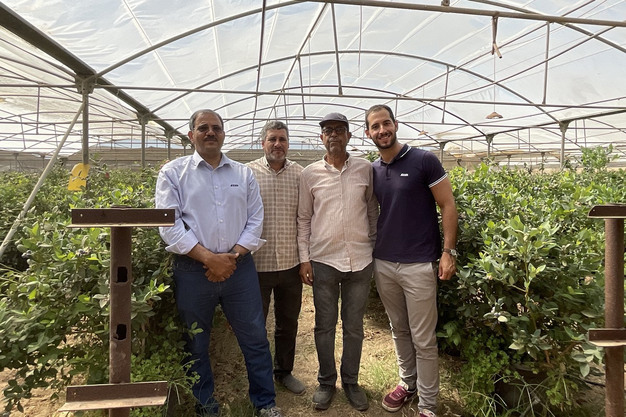 © AZUDAZUD and Pico Agriculture team.
The technology brings precision, reliability and sustainability to a crop that demands consistency and accuracy. "With a more stable level of control and plants exposed to less stress, reaching yearly productivity goals is now more feasible, with a direct impact on profitability and fruit quality."
The success story developed with Pico Agriculture shows how innovation in fertigation can completely transform a sensitive crop such as blueberries. The full case study is available on the AZUD YouTube channel.
 For more information:
Sistema AZUD, S.A.
Avenida de las Américas P.6/6 - Apdo 147
Polígono Industrial Oeste, 30820
Alcantarilla, Murcia, Spain
Tel. +34 968 808 402
[email protected]
www.azud.com