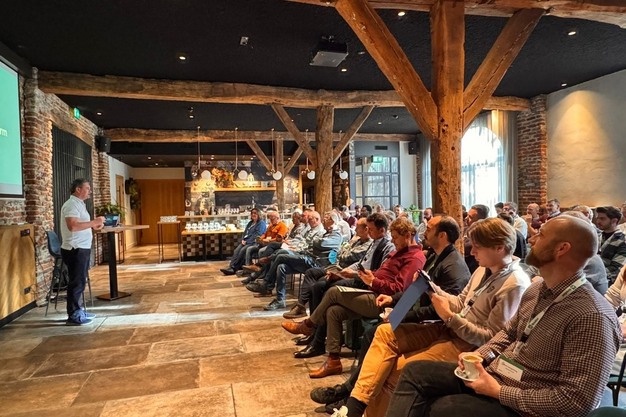
The 27th edition of the Green Expert Platform (GEP) hosted by Grodan brought together 56 crop consultants and technical specialists from across Europe and North America for a full day of discussion on some of the most pressing technical challenges in high-tech horticulture. Established in 2009, the GEP aims to facilitate deep knowledge exchange among international experts, and this year's event placed a deliberate emphasis on root-zone dynamics, nutrient strategies, and water quality.
According to Andrew Lee, Knowledge Manager at Grodan, the objective has remained consistent throughout the platform's history: to create an environment where technical advisors feel able to discuss "the topics of the day" openly. "Questions were asked freely," he observed, adding that the long-standing core group of advisors has cultivated an atmosphere that encouraged the participation of newer attendees. Engagement was strong not only in the seminar room but also throughout informal discussions during breaks and over dinner.
 © Grodan
Exploring low-energy growing and generative steering
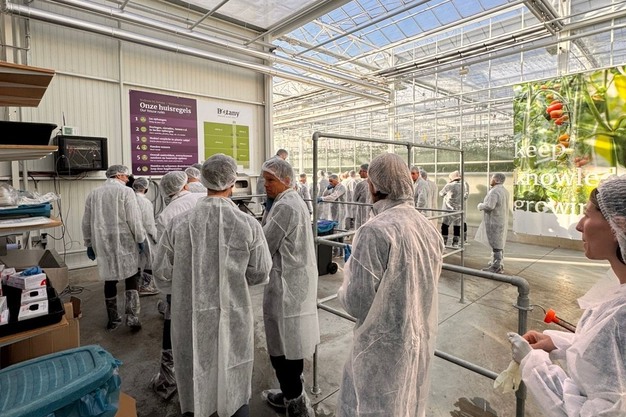
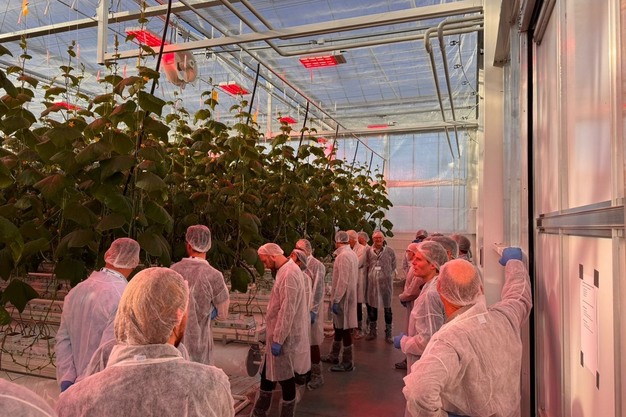
The day opened with a tour of Grodan's low-energy trials at Botany BV, conducted in partnership with Philips Horticulture LED Solutions. Delegates examined strategies for supporting generative plant development in full-LED winter crops, particularly under conditions of reduced radiant heat.
Andrew noted that these trials emphasised the role of nutrient steering when heat input is lowered. "Generative plant steering using low nitrate and adjusted potassium feed recipes takes on new importance in full LED situations," he explained.
 © Grodan
Trend toward active dehumidification
Energy reduction strategies continue to shape greenhouse design, and Andrew highlighted a promising trend: active dehumidification systems. Grodan's long-running trials with Philips LED Solutions have proved the value of this approach in low-heat environments. "It's nice to see the 'first movers' installing similar systems in their new-build greenhouses," he said, predicting that adoption will grow as more growers seek to decouple humidity control from heating requirements.
 © Grodan
Water quality: No silver bullet yet
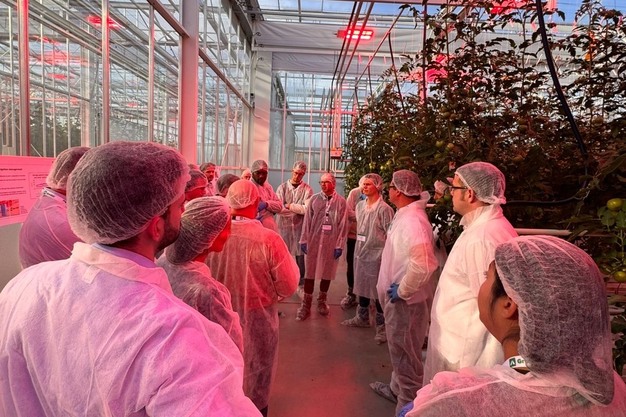
Water quality and the increasing complexity of managing recycled water were a major focal point in the discussions. Andrew summarised the consensus: "There is no silver bullet to the issue of water quality, both in treating drain water and keeping irrigation systems clean." The regulatory pressure in the Netherlands, where strict emission rules are pushing growers to improve water treatment, highlights the urgency of practical, scalable solutions.
One emerging theme discussed by the presenters and the audience was the rising use of peroxide in irrigation systems. While peroxide plays an essential role in UV-advanced oxidation processes to break down plant protection products in drain water, its frequent application inside irrigation lines needs to be studied further. The group cautioned that "peroxide is being dosed at ever-increasing concentrations, sometimes with every irrigation," and that its interaction with plant protection products, and even root health itself, needs to be further understood.
 © Grodan
Defining and measuring plant balance
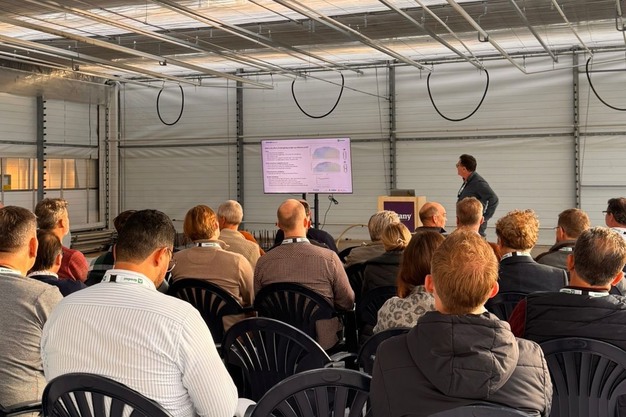
Plant balance, a concept with more than two decades of development, remains central to greenhouse decision-making. Andrew explained that consultants now have clear methodologies for measuring plant responses and linking them to climate, root-zone management, and labour practices. Companies working with data-driven approaches, such as Source Ag, are contributing to the development of these insights. He believes that "imaging technology in greenhouse control is the missing link" for future precision-based steering.
 © Grodan
New perspectives on root zone microbiomes
The root-zone microbiome was another topic that generated considerable exchange among delegates. Discussions reinforced that microbial life is abundant in all growing systems and that plants actively influence microbial composition through root exudates throughout the crop cycle.
Yet defining an optimal microbiome remains elusive. "Today we cannot define what constitutes a 'superior root zone microbiome'," Andrew stated. He pointed out that substrate type plays a major role in shaping microbial populations; stone wool tends to support bacteria, while coco systems favour fungi due to their reliance on complex organic molecules and participation in substrate decomposition.
Industry at a crossroads in water treatment
Case studies presented by consultants indicated a broader theme: greenhouse horticulture is at a turning point in how it approaches water treatment and microbiological management. "We never work in sterile environments," he remarked, noting that the industry is "at the end of the beginning" in understanding how to measure and steer microbial communities. With the future of plant resilience increasingly tied to microbiome interactions and the availability of chemical plant protection products steadily declining, growers will need new biological tools. However, the EU registration process means that developing new bio-pesticides could take 8–10 years.
For more information:
Grodan
Andrew Lee, Knowledge Manager
[email protected]
www.grodan.com