Cordenka has been one of the market leaders in the car tire industry for many years: Cordenka's technical viscose is used specifically in the production of the inner reinforcement fabric for high-performance tires. About five years ago, the basic idea arose to also produce guide strings for so-called high-wire crops in commercial horticulture (primarily cucumbers and tomatoes) from this natural raw material.
"Polypropylene is usually used for this purpose, which in turn can cause microplastics. The main problem with this material is its disposal: after harvesting, the plant material itself and the plastic must be separated and disposed of individually. While the plants are sent to compostable waste, the polypropylene must be incinerated, which in turn is costly and time-consuming. It should also be remembered that plastic disposal is becoming increasingly expensive not only in Germany but also in other European countries, so a sustainable alternative is urgently needed," reports Torsten Zöller, sales manager of the industry supplier based in Obernburg, Lower Franconia.
Residue-free and tear-resistant
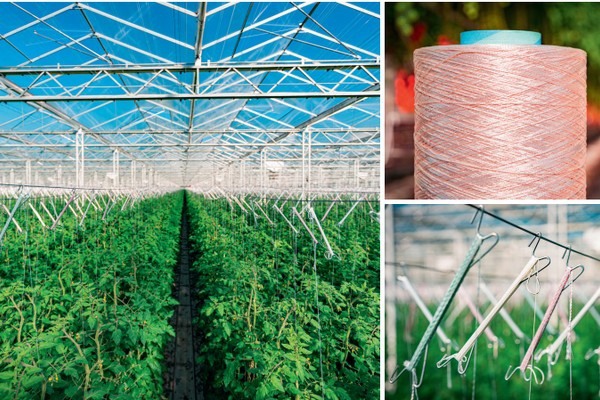
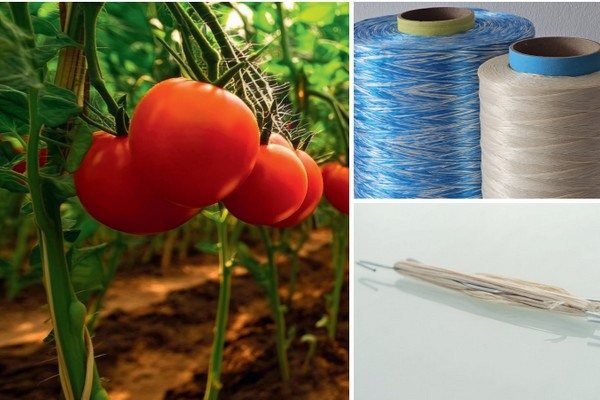
This is precisely where Cordenka comes in with its product line Growth. These are cellulose-based guide strings. Zöller: "This natural raw material typically decomposes within three to six months after being added to the compost. The material is therefore completely bio-based, biodegradable, and also residue-free. In addition to the sustainability aspect, our product also meets the other technical requirements of modern commercial horticulture. Thanks to their high and consistent tear resistance, the strings can easily support tomato plants ready for harvest with a total weight of around 10-20 kg. This is also an important competitive advantage."
 © Cordenka
Previous users of the guide strings include both small producers and large farms with dozens of hectares. Customers particularly appreciate the elimination of disposal costs and the user-friendliness of the system.
So far, this advanced technology has been used primarily in Germany, Italy, Belgium, the Netherlands, and France. However, there are already successful user examples in other parts of Europe and the Far East, emphasizes Zöller. "In the Benelux region, we have a reliable marketing partner in Royal Brinkman, who distributes our product and also offers the corresponding biodegradable fastening clips. However, we see growth opportunities primarily in Southern Europe. Despite the difficult market environment, we have once again achieved encouraging growth figures compared to the previous year. This shows us that the product is well-received and that we are on the right track."
 © Cordenka
In addition to the round 'standard yarn', a new variant called Cordenka Growth More Grip is now available. The flat structure of the yarn reduces the risk of damage to the plant.
Plastic-free vegetable production
The next step is to continue communicating the added value of plastic-free vegetable production, for example, at the point of sale, Zöller continues. "We are only at the beginning of a structural change. In the future, I could imagine a special 'Free of Microplastics' seal, for example, so that end consumers also know that the product in question has been produced in a 100 percent sustainable manner."
For more information:
Torsten Zöller © Cordenka
CORDENKA GmbH & Co. KG
Industrie Center Obernburg
63784 Obernburg
Tel: +49 6022 81-3271
[email protected]
www.cordenka.com