The European and Mediterranean Plant Protection Organization (EPPO) is closely monitoring the advance of Pochazia shantungensis, commonly known as the brown winged cicada, as the insect continues to spread rapidly across Europe. Native to Asia and highly polyphagous, with records on more than two hundred plant species, it has already become a noteworthy pest in several countries due to the direct and indirect damage it causes in fruit, ornamental and forest crops.
Since its first detection in Europe in 2018, when it was reported in Türkiye, the pest has been confirmed in France, Italy, Germany, Russia, the Netherlands, Hungary and Bulgaria.
In 2025 it was reported in Belgium for the first time. Adults and egg masses were found in a garden center, prompting official eradication measures that included trapping, destroying infested plant material and imposing restrictions on plant movement.
France, which had already confirmed the pest in the Provence Alpes Côte d Azur region since 2018, has recorded new cases in 2025 in Gironde and Rhône Alpes. Both situations are considered likely isolated interceptions, but surveillance and awareness efforts have been strengthened all the same.
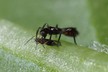
P. shantungensis is easily confused with other species of the same genus. Adults measure around fifteen millimeters and are marked by a distinctive white elliptical blotch on the wing margin. Its broad host range includes high value crops such as apple, blueberry, chestnut, peach, persimmon, citrus, grapevine, olive and rose. Damage comes from sap feeding, oviposition on young shoots and the development of sooty mold associated with honeydew.
The pest overwinters exclusively in the egg stage on tree branches. The number of generations varies by country, with one or two per year. Natural dispersal is not fully described, although adults show higher mobility within their life cycle.
Due to its capacity to expand and its potential economic and ecological impact, P. shantungensis is considered a significant plant health threat in Europe. EPPO recommends stepping up monitoring, improving knowledge of its life cycle under European conditions and reinforcing containment and prevention measures.