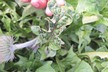
Parvispinus thrips is hardly a newcomer to Europe. Back in 2000, the United Kingdom suggested adding the species to the European and Mediterranean Plant Protection Organization (EPPO) Alert List after it was detected in two greenhouses near Volos in Greece, where it was reported as harmful to gardenia plants. It was not its first appearance in Europe. According to EPPO records, the pest had already been intercepted in 1996 by the Netherlands, listed then as T. taiwanus, in a shipment of cut gardenia flowers from Indonesia.
Today, this tropical and polyphagous species is established in countries across all five continents.
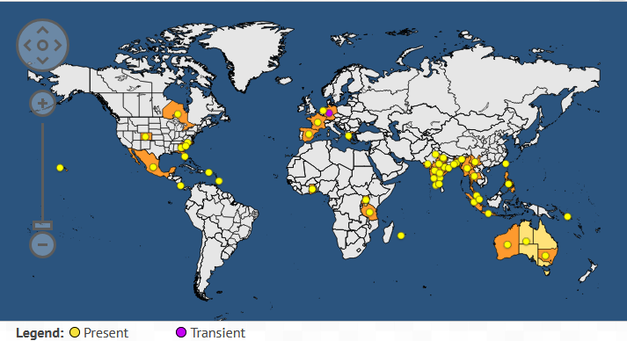 © EPPOImage source: https://gd.eppo.int/taxon/THRIPV/distribution
Spain registered T. parvispinus for the first time in September 2017, in a greenhouse producing gardenia and mandevilla. Follow up monitoring from late 2017 to mid 2019 also found larvae and adults on ornamental citrus. From there, global trade and climate change, as noted by EPPO and by Juan Antonio Sanchez of Coexphal, brought the pest into pepper greenhouses along the Mediterranean coast. Mild temperatures, controlled humidity, and an abundance of protected crops helped its establishment.
Fifteen years ago it would not have settled, Sanchez says, because it is a tropical species. With rising temperatures and climate change it not only established itself but has spread fast. Since its first detections in pepper crops in Almeria in 2022, the pest is now present in between 95 and 100 percent of the Coexphal member farms in the western part of the province in the current 2025 to 2026 campaign.
Severe damage is being detected in about 10 to 15 percent of pepper production so far. Sanchez notes that there are no precise figures yet on how many hectares have had to be pulled up, but the number could grow in the coming days. He adds that the cold will stop the pest, but the damage was already done in October and in early November.
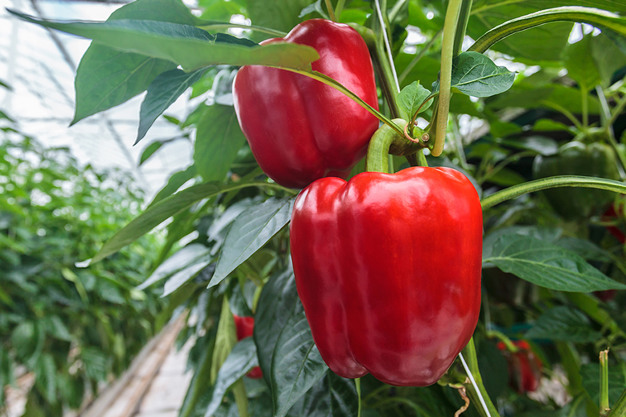 © MartinBergsma | Dreamstime
The damage caused by T. parvispinus on peppers is superficial. It does not affect the nutritional qualities of the vegetable and does not pose a risk for consumers. It does leave a visible mark that compromises marketability.
The demand from retailers for flawless fruit and vegetables means that peppers with thrips marks are almost always rejected. This leads to additional losses that are often not fully recorded, Sanchez says. Growers and the sector are trying to engage with retailers to change that policy since discarding peppers for minor skin marks makes little sense.
He points to the marketing strategy used years ago by Plátano de Canarias that turned banana spots from a defect into a selling point. With Almeria peppers produced almost entirely through biological control, a skin mark could be seen as proof that no chemical products are used.
And the sector plans to keep relying on biological control to manage T. parvispinus.
"Chemistry is not enough"
In the field, parvispinus behaves differently from other common thrips. It hides in plant areas that are very difficult to reach. As a result, even pesticides normally used against other thrips are not providing the level of control needed. For this reason, the administration, biotech companies, and grower organizations have reinforced a strategy centered on beneficial insects. The plan includes measures to support their establishment, conservation based control, and more targeted monitoring.
A biological control protocol has been prepared for growers and another for nurseries, along with recommendations for the transport of affected plant material. Several predatory thrips species are also being tested and some trials are already at an advanced stage in commercial fields. These are native species that feed on other thrips, are well adapted to the conditions in the southeast of Spain, can be bred in captivity, and are showing promising results.
"We have only known about this insect for almost two years"
Coexphal acknowledges that the situation is difficult for growers. There are losses and many growers are struggling, Sanchez says, but the sector is working together to find a solution. Beneficial insects do not deliver immediate results like an insecticide and the management approach is not yet fully refined. Even so, progress is being made.
The insect has been present for barely two years and there is still no clear understanding of how it will adapt to local climate and production systems. Control systems are still being adapted to this new pest. Sanchez says the sector is confident that it will find a solution just as it did with Frankliniella occidentalis, which ended up marking a turning point in the sustainable way peppers are produced in Almeria.