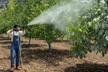
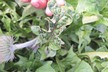
Greenhouse cucumber production often faces significant challenges from thrips (Frankliniella occidentalis) and Didymella (Didymella bryoniae). In regions adjacent to open-field crops, pest populations can become resistant to chemical controls, creating persistent management issues. As chemical interventions lose efficacy, preventive cultural practices have gained attention as a sustainable alternative to protect crop health and quality.
Implementation of preventive flower removal
At Greenhouse Organika in San Miguel de Allende, Mexico, Head Grower Ana Isabel González Borbolla and her team adapted a technique inspired by European organic growers. "We implemented a practice that involves manually removing cucumber flowers before they open, directly from the apical end of the developing fruit," Ana Isabel shares. This step disrupts the microenvironment that closed flowers provide for thrips and fungal spores, including moisture, pollen, and tender tissue that favor pest development.
"Immediately after flower removal, a light application of peracetic acid is applied to the exposed fruit tip. This sanitization step prevents the establishment of residual thrips larvae or fungal spores without applying conventional chemicals or stressing the plant." She describes the procedure as "preventive and surgical," noting that it integrates easily into regular crop walks and does not interfere with normal plant growth.
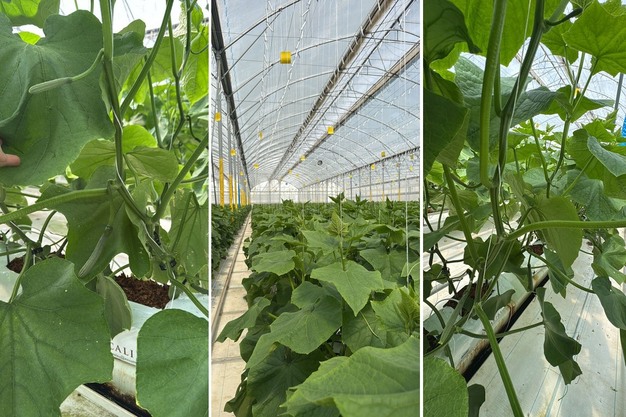 © Ana Isabel Gonzalez Borbolla
Results and performance
The implementation of this practice in the latest production cycle produced measurable outcomes. "Thrips-related damage, previously affecting up to 20% of our fruits, was almost completely eliminated, and Didymella incidence, which caused approximately 7% of commercial losses, was no longer observed in treated areas," she shares. She adds that fruit quality also improved, with greater uniformity, brightness, and shelf life, while apical tips remained clean. "Plant vigor and fruit set were unaffected, with only a slight delay in maturation requiring minor adjustments to harvest schedules."
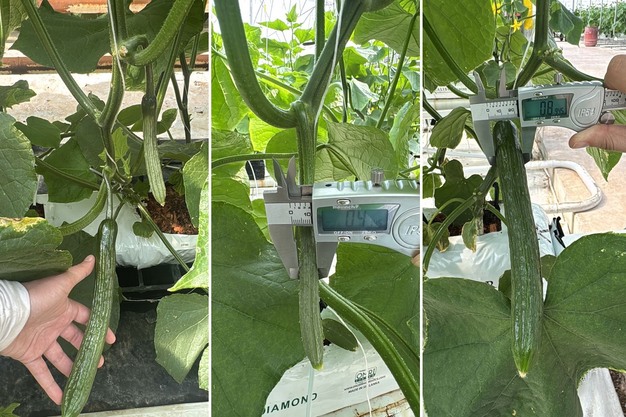 © Ana Isabel Gonzalez Borbolla
Integration into pest management
The preventive flower removal technique is now fully integrated into Greenhouse Organika's integrated pest management (IPM) program. It complements existing biological controls, including Amblyseius swirskii releases, chromatic traps, and preventive biological applications. "The key factors for successful implementation are timing and precision: flowers should be removed when the fruit is visibly developing but still closed, and the procedure should be performed manually to avoid damaging the apical tissue," Ana Isabel mentions. Follow-up peracetic acid application ensures that the area remains free from pathogens and pests.
 © Ana Isabel Gonzalez Borbolla
Implications for greenhouse management
This approach demonstrates that small, well-timed cultural interventions can deliver significant phytosanitary and economic benefits. In high-pressure environments where chemical control is less effective, preventive strategies can protect yields, reduce pest and disease incidence, and improve fruit quality without compromising plant health. She emphasizes that "prevention is the smartest form of control. It's a small detail, but it makes a huge difference in crop health."
For more information:
Ana Isabel Gonzalez Borbolla
San Miguel de Allende,
Guanajuato, Mexico
[email protected]