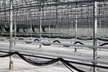
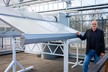
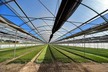
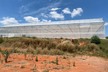
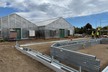
The construction of the second phase of the "Sunzha" greenhouse complex in Ingushetia, covering 22 hectares with an annual production capacity of over 15,000 tons of vegetables, is nearing completion. The facility, valued at 7.5 billion rubles (€73 million), is expected to be commissioned by the end of the year, according to the regional government.
The first 10-hectare phase of "Sunzha," capable of producing more than 5,000 tons of tomatoes annually, was launched in 2019. Initially, investors planned to complete the second phase, estimated at 6.3 billion rubles, by the end of 2022, with production expected to rise to around 22,000–23,000 tons per year. The launch was later postponed several times, first to 2023 and then to 2024. As part of the expansion, the complex also announced plans to grow Chinese cabbage in open fields.
"Sunzha" remains the only modern greenhouse complex with lighting-based cultivation technology in Ingushetia. According to Tamara Reshetnikova, CEO of Tekhnologii Rosta, most of the tomatoes grown there are sold in Moscow, where demand is stable. "Local demand is limited. Ingushetia remains one of Russia's most economically depressed regions, with low wages and high unemployment," Reshetnikova told Agroinvestor.
While the project creates new jobs and tax revenue for the region, experts note broader challenges for Russia's greenhouse sector. Investment interest has recently shifted toward the Far East, where shortages of locally grown produce are acute and largely covered by imports from China. In Siberia and the northern regions, logistical barriers, long distances, and sparse populations make greenhouse production viable only for small, locally oriented farms.
Reshetnikova also pointed out that Russia's protected agriculture sector remains underdeveloped beyond vegetables, with floriculture and berry cultivation still lagging. Around 80% of cut flowers sold in the country are imported, though some domestic projects using modern technologies are beginning to emerge.
Source: www.agroinvestor.ru