A recent analysis at Integradora Agro Parque Tanquecillos in Nuevo León, Mexico, has highlighted the key factors explaining why some greenhouses achieve almost double the yield of others, even under similar management conditions. The project brings together 100 growers cultivating saladette-type tomatoes in soil, within rustic greenhouses that lack temperature control and CO₂ enrichment.
According to Raul Bribiesca Aguilar, Director General at Agrofacto, the 2025 production cycle is closing with an average yield of 39 kg/m², with individual records ranging between 30 and 52 kg/m². "The results show that productivity differences can emerge even when general management criteria are shared," he says.
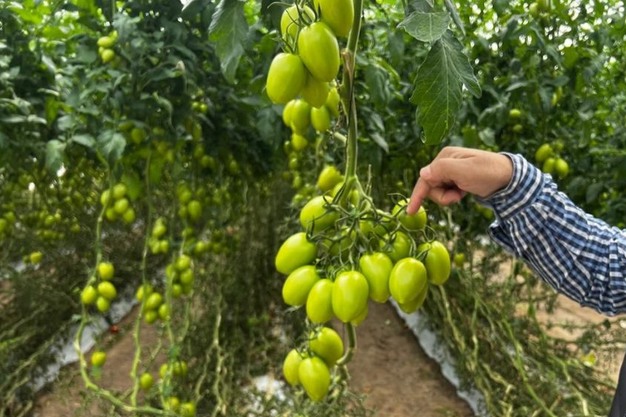 © Agrofacto
Key factors identified
The evaluation identified four main variables that influenced productivity across the different production areas. One of the most important was cultural management. Greenhouses where sprouting, leaf removal, and plant lowering were carried out more promptly and consistently showed notably higher yields. Timely operations contributed to better plant balance and more uniform fruit development.
Another determining factor was plant vigor and metabolic stability. Areas where plants maintained better physiological balance were less affected by the Tomato Brown Rugose Fruit Virus (ToBRFV), which translated into more stable production levels throughout the cycle.
The distribution of irrigation also played a crucial role. Greenhouses located closer to the irrigation head received higher fertigation flow, while those further away were undersupplied. Because irrigation scheduling was based on time rather than flow uniformity, the resulting differences in water and nutrient delivery had a measurable impact on yield.
Finally, soil structure proved to be a significant element. Soils with better physical conditions allowed for more efficient irrigation and drainage, preventing waterlogging and reducing the incidence of root diseases such as Fusarium and Verticillium. These areas showed healthier root systems and higher overall productivity.
 © Agrofacto
Corrective measures
In response, several corrective actions have been introduced. The project team is improving soil conditions through oat planting, a practice that has demonstrated high effectiveness in restoring soil structure in affected areas. In parallel, training programs are being reinforced, and ToBRFV-tolerant varieties are under evaluation to improve resilience in future cycles.
Raul notes that these adjustments are part of an ongoing effort to refine management practices and support the cooperative's long-term sustainability.
Social and economic relevance
Beyond the technical findings, Tanquecillos Park represents a significant social initiative. The project unites small producers from a marginalized area in northern Mexico, fostering cooperation and shared learning.
"This is a social project that brings together 100 growers from a marginal area in northern Mexico," he shares. "It is successfully strengthening their operations, allowing them to produce and market their crops effectively."
"It is also important to note it is possible to achieve acceptable levels of profitability with intermediate levels of technology in greenhouses. Proper management and organization can offset the limitations of simpler infrastructure."
For more information:
Agrofacto
Raul Bribiesca Aguilar, Director General
[email protected]
agrofacto.com