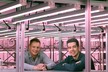
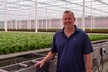
This year, Vreugdenhil Young Plants and Klugt Quality Plants made the move to LED lighting. John Potters, manager and specialist at both companies, sat down with Arno Wartewig, founder of Orance, a consultancy that specializes in LED lighting for professional horticulture, to discuss the key considerations when investing in a new LED grow light system.
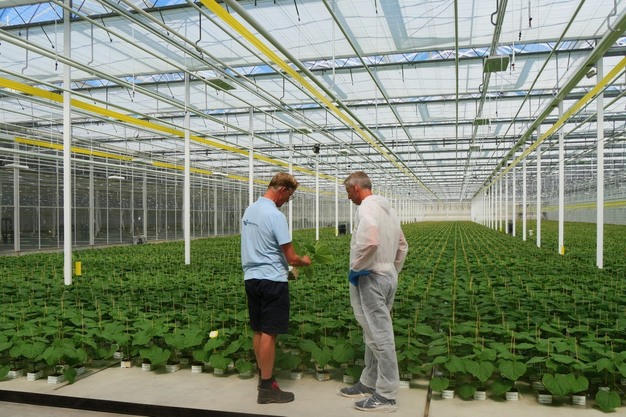
Together, Vreugdenhil and Klugt operate 60 hectares of modern greenhouses, all fully equipped with artificial lighting. "We decided to replace our HPS fixtures with LEDs for two main reasons: LEDs are twice as efficient, and we can control the light spectrum," John explains.
 © Orance BV
For their investment in four-channel LED fixtures, the companies relied on guidance from Orance Grow Light Architects. "It's a major investment, and there's a lot more to it than just picking the right fixture," says John. "You also need to think about integration with climate computers, supplier reliability for large orders, maintenance, and after-sales service. Having a partner like Orance by your side throughout the process gives a lot of confidence."
No such thing as one-size-fits-all
"Orance helps propagators translate their goals into a clear project definition that covers purchasing, supplier selection, installation, maintenance, and warranties," Arno adds. For propagation companies like Vreugdenhil and Klugt, the challenge is to find a lighting setup that offers enough flexibility while allowing crops to develop optimally according to each customer's needs.
"Not all greenhouses are the same, so choosing the right fixture is always a challenge," says John. "There's no one-size-fits-all solution."
Flexibility was a key factor in their decision-making process. They need to be able to grow different crops in each greenhouse section throughout the year. "With HPS, things were simple, on or off, that was it. Four-channel fixtures are relatively new, and that technology comes with its own risks," Arno explains. These risks can be technical or financial, but there's also the risk that the system won't be used to its full potential.
One of Arno's most important pieces of advice: "Start with a clear project definition and let that guide every decision you make. The technology should serve the grower's needs, not the other way around."
For more information:
Orance
[email protected]
www.orance.nl