The 11th edition of the Indian Horticulture Congress and International Meet was inaugurated on Thursday at the University of Agricultural Sciences at GKVK. The four-day event wrapped up on Sunday, November 9.
It was inaugurated by Padma Bhushan awardee Dr RS Paroda, former Secretary, Department of Agricultural Research and Education (DARE) and Director General at the Indian Council of Agricultural Research (ICAR), and Dr Mangi Lal Jat, Secretary, DARE and Director General, ICAR.
Speaking at the event, Dr Jat highlighted the three mandates set by the Prime Minister for the agriculture sector — to focus on biofortified crops, harnessing biodiversity and use of bio-based inputs for soil health management, and emphasised that traditional crops should be explored for achieving nutritional security and also for climate resilience. Dr Paroda highlighted the role of the horticulture sector in achieving national security, and commended the sector for surpassing cereal production.
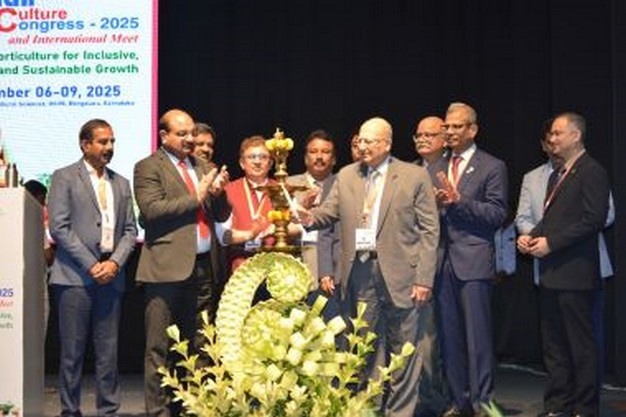 © ICAR-Indian Institute of Horticulture Research, Bengaluru
On Thursday, various presentations on the topic Innovations in Seed Multiplication, Propagation and Nursery Techniques, Precision Horticulture and New Age Farming Technologies, and Precision Horticulture and New Age Farming Technologies were also conducted.
Dr. Jat also stated that the Government of India has recently initiated several new programmes, including the Clean Plant Material Mission, Mission on High-Yielding Seeds, and the Establishment of Alternative Gene Banks to safeguard the nation's genetic diversity and enhance preparedness against potential future challenges.
In his inaugural address, Chief Guest Dr. R. S. Paroda, Former Director General, ICAR, and Padma Bhushan awardee, highlighted the timeliness of the congress in light of India's significant growth in horticultural production. He observed that this remarkable progress has been driven by the collective efforts of farmers, scientists, policymakers, and other stakeholders. Dr. Paroda emphasized that the horticulture sector plays a pivotal role in achieving nutritional security, noting that over the past two decades, per capita fruit and vegetable consumption has more than doubled from 4 kg to 9 kg per month while horticultural production has now surpassed cereal production. He underscored the need for strong policy support, human resource development, research commercialization, post-harvest loss reduction, value addition, and a renewed focus on exports, especially of spices and high-value crops.
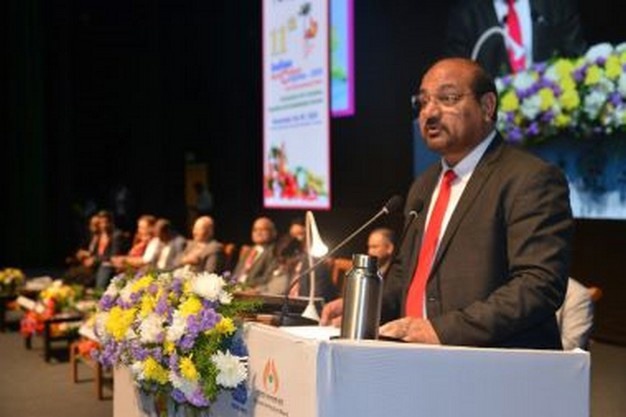 © ICAR-Indian Institute of Horticulture Research, Bengaluru
Dr. S. K. Singh, President, IAHS and Deputy Director General (Horticultural Science), ICAR, provided an overview of the four-day conference and highlighted the contributions of the Indian Academy of Horticultural Sciences to the development of India's horticulture sector.
During the occasion, several awards and recognitions were conferred for outstanding contributions to horticultural research and development.
The IAHS Fellowship was awarded to Padma Shri Shri Amal Mahaling Nayak of Dakshina Kannada, Karnataka, who has developed an organic agricultural farm with a zero-energy micro-irrigation system.
The IAHS Corporate Fellowship was conferred on M/s Jain Irrigation Systems.
The IAHS Dr. K. L. Chadha Memorial Award was presented to Dr. Narayana Chawda for excellence in horticultural research and development.
The Shivashakthi Lifetime Achievement Award was presented to Dr. V. A. Parthasarathi and Dr. W. S. Dhillon for their distinguished contributions to horticultural science.
On the sidelines of the event, two new rose and china aster varieties Arka Veeraraghavan and Arka Arina were released. A Memorandum of Understanding (MoU) was also signed between ICAR-IIHR and the Government of Uttar Pradesh for technical inputs, capacity-building programmes, and technology transfer on Kamalam (Dragon Fruit) cultivation.
Source: ICAR