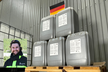
The World Food Day event hosted by the Netherlands Food Partnership (NFP) gathered hundreds of experts, entrepreneurs, and policymakers under the theme "Partnerships that Feed the Future." Among its side sessions was From Seed to System Change: the official launch of Growpact Global, a partnership founded by Viscon, Truvalu, Greenspan, and Growpact Kitale.
The session was designed to do more than just present an idea. It set out to show proof of concept, highlight scaling opportunities, and engage investors and experts in a lively, solutions-driven discussion.
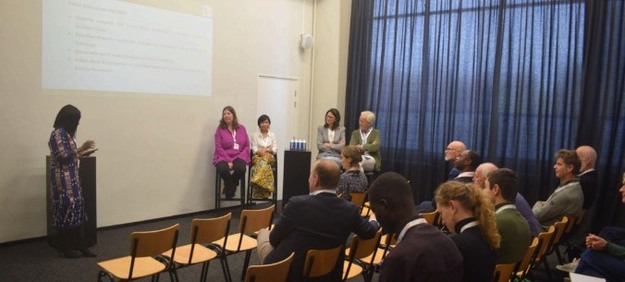
Led by Kees Veldhuijzen, director of Growpact Global, the session combined a visionary presentation, a multi-stakeholder panel, and an open dialogue with the audience. Together, participants explored how locally co-owned seedling nurseries can help transform the way Africa produces vegetables.
A vision rooted in partnership
Opening the session, Kees began with a simple yet urgent message: "The world needs more and better vegetables to feed its growing population. But without high-quality seedlings, farmers can't reach the yields we need."
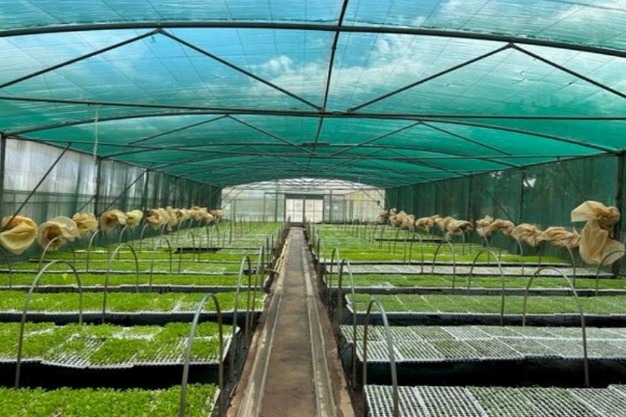
Across Africa, millions of smallholder farmers struggle with inconsistent access to quality seedlings — a missing link that constrains productivity and income. Growpact Global seeks to bridge that gap through a co-entrepreneurial model that links Dutch horticultural innovation, African entrepreneurship, and international investors.
The model's goal is to build a network of locally owned and operated nurseries — businesses that deliver professionally raised seedlings at scale, while creating jobs and strengthening local food systems.
 © Growpact Global
"We're moving from seed to system change," Kees explained. "Growpact Global is about building local businesses that can deliver quality and consistency to farmers."
This collaborative approach, he added, builds directly on a proven concept: the Growpact Kitale Nursery in Kenya, where Dutch technology has already been adapted to local realities, demonstrating both technical and financial viability.
The panel: Insights from industry leaders
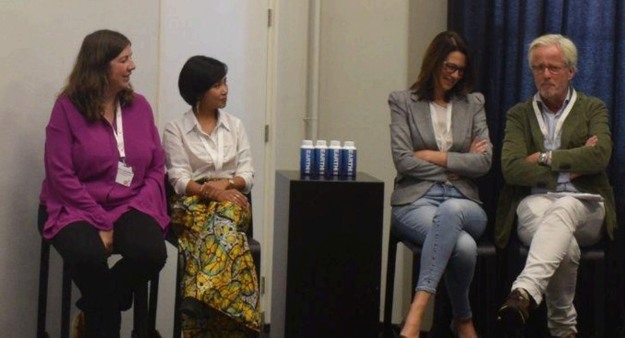
To explore Growpact Global's potential from multiple perspectives, four experts from the Dutch agri-food ecosystem joined Kees on stage for a panel discussion.
 © Growpact Global
Charlotte Langerak – CEO, Viscon Plant Technology
As one of Growpact Global's founding partners, Charlotte highlighted how her company's horticultural automation technologies have provided inspiration and advantage for local applications.
"When we first visited Kenya, we saw an orphanage trying to grow its own food with the most basic tools," she recalled. "That moment showed us that Dutch technology could be 'smartified' — simplified and adapted — to truly fit African contexts, and quickly improve quality by proven accessible technologies."
Charlotte emphasized that much of the innovation in Europe remains out of reach for African entrepreneurs, even though the potential is immense.
"There's a huge opportunity for technology transfer that's practical, affordable, and co-developed with local partners."
Diep Phan – Researcher & Trainer, Wageningen University
Drawing on years of field experience, Diep underlined that high-quality planting material is often overlooked but essential for food security.
"I've trained countless farmers across tropical regions," she said. "Every successful harvest begins with a healthy seedling. It's the foundation of the entire production system."
According to her, professional nurseries don't just benefit individual farmers; they strengthen the seed sector, stabilize yields, and improve resilience to pests and climate shocks.
Manou Aelmans – Business Developer, Invest International
Turning to finance, Manou discussed both the risks and rewards of investing in early-stage agribusiness ventures.
 © Growpact Global
"There's always risk in agriculture," she noted. "Returns can take time, but the impact is lasting. The challenge is building a solid business model supported by credible data."
She outlined how blended finance — combining public, donor, and private investment — could provide the right capital mix to scale Growpact Global sustainably.
"Once the model matures, Invest International and similar institutions could help unlock investment to reach new countries."
Rutger Groot – Board Member, East-West Seed & Knowledge Transfer Foundation
As a veteran of the seed industry, Rutger offered both encouragement and caution.
"Yes, the market is moving toward readiness for seedling nurseries at scale, especially in regions such as Central and Western Kenya, northern Tanzania, and southwest Nigeria, where vegetable value chains are already well established. The challenge now is to extend this access to smallholders in more remote areas."
He stressed the importance of collaboration between seed companies and nurseries, while preserving farmers' freedom of choice.
"Collaboration between seed companies and independent nursery operators will be key to maintaining transparency, trust, and farmer choice."
Engaging the audience: From curiosity to commitment
The audience brought energy and fresh questions to the conversation, reflecting diverse interests — from gender inclusion to business model design.
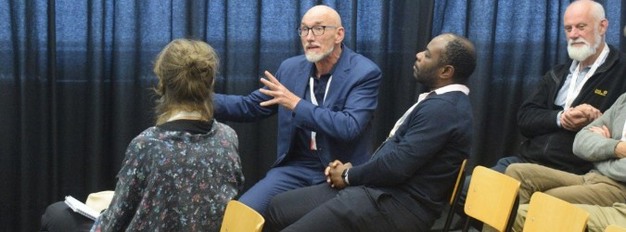 © Growpact Global
Kees affirmed Growpact Global's commitment to women's participation: "Women are the backbone of the planting-material industry. The nursery business offers great opportunities for women entrepreneurs, and we integrate this focus as part of our SDG alignment."
Charlotte addressed a question on whether the model could support urban agriculture: "Urban farming is important now, especially in African cities, but it's not the long-term scalable solution for food security. Our focus remains on efficient regional nurseries that supply both peri-urban and rural areas."
Asked about the type of entrepreneurs sought, Kees replied: "We look for people with skin in the game — innovative, practical, and ready to train farmers. Not just managers, but true doers."
Responding to interest in broader applications, Kees added: "We start with vegetables, but the same model can be adapted for roots and tubers like potato, yam, and cassava, and even for tree crops like mango, cashew, or avocado."
From concept to collaboration
As the session drew to a close, Kees summarized the key takeaway: "A proof of concept exists, the technology adapts, the seed sector sees value, investors see potential, and the market is ready."
"Join us. Together, we can grow the next generation of seedling entrepreneurs and move from seed to system change," he closed with a call to action.
A moment of momentum
The discussion at World Food Day demonstrated that the future of African vegetable production depends not only on better seeds but also on the systems that deliver them. Growpact Global's cooperative model stands out as a bridge between innovation and inclusion, ensuring that technology and finance work hand in hand with local entrepreneurship.
For more information:
Growpact Global
Email: [email protected]
https://growpactglobal.com/