Peru is strengthening its position in the global processed capsicum market, with canned piquillo peppers as its main expansion product.
In 2024, worldwide trade in sweet and hot peppers totaled $7.5 billion, continuing its upward trend. Mexico, Spain, the Netherlands, Canada, and the United States together accounted for 75% of total exports, driven by large-scale agro-industrial operations.
In 2025, climate volatility influenced market dynamics. Spain, a key supplier, faced a tough season, especially in Almeria, due to the Thrips parvispinus pest and weather events that lowered high-quality yields. This shortage pushed prices up and created a supply gap in Germany and France, thereby increasing demand for alternatives such as Morocco and Israel.
In North America, Mexican production dipped slightly amid water uncertainty and potential new U.S. tariffs, while Canadian acreage decreased because of Fusarium. Additionally, an early frost affected Mexican crops, creating an opportunity that Peru seized during the northern spring.
Main exporters are adopting different strategies. Mexico focuses on volume and low labor costs to supply the U.S. market. Spain combines advanced greenhouse technology with the artisanal method of the Piquillo pepper from Lodosa, which is protected by a designation of origin that requires direct-fire roasting and manual peeling. Though this process raises costs, it maintains the product's brand value and authenticity. The Netherlands emphasizes logistics and re-export, supported by high-standard environmental certifications.
In Peru, piquillo production involves both family farms and large-scale agro-industry, with Lambayeque the top national producer.
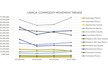
The 2025 data shows the sector rebounding after a difficult 2024. By September, piquillo exports totaled 25,866 tons, worth $58 million FOB, representing a 42% increase in volume and a 32% rise in value compared to the previous year. However, the average price fell 6% to $2.24 per kilogram due to strong international competition. Spain remained the primary destination, accounting for about 83% to 84% of shipments in the first half of the year.
Going forward, the sector aims to reduce dependence on the Spanish market by expanding into promising destinations such as Germany, the United States, and Italy. A greater focus on sustainability certifications and organic production is also expected, with the goal of competing on value rather than price.
The main challenge is to improve safety and phytosanitary compliance, ensuring minimal residues and full traceability. Effective coordination among Senasa, agro-exporters, and producers will be essential to establish the Peruvian piquillo as a high-quality, sustainable product with a unique identity in global markets.
Source: freshfruit.pe