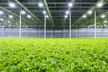
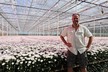
At the United Nations Economic Commission for Europe (UNECE) meeting in Geneva, Swedish vertical farming company Ljusgarda presented new research demonstrating how artificial intelligence can make indoor cultivation more adaptive and precise. The project, developed with support from Vinnova, Sweden's Innovation Agency, achieved a 34 percent yield increase by linking plant-physiology data to automated environmental control.
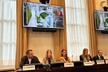
The 17th session of UNECE's Team of Specialists on Innovation and Competitiveness Policies brought together policymakers, researchers, and international organizations to explore how artificial intelligence and transformative innovation can support sustainable and inclusive development. Ljusgarda was the only company represented on the panel, sharing Sweden's private-sector perspective on how data-driven cultivation can support sustainability.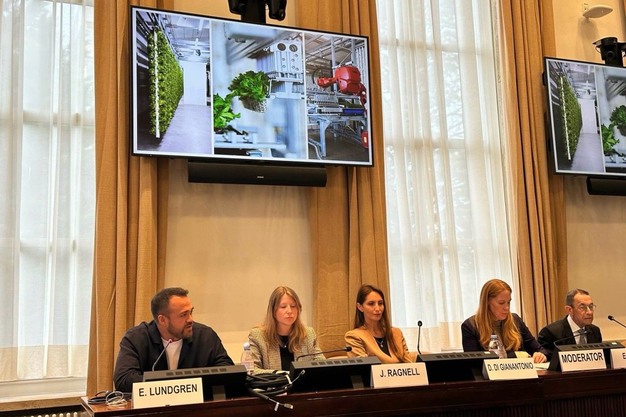 © Ljusgarda
From weeks to seconds
Erik Lundgren, Founder and Chief Research Officer at Ljusgarda, says the company's project marks a fundamental shift in how plant data is used. "In the project, we were able to shorten the data feedback loop from weeks to seconds. We have always had high quality and quantity of data, but it could mainly be used to make decisions after a growth cycle. Now we interpret the data in real time, feed it to our algorithm, and make intelligent adjustments automatically, without human interference."
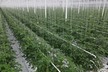
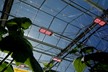
The system uses advanced sensors to monitor plant physiology, detecting subtle stress responses that previously went unnoticed. These inputs allow the AI model to adjust irrigation and other parameters autonomously, creating a closed feedback loop between the plant and its environment.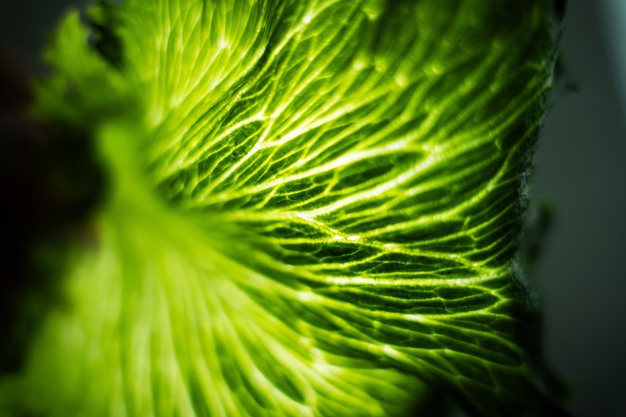 © Ljusgarda
Quantifying plant intelligence
The project achieved the result by controlling a single parameter: irrigation. Lundgren says the result highlights how meaningful progress can come from small, targeted refinements when guided by real-time plant feedback.
"The yield increase was achieved by controlling irrigation alone," Lundgren explains. "Most of the project period was spent understanding and interpreting the data. It's still in R&D, but the mechanisms are in place to integrate it into a commercial setting. We believe in short iterations and quick development, simplifying as much as possible to stay focused on what truly makes a difference."
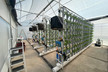
Ljusgarda's system was designed with scalability in mind. "If you prove that something works but it cannot be applied to current industry standards, it becomes an interesting discovery, not a solution," Lundgren says. "We worked with sensors ready to scale and built the algorithm so it can communicate with existing control systems." © Ljusgarda
Erik Lundgren
Decoding the language of plants
Lundgren believes the next step toward intelligent cultivation lies in decoding the unique "signature" of each plant species. "It could most likely be applied to all plants with tissue that the sensor can attach to. Even within the same family, say two different lettuces, the signature we look for is not the same. You need the right process and technology to identify how each plant experiences stress. Once you decode that signature, the AI can respond accordingly."
The team plans to expand the system using reinforcement learning, a form of adaptive AI that continuously optimizes parameters throughout the growth cycle based on plant feedback.
Policy, innovation, and pace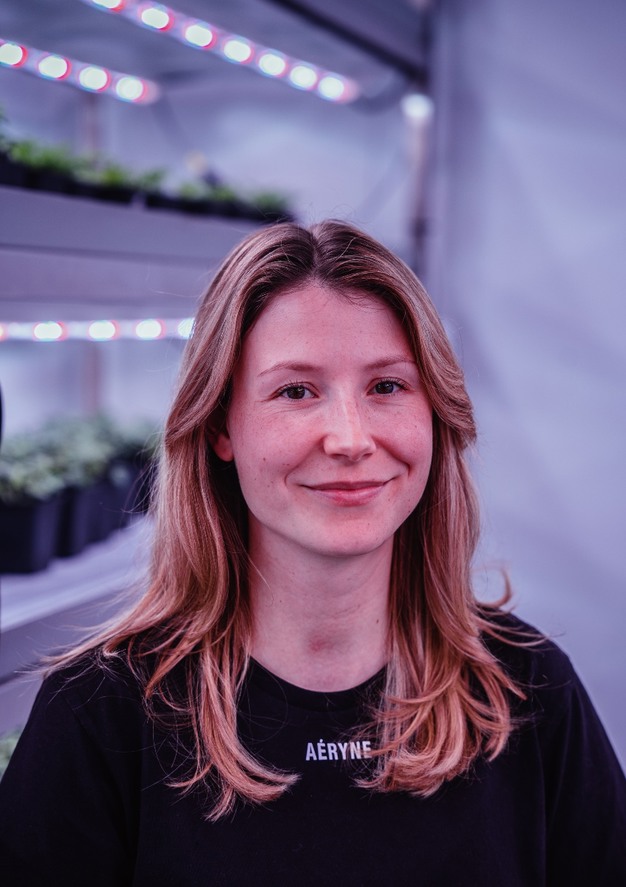 © LjusgardaDuring the UNECE session, Ljusgarda shared both scientific insights and reflections on innovation policy. Lundgren says supportive frameworks are essential for enabling companies to take bold steps in emerging fields like agricultural AI.
"We emphasized the need for shorter, less complex grant structures," Lundgren says. "Companies like ours should be able to test bold, innovative ideas quickly. It speeds up insights and lowers risk enough to make informed strategic decisions."
Julia Ragnell, Business Developer at Ljusgarda, adds that the event was an opportunity to highlight how innovation works in practice. "For us, successful innovation is about speed, learning, and the courage to experiment, supported by structures that allow exactly that," she says. Ragnell notes that open collaboration and rapid learning cycles are essential to turning ideas into viable systems, especially in emerging fields such as agricultural AI.
Julia Ragnell (right)
Building ecosystems of knowledge
Lundgren says the company's work aims to connect plant science, technology, and sustainability in ways that reach beyond food production. "Being invited to share our results at the UN highlights the potential of our work," he says. "We are building ecosystems where technology and biology work in harmony. Systems that not only grow food, but may also contribute to areas like health and nutrition in the future. When we truly understand the potential of plants, entirely new opportunities emerge."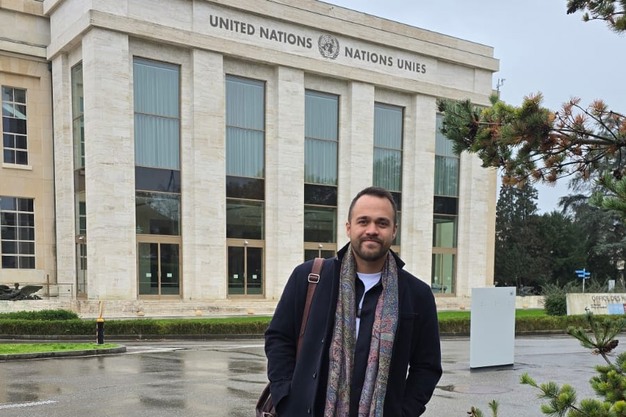 © Ljusgarda
For more information:
Ljusgarda
Erik Lundgren, Founder & Chief Research Officer
[email protected]
www.ljusgarda.se