In the search for a one hundred percent biological, biodegradable, and renewable material that can replace peat or coco coir as an agricultural substrate, without the need to cultivate or extract it, and that at the same time helps municipalities deal with waste management, Posidonia oceanica may be part of the answer.
Every year, thousands of tons of dead Posidonia oceanica leaves wash up on Mediterranean beaches. They play an important ecological role and protect shorelines from erosion, but they also create a headache for coastal municipalities, which must remove them at high cost. For Jose Luis Espinosa, CEO and founder of Posigreen, those piles are not waste but an opportunity. "This natural waste can become a high value agricultural raw material."
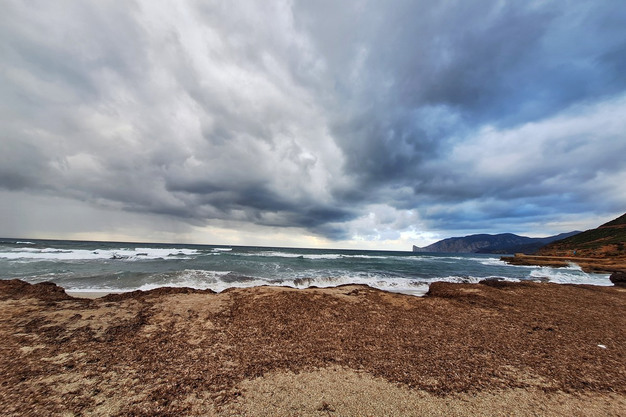 Posidonia accumulations
From the seabed to the nursery
Posigreen started in 2018, when Espinosa, a law graduate with experience in plant biotechnology, began running a company focused on in vitro propagation of woody plant species.
"I came back from Germany and discovered a fascinating sector. In the lab I noticed that peat and coco coir substrates looked physically similar to the marine leaf piles I had seen all my life in Santa Pola, and I started wondering if they could be used for the same purpose."
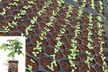
The first tests using marine biomass as a substrate, carried out with walnut plants, delivered surprising results. "We got spectacular root development, even better than with standard substrates"
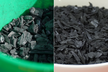
After several years of trials, Espinosa established Posigreen S L and built a pilot plant in Santa Pola capable of processing between 1.5 and 3 cubic meters per hour. There, he developed a patented method to stabilize pH and electrical conductivity, eliminate excess salts, and fine tune the physical properties of the material.
"The challenge was balancing a naturally alkaline substrate for a market that is used to acidic products. But we did it. The result is a chemically stable substrate, very porous, with strong water retention capacity and antifungal and antibacterial properties."
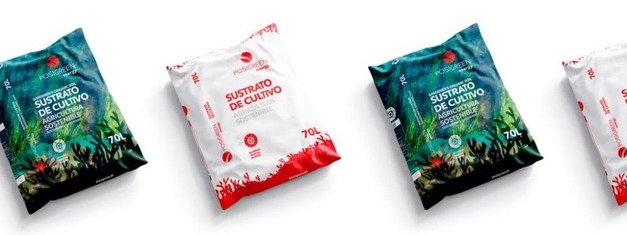 © Posigreen
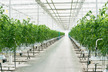
The product is sold in 10 liter and 70 liter bags, as well as one cubic meter big bags. It can be used alone, mixed with other materials, or as an organic amendment. The University of Alicante recently published a study showing that posidonia based substrates improve the organoleptic quality of tomatoes, reinforcing the agronomic potential of this material.
A sustainable alternative
Posigreen uses dead marine biomass. Primarily fallen posidonia leaves from late summer and early autumn, collected according to circular economy principles.
"We only use leaves that arrive naturally on the coast. In this way we help municipalities, which spend large amounts every year removing these accumulations," says Espinosa. "The resulting substrate adds lignocellulosic organic carbon to the soil, improving soil structure and storing stable carbon for years without emitting gases or attracting bacteria. Our product reduces the carbon footprint of crops and contributes to regenerating agricultural soil with a highly stable form of carbon."
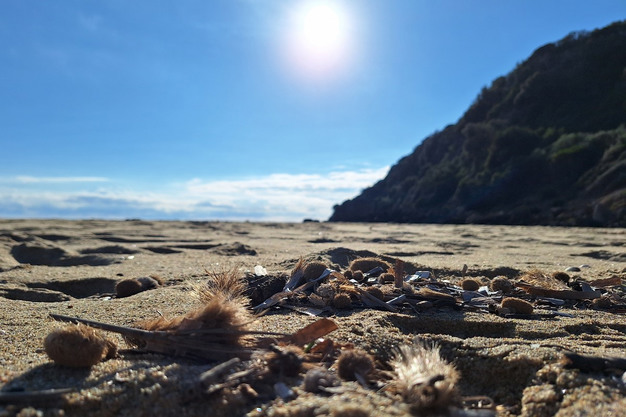 Pictured, Posidonia fibre balls on the Mediterranean coastline
Looking for investors to scale up
Despite the technical success of the project, Espinosa admits that the road has not been easy. "It has been a costly process, with no previous references or literature. In theory everyone talks about sustainability, ecological transition, and European funds, but in reality a micro SME has to advance hundreds of thousands of euros to access those grants. For a family business, that is a wall that is almost impossible to climb."
Posigreen already has a customer base that includes nurseries, growers, and research centers. "We have proven the material works, that it is stable and competitive. But to move from a pilot plant to industrial scale we need financial or industrial partners that truly believe in circular economy projects that can transform the Mediterranean. That is what we are focusing on right now."
"With investment to scale our production, and by forming agreements with municipalities and coastal waste treatment facilities, we could create local jobs, reduce waste, and offer growers a viable alternative".
"The path is mapped out. Now we just need the push," says Espinosa.
 For more information:
Posigreen
Tel.: +34 865 615 309 // +34 629 537 314
[email protected]
https://posigreen.es