The QUAD countries (the United States, Australia, Japan, and India) launched the advancing innovations for empowering next-gen agriculture (AI-ENGAGE) program to encourage collaboration among researchers of these countries to make agriculture more resilient.
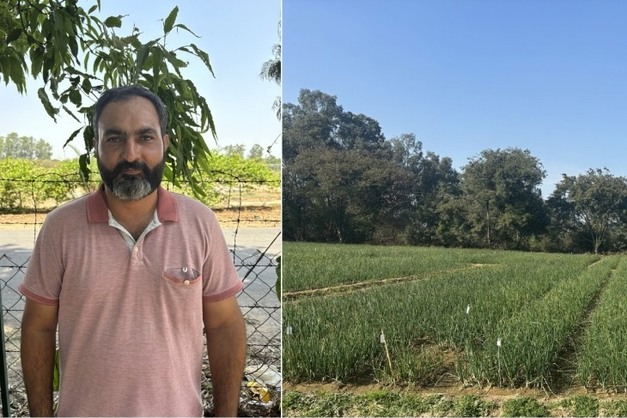
Dr Jiffinvir Singh Khosa, Principal Investigator (PI), Punjab Agricultural University (PAU); and Dr Dhritiman Saha, Co-PI, CIPHET, Ludhiana, from the Indian side secured a funding of Rs 2.51 crore for a proposal entitled "Image-based phenotyping and multi-omic prediction schemes for horticultural crop improvement" in collaboration with researchers from Cornell University, USA; University of Tokyo, Japan; University of Adelaide, Australia, and University of Western Australia.
 © Punjab Agricultural University
This project focused on developing image-based phenotyping tools and multi-omics datasets for integrating them into predictive breeding schemes for three of the most globally important horticultural crops: tomato, onion, and strawberry. The outcome of this research will help breeders to achieve high genetic gain in their programs to develop climate-resilient cultivars with high yield and improved quality. This grant will foster international research partnerships and build capacity for information sharing through collaboration and joint training opportunities.
Dr Satbir Singh Gosal, Vice-Chancellor, PAU, congratulated the team for securing funding and developing collaborations with global institutes.
Dr Nachiket Kotwaliwale, Director of ICAR-CIPHET, highly appreciated the collaborative efforts of PAU and CIPHET scientists to utilize novel tools in horticultural research.
Dr Ajmer Singh Dhatt, Director of Research, and Dr Sat Pal Sharma, Head, Department of Vegetable Science, congratulated the scientists for strengthening AI-based research in PAU and encouraged the team to develop breeder friendly pipelines to accelerate breeding programs.
Source: Punjab Agricultural University