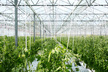
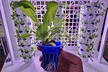
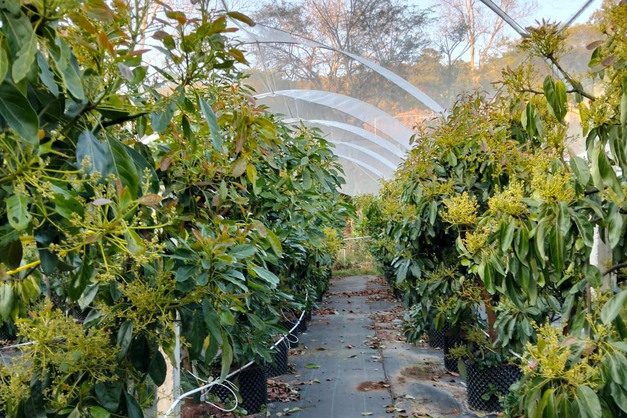
Hydroponics, long established in vegetables and berries, is now pushing into new territory, including avocado cultivation. "Some years ago, talking about growing avocados in pots sounded almost crazy, but today we already have very promising results and a solid technical foundation to think about scaling it," says Luis Enrique Ortiz. He leads this transition by introducing digital tools that allow growers to control every variable of the crop, from irrigation and nutrition to plant health, all through Hydrobit.
 © Hydrobit
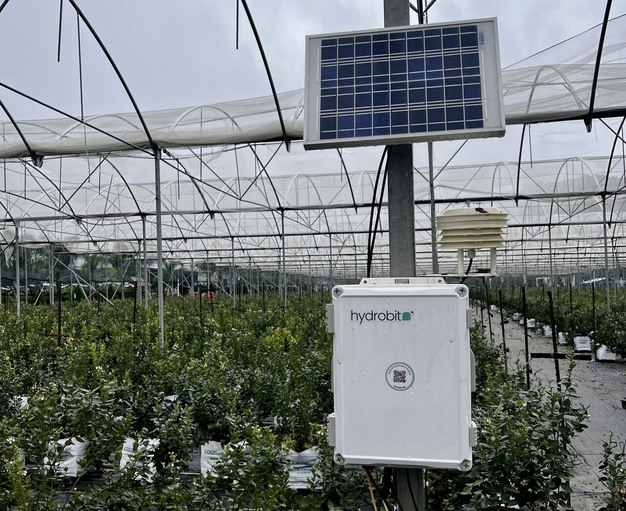
"In Mexico, hydroponic production has grown steadily in intensive crops such as strawberry, blueberry and raspberry, where precision in irrigation and nutrition is a critical competitive factor. Hydrobit, a modular platform that integrates sensors, data management and agronomic analysis, has become a key tool in this transition."
"With the platform, growers can control electrical conductivity, pH and substrate moisture in real time, and record plant health issues with geolocation. Decisions are based on data, not assumptions," Ortiz explains. "In berries, digitalization has helped reduce costs by up to 12 percent and increase productivity by around 5 percent. Besides precision, growers gain additional advantages."
 © Hydrobit
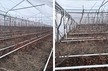
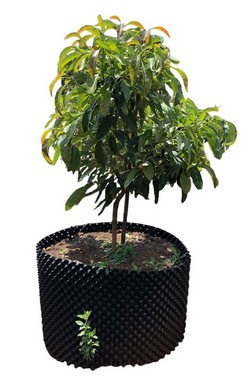
The next step in this technological evolution is hydroponic avocado cultivation, a practice that is advancing in Mexico with promising results. Ortiz, whose family has grown avocados for three generations, says that the key to success is the substrate. "We are working with volcanic materials such as tezontle, a very stable gravel that is abundant in Mexico. It is inert, inexpensive and can be reused for years compared to coconut fiber, which degrades and compacts over time, limiting system lifespan."
"Early Hydrobit trials in avocado have shown yields close to 8 metric tons per hectare in the first year and more than 25 tons in the second, figures that far exceed what is obtained in traditional soil during the same periods."
Beyond yield, the model offers environmental and sustainability advantages by reducing water use, preventing soil erosion and enabling production in already degraded or clay heavy land.
A soil free agriculture that focuses on precision and sustainability
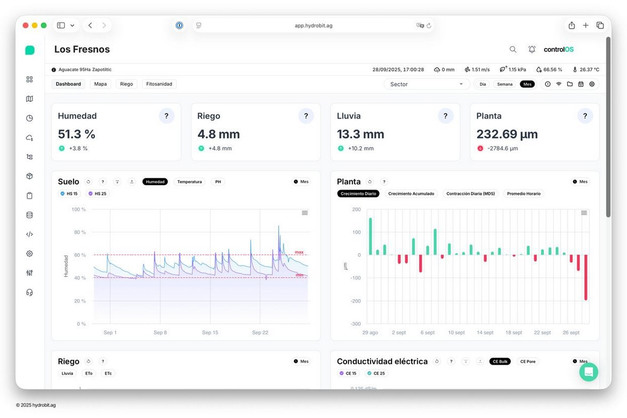
Hydrobit has developed a digital ecosystem divided into interconnected modules that cover everything from field sensors to harvest control and plant health management.
 © Hydrobit
- Sensor Module: collects information on moisture, temperature, pH, electrical conductivity and solar radiation, both in the substrate and irrigation lines, integrating everything into a single dashboard.
- Plant Health Module: through a mobile app, field staff can geolocate pests and diseases. The system consolidates the information into a Business Intelligence platform to visualize issues by sector and support more precise decisions.
in a Business Intelligence system, making it possible to visualise incidents by sector and make more precise management decisions. - Nutrition and Irrigation Module: controls critical fertigation parameters and sends alerts when any value leaves the desired range.
- Harvest Module: mainly used in berry production, it records productivity per worker in real time and calculates payroll automatically.
 © Hydrobit
"This allows the producer to set critical thresholds and receive alerts whenever something falls outside optimal parameters. In hydroponics there is no room for mistakes. A single week with poor irrigation can affect the entire orchard. This is why precision agriculture is indispensable," says Ortiz.
Just like digitalization, soil free cultivation is also reshaping where production can happen. "This model allows growers to produce closer to the consumer. There is no need for soil with very specific characteristics. You only need a good substrate and a precision strategy managed through tools like Hydrobit."
According to Ortiz, the trend is clear. "Mexico is moving toward soil free and digital agriculture. And in unexpected sectors such as avocado, we may soon see interesting expansion."
 © HydrobitFor more information:
Hydrobit
Valparaiso #2564
Guadalajara, Jalisco
[email protected]
www.hydrobit.ag/