"REGACE fits perfectly into Greece's current agricultural transformation," Andreas Lypas says, Co-Founder of grower consultancy company, Fertile Land. "Over the last five years, we've seen a clear move toward high-tech greenhouse infrastructure and data-driven crop management. REGACE adds the energy intelligence layer that Greece urgently needs."
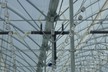
By integrating adaptive photovoltaic (PV) shading, CO₂ enrichment, and real-time microclimate control, REGACE transforms conventional greenhouses into intelligent, self-regulating ecosystems. These technologies align closely with the solutions Fertile Land already deploys: precision fertigation, substrate monitoring, and digital crop steering, across its client network.
 © Fertile Land
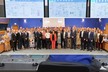
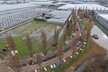
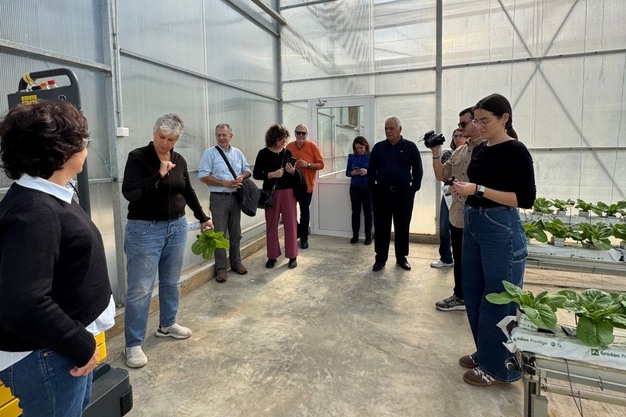
The 2nd World Café at the University of Thessaly, within the framework of the REGACE project
Integrating the systems
"We're most excited by how energy, light, and plant health can be managed as a single system. REGACE allows dynamic shading to respond to real-time metrics like VPD, radiation, or CO₂ levels to maintain optimal photosynthetic conditions per mole of light."
According to him, this means better summer yields, reduced cooling costs, and more stable fruiting cycles, benefits especially critical for Greek producers competing on export markets.
Making agrivoltaics feasible
Despite the high-tech appeal, Andreas insists REGACE is within reach for small-to-medium farms, if approached correctly. "It's feasible, but only through modularity and service-based support," he notes. Fertile Land designs scalable retrofit packages: PV frames, fertigation loops, and CO₂ lines, that growers can integrate without overhauling entire operations.
Training plays a key role: "We run field workshops and digital dashboards where growers see real-time energy and plant data. When they witness improved canopy temperature or reduced crop stress, adoption follows naturally."
 © Andreas Lypas
Overcoming barriers technically and financially
The biggest hurdles, according to Andreas, are not just financial, but also operational and educational. "Even when capital is available, many greenhouses still lack proper sensor calibration, data interpretation, or protocols for real-time crop steering."
To close this gap, Fertile Land offers weekly site visits, IoT-based monitoring, and crop steering reports to guide irrigation, pruning, and climate decisions. As for financing, he highlights the need for stronger institutional support: "Greek banks are only beginning to view agritech as infrastructure. We're developing technical guides that show the ROI including energy savings, yield stability, and lower carbon footprints, so projects like REGACE become bankable."
Technology integration ready and waiting
He shares that many of Fertile Land's current projects are already equipped for REGACE-style upgrades. "Several of our greenhouses use CO₂ enrichment systems managed through Hoogendoorn iSii or Priva Connect for example. PV shading could be linked to the same climate computers to optimize light and CO₂ simultaneously."
He points out that in summer months, when photosynthetically active radiation (PAR) exceeds 950 µmol·m⁻²·s⁻¹, dynamic shading could reduce canopy temperatures by 3–4°C, significantly reducing water use and plant stress.
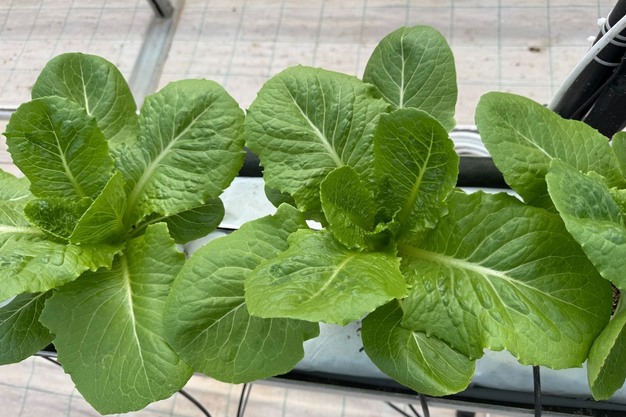
According to Andreas, strawberries and lettuce are prime beneficiaries. "Strawberries suffer from summer heat, leading to flower abortion and misshapen fruit. And lettuce needs uniform light to avoid bolting. REGACE helps maintain the right DLI (Daily Light Integral) and canopy conditions."
Unlocking public funding and private investment
Andreas is optimistic about REGACE's scalability through national and EU funding streams. "The €600 million from CAP 2023–2027 and RRF programs can support technologies like REGACE that combine renewables, smart farming, and digital monitoring."
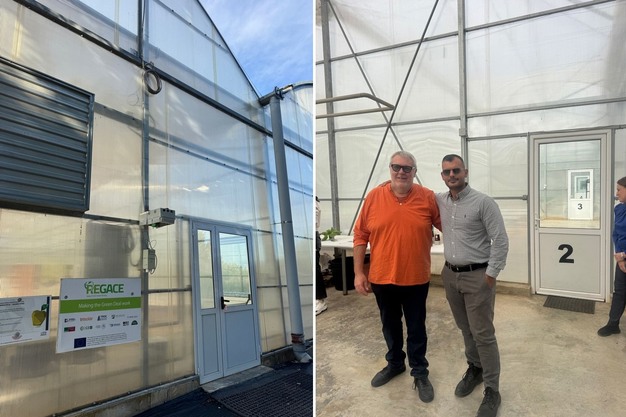
Fertile Land helps investors navigate this landscape by preparing CAPEX-OPEX models, grant applications, and feasibility studies. "We already embed REGACE components into funding dossiers," he says, "and we're designing a hybrid agrivoltaic complex for strawberries and lettuce to showcase the concept to institutional investors."
 © Andreas Lypas
"Training is essential for long-term adoption"
Andreas notes that without trained operators and data-competent agronomists, even the best technology will underperform. Fertile Land proposes an "Agrivoltaic Academy" model in collaboration with universities and municipalities. "We already conduct weekly crop walks and sensor calibration sessions. These could expand to include energy management modules, turning greenhouses into living labs for growers and students alike."
The company is already working with institutions like the University of Thessaly to develop internships, research trials, and joint training programs. "REGACE could become a central demonstration platform for this academic–industry partnership," he adds.
The appetite for innovation is not limited to investors. "We're seeing a new wave of young agronomists and engineers, many trained abroad, returning to agriculture. They're fluent in automation, data analytics, and ESG metrics. This human capital is the most promising driver of change."
Environmental benefits
REGACE also presents a compelling environmental case. "We reuse existing greenhouse structures which means no additional land, lower embodied carbon, and more efficient water and energy use per kilogram of produce," Andreas elaborates. "For a country like Greece, where land and water are under pressure, this approach is strategically essential."
From pilot to scale in measured ways
He advises growers to begin with diagnostics. "Measure your energy usage, humidity, solar load. Start with a small pilot like 0.5 to 1 hectare and track clear KPIs. With baseline data, scaling becomes logical, not risky."
And when scaling, integration is key. "Don't just buy panels. Buy systems with after-sales support, data dashboards, and agronomic guidance. That's what Fertile Land delivers."

For more information:
Fertile Land Ltd
Andreas Lypas, founder
+44(0)7438194307
71-75 Shelton Street, London
[email protected]
[email protected]