The green lettuce aphid, Nasonovia ribisnigri, continues to challenge European leafy vegetable growers. In response, Dutch breeding company Enza Zaden has developed new iceberg lettuce varieties that include intermediate resistance to the Nr:1 biotype, alongside full Bremia resistance (Bl:29–41) and high resistance to Nr:0. Larger seed volumes are expected to be available from mid-2026, supporting commercial sowing from June onwards.
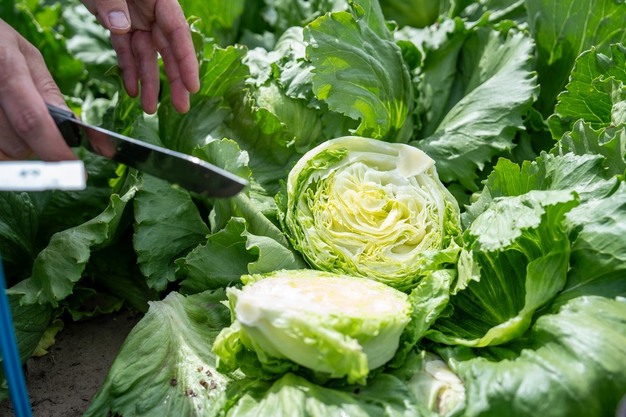 © Enza Zaden
Sales Manager Leafy Benelux and Nordics Sven Paauwe and Product Manager Iceberg Europe Paul Huijs discussed the development and agronomic background of these new varieties. According to Huijs, Nasonovia ribisnigri has two primary biotypes — Nr:0 and Nr:1. The original Nr:0 type was manageable through genetic resistance, but the emergence of Nr:1 in 2007 allowed the pest to overcome existing resistance mechanisms. Both biotypes are now widespread in European lettuce cultivation.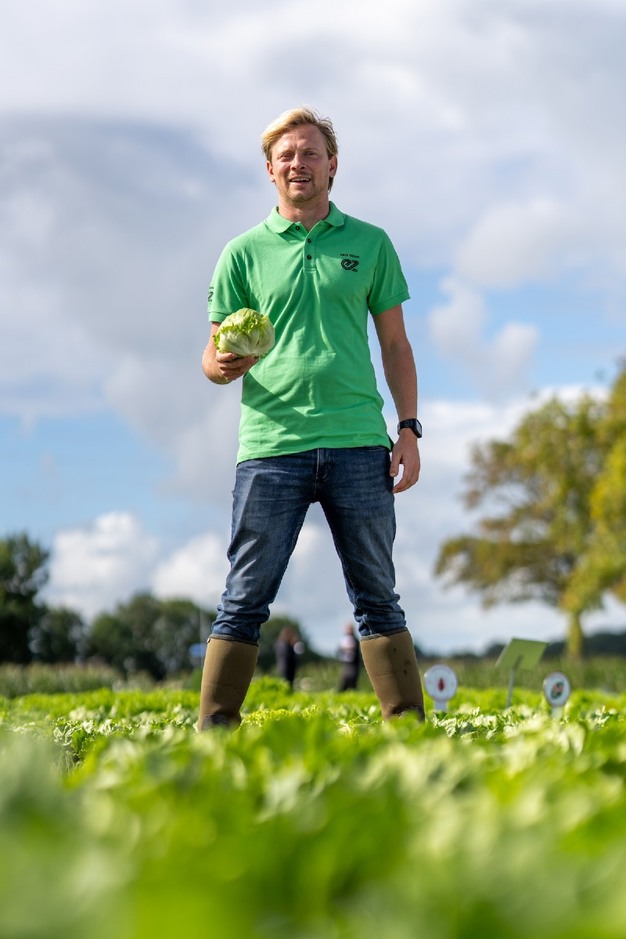 © Enza Zaden
Huijs noted that the Nr:1 biotype cannot be visually distinguished from Nr:0 but can bypass conventional resistance genes. This prompted Enza Zaden to begin a breeding program focused on identifying wild lettuce sources capable of withstanding Nr:1 infestations. The program combined classical breeding, marker-assisted selection, and field trials, resulting in iceberg lettuce lines showing intermediate resistance to the pest.
Paauwe explained that Nasonovia ribisnigri performs best in moderate climates, with optimal development occurring between 20°C and 24°C. When temperatures exceed 28°C, mortality rises sharply among nymphs and adults, and reproductive capacity declines. "At this threshold, reproduction ceases, and fertility in winged forms drops significantly," Paauwe said.
The development of new resistant varieties forms part of broader integrated pest management strategies aimed at supporting lettuce growers in temperate regions where aphid pressure remains high.
 For more information:
Sven Paauwe
Enza Zaden
Tel: +31 682192588
Email: [email protected]
www.enzazaden.com