The Andalusian Network of Phytosanitary Alerts and Information (RAIF) has published on its website a set of recommendations for handling plant residues in greenhouses where crops have been removed due to the presence of Thrips parvispinus.
- Ensuring that side bands and windows are properly closed.
- Placing a large number of blue chromatic traps around the entire greenhouse perimeter.
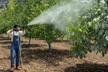
- Applying mineral oil products that are officially registered in the MAPA Phytosanitary Product Register, following authorized usage conditions.
- Informing neighboring growers so they can close their own greenhouse bands and windows on the day of residue removal.
- Chopping and incorporating crop residues into the soil, or removing them preferably on the same day. If that is not possible, the greenhouse should remain closed.
- If residues are transported, ensuring that the transport vehicle covers them with a tarp during transit.
- Delivering all plant residues only to officially authorized recycling plants—never dumping them in open fields, feeding them to livestock, or abandoning them.
- Dusting the greenhouse structure (when empty) with diatomaceous earth and applying a soil treatment to reduce the pest's presence. Growers should consult a technical advisor and use only MAPA-registered phytosanitary products under authorized conditions. A shallow tilling may also help reduce pupae and pre-pupae in the soil.
- Where possible, disinfecting the soil to completely eliminate pest reservoirs.
- Using plastic mulching to affect pupae and pre-pupae that may remain in the soil.
These recommendations were agreed upon on October 16, 2025, during a meeting of the Technical Committee of Plant Health Experts at the Territorial Delegation of Agriculture, Fisheries, Water, and Rural Development of the Junta de Andalucía. The committee operates within the framework of Andalusia's First Strategic Plan for Greenhouse-Grown Vegetables.
Source: juntadeandalucia.es