Whereas every flight to Amsterdam was once packed with Surinamese fruit and vegetables, today aircraft space remains conspicuously underused by fresh produce exporters. "We are still only loading at most 10 tonnes per flight," sighs Swami Girdhari, secretary of the Association of Exporters of Agricultural Products in Suriname (VEAPS). What is happening with fresh produce exports to Europe? And more importantly, what can be done about it?
Ten years ago, exports of Surinamese rice, bananas, and other fresh produce flourished to the Netherlands and neighbouring countries with a Surinamese community. Today, little of that remains. The causes are varied, says Girdhari, but with some goodwill, solutions are within reach.
 © Swami Girdhari"They would rather eat asparagus than boulanger"
First, something is shifting on the demand side. Swami points to changing consumption patterns in the Netherlands: "The younger generations of Surinamese, now already the sixth generation, are eating fewer traditional products. They would rather eat asparagus than boulanger." That is why he advocates a new marketing approach. "We should not only target the Surinamese community in the Netherlands but also the broader Dutch consumer. Why not offer antroewa in regular supermarkets, with clear explanations on how to prepare it?"
Import ban
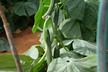
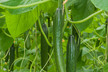
Another sticking point is the European Union's 2019 restriction on importing certain plants and plant parts. Among the crops that can no longer be imported from outside the EU are Momordica species, including sopropo. Sopropo previously accounted for as much as 35% of Suriname's fresh produce export volume. The ban was introduced over fears that Thrips palmi, considered a risk to European agriculture and biodiversity, could hide in the folds of the fruit and make its way to Europe. "But other countries, such as Honduras and Mexico, have been allowed to continue exporting sopropo after implementing specific EU-approved measures. Our government should engage with those countries to learn how they managed it," says Girdhari.
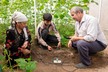
Obtaining phytosanitary certificates is another challenge. "The whole process of meeting the requirements of the Suriname Plant Health Service is complex," Girdhari notes. "Still, there is hope: the government has already taken steps to better support growers and exporters since 2019, but it now needs to follow through. We need clear protocols and better pest control facilities. And perhaps most importantly, closer cooperation between the government and the private sector."
 © Swami Girdhari
Flying with half a wing
Logistics is another major bottleneck. Suriname lacks sufficient cargo capacity and depends on scarce space in passenger aircraft. And that does not come cheap: air freight, including handling, costs about €2.50 per kilo. "For fresh fruit and vegetables, that's almost unsustainable," says Girdhari.
Meanwhile, competition is not standing still. Frozen vegetables from countries such as China, Indonesia, India, and Egypt are flooding the European market at prices Suriname cannot match. "Sometimes we even see vegetables from other countries being sold under a Surinamese label to boost sales. That's frustrating, but it also shows that the 'Suriname' brand has value."
The economic crisis in Suriname is also taking a toll on cultivation and is driving up prices for Surinamese vegetables. The depreciation of the Suriname dollar and high inflation in recent years have raised production costs. "And then it becomes difficult to compete with countries that can produce much more cheaply. Moreover, we still operate on too small a scale, with limited mechanisation and little technology. As a result, efficiency remains low despite our labour costs."
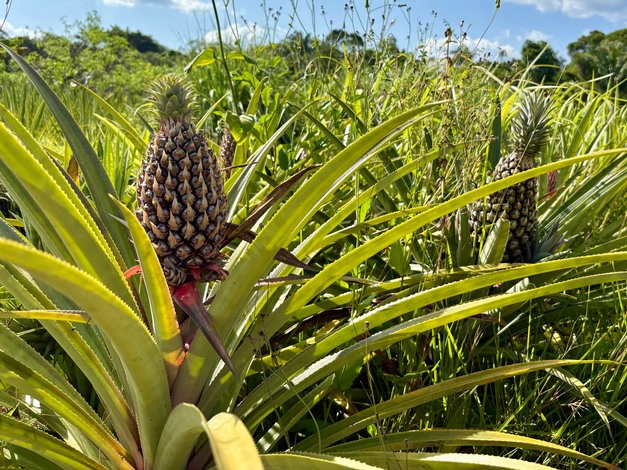
Swami calls for more dissemination of cultivation knowledge and access to modern techniques. "We can learn from countries that are doing well. Look at pineapple cultivation in Costa Rica or citrus cultivation in Brazil. We should collaborate more with companies and organisations from different countries."
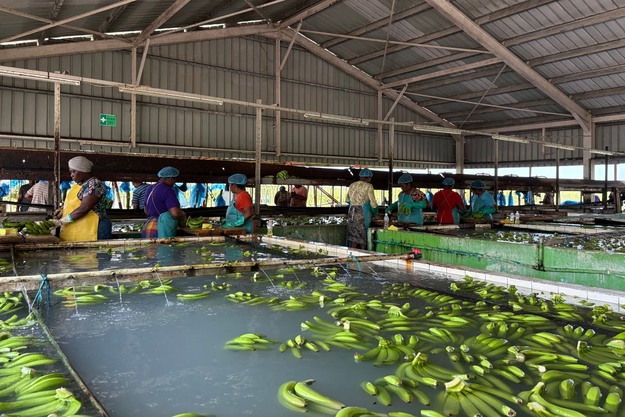 © Swami GirdhariFAI's banana packing station
Not everything has to go to Europe
Still, Girdhari does not want to limit the discussion to exports alone. He also sees opportunities in the domestic market. "Due to inefficient cultivation, our local vegetables are expensive, while we import a large share of what we consume. If we can reduce prices on the domestic market through greater efficiency, we can replace some of those imports with local production. And we should not be blinded by the current range of crops. Why shouldn't we grow cauliflower or broccoli, which are becoming increasingly popular in Suriname?" Swami asks.
The Caribbean market, where Suriname faces no import duties, also holds potential. The Caricom countries, with a combined population of 15 million, import around US$7 billion worth of food annually. "That's a huge opportunity. We need to start thinking of Suriname as a regional food producer."
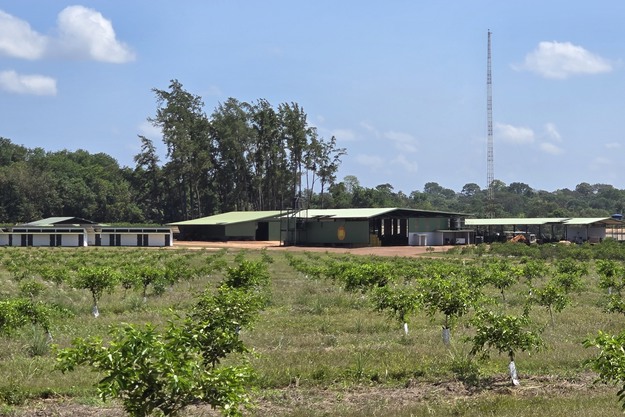 © Swami GirdhariCitrus growing in Suriname at Goliath
A look to the future
In short, Girdhari remains optimistic about Suriname's fresh produce sector. "In five years, our industry could look completely different," he says. "We will hopefully have regained markets, expanded acreage, achieved higher productivity, and established clear cooperation between the government and the private sector. Agriculture may not be Suriname's biggest export sector, but it is strategically vital, if only to feed ourselves. COVID has taught us that."
For more information:
Swami Girdhari
Vereniging van Exporteurs van Agrarische Producten in Suriname (VEAPS)
[email protected]