Agriculture in Suriname is facing structural problems. For growing supplies such as seeds and substrates, many growers depend on imports, while exporting fresh produce is almost impossible due to high freight costs. Moreover, inflation has been high in the country for years. Nevertheless, Kewal Radj has successfully built a thriving propagation business. Radj Garden Plantnursery attracts both growers and consumers from within and outside the country, and Kewal plans to expand the company with a foil greenhouse and a retail shop. "If you don't modernise, you will be left behind," he says.
 © Pieter Boekhout | HortiDaily.com
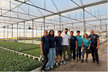
Radj Garden Plantnursery attracts growers and consumers from home and abroad
Radj Garden Plantnursery offers a wide range of produce, including pak choi, kaisoi, celery, chillies, boulanger (aubergine), cucumber, beef tomatoes, and papaya, as well as yardlong bean, among others. In recent years, Kewal has noticed an increasing demand for lettuce and capsicum. "And whatever a customer wants, I will sow. The customer is king."
To meet this demand, he only uses seed from recognised suppliers in the Netherlands, Italy, Japan, and India, including brands such as East-West Seed, Enza Zaden, and Takii. "In the beginning, I did take seed from growers, but I saw that the quality was not good. I don't know where they keep their seed. That's why I only use my own seed. Now the germination rate is around 95 per cent." Resistance is essential for him: "I want varieties with strong resistance. Then I can use fewer inputs. Without resistance, you have to use a lot more resources, especially in a tropical climate."
Growing customer base
Although he has only been in business for three and a half years, his customer base continues to grow steadily. Consumers, but especially professional growers, are finding their way to the company, from Suriname itself and neighbouring French Guiana. His role extends beyond supplying plants; he also provides knowledge and advice. "If a customer has a disease, they send me photos, and I give them advice. And if I don't know something, I forward it to my contacts in Trinidad." He himself has completed training courses in Trinidad and works with the Ministry of Agriculture, Livestock and Fisheries (LVV), among others. He also has several laboratories that conduct tests. "They take the plants themselves, so they also want good-quality plants and test a lot," he says.
 © Pieter Boekhout | HortiDaily.com
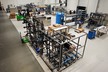
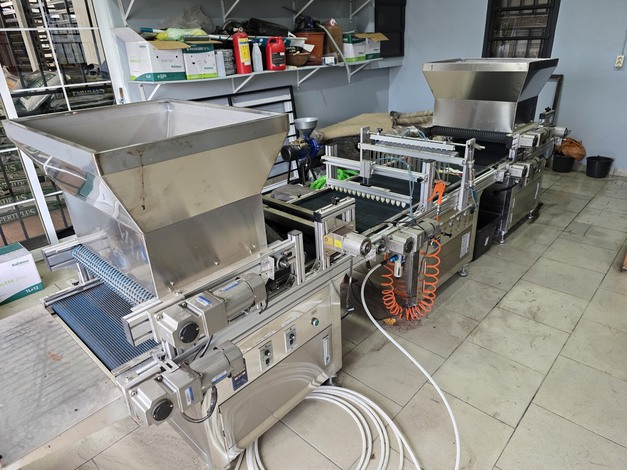
Sowing is done with a machine, which can fill 420 seed trays per hour, mostly in 128-hole trays
Propagation
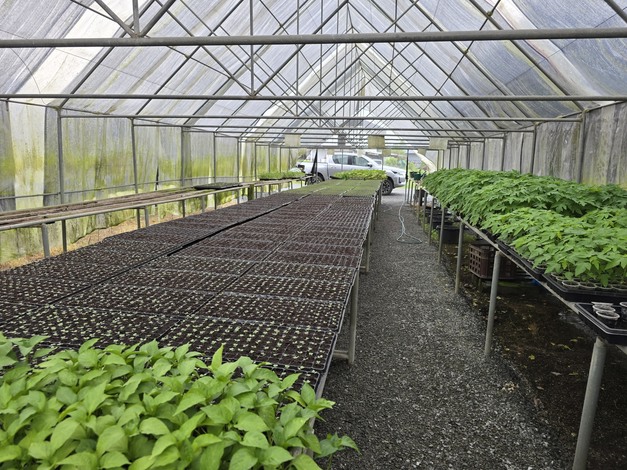
The company employs three people, including Kewal himself. Sowing is done with a machine that can fill 420 seed trays per hour, mostly in 128-hole trays. "That's almost 50,000 plants. But I don't always do that much per day, only if there are a lot of orders." When all his facilities are full, there are 1.2 million plants in production.
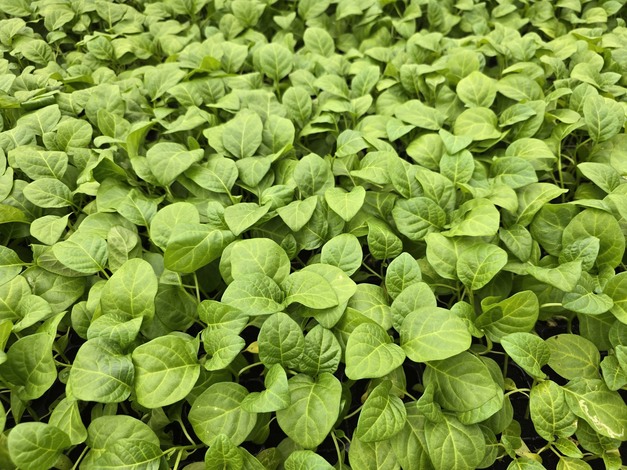
The plants remain in propagation for three to six weeks. "Vegetable plants after a month, papaya too. Tomato is a pendulum plant, so those after three weeks. Soup vegetables like celery after six weeks. Customers want ready-made plants so they can continue growing them themselves."
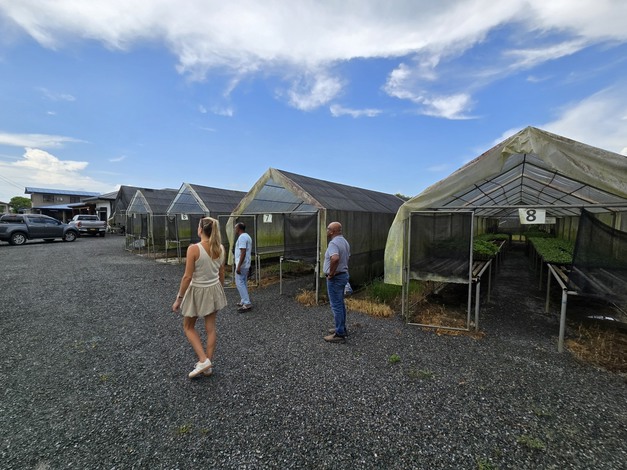 © Pieter Boekhout | HortiDaily.comThe propagation greenhouses
Assortment and customer base
Agriculture in Suriname is facing considerable challenges. Whereas Suriname used to export about 42,000 tonnes of fruit and vegetables to Europe, it now exports only 1,200 to 1,300 tonnes a year. According to Kewal, this is mainly due to high freight costs. "The problem in Suriname is the freight cost. More than €3 per kilo. As a result, we export very little. If freight costs went down, more exports would be possible."
Things are not always easy in the nursery either. Although Kewal works well with the Ministry of Agriculture, he sees that the government pays little attention to the position of agriculture. The country depends on imports for many supplies, such as seeds and substrates, and government policies do not help. For instance, Kewal depends on the availability of seeds. "In tomatoes, for instance, I could only get beef tomatoes. Avocado seed is not available at all, otherwise I would sow that too."
Material availability is also a challenge for the substrate. Radj imports potting soil. "I prefer special seedling potting soil, but that is not available here. Everything that comes in now is more for larger plants. Sometimes when you open the bag, you see mould, white or brown. I don't like that. That's why I keep looking for better alternatives." He has also experimented with coco peat and rockwool. "In cocopeat and rockwool, there are few fertilisers. You have to keep adding extra fertiliser. It can be done, but it takes more work."
 © Pieter Boekhout | HortiDaily.com
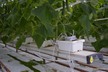
For many supplies, such as seeds and substrates, the country depends on imports, and government policies do not help. For instance, Kewal depends on the availability of seeds. "In tomatoes, for example, I could only get beef tomatoes. Avocado seeds are not available at all."
From outside to protected
Most farming in Suriname still takes place outdoors. That brings challenges, says Kewal: "People here do everything outside. Especially in the tropical climate, you get a lot of diseases, bacteria, and pests. A greenhouse with ventilation already prevents 50 per cent of diseases."
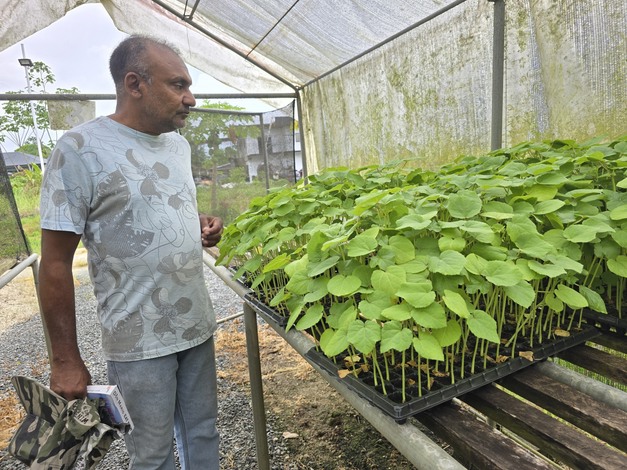
He therefore plans to build a 3,000 m² greenhouse complex on a 4,000 m² plot. "These will be plastic greenhouses, with ventilation and water cooling. With that, I want to further professionalise. I always want to modernise." He also sees opportunities in scaling up, modernising, and expanding towards the consumer market. "I am also going to set up a shop. Then I will sell plants directly to consumers. Fruit trees and herb plants will also be interesting then."
 © Pieter Boekhout | HortiDaily.com
"I'm looking at new seeds and new ways of propagation. Directly in a cup, for example, or by cuttings for other products. If another method of making plantlets comes along, I will switch to an easier system."
Propagation and labour
This attitude reflects his mindset, how, despite the circumstances, Kewal continues to innovate. "I look at new seeds and new ways of propagation. Directly in a cup, for example, or by cuttings for other products. If another method of making plants comes along, I'm going to switch to an easier system. I'm not going to stay with the old system. I've always learned that. You have to modernise. If you don't, you will be left behind." He also teaches this to his son, who is now 13, but whom Kewal envisions one day taking over the plant nursery. "But I also tell him: Keep modernising. Keep busy. Always keep learning. Our country has been 50 years behind, and if you don't start modernising, you'll stay 50 years behind."
 © Pieter Boekhout | HortiDaily.com
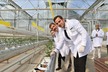
"Keep busy. Always learn further. Our country has already fallen fifty years behind, and if you don't start modernising, you're going to fall fifty years behind."
For more information:
Kewal Radj
Radj Garden Plantnursery
Weg naar Peperpot #95 A
Meerzorg (Suriname)
Tel: +597 8828204
[email protected]