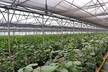
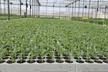
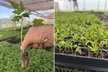
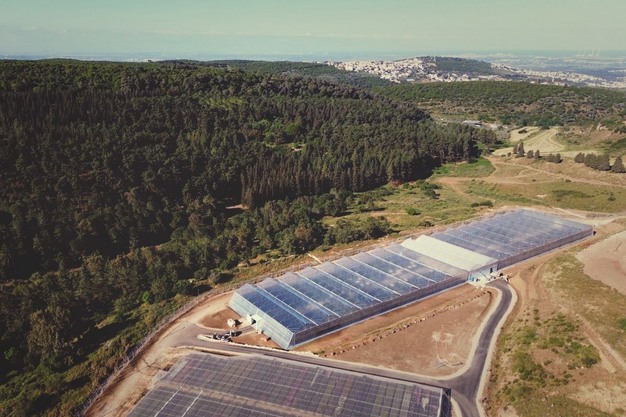
At the edge of Israel's Samaria mountain ridge, on elevated terrain that CEO Uriel Ben Haim describes as a "challenging terrain for greenhouses," propagator Mei Ami Quality Plants has a highly specialized focus on ornamental houseplants, bedding plants, and increasingly berry propagation. The company has carved a distinctive niche by combining international standards with its local roots.
 © Mei Ami
Venturing into berries
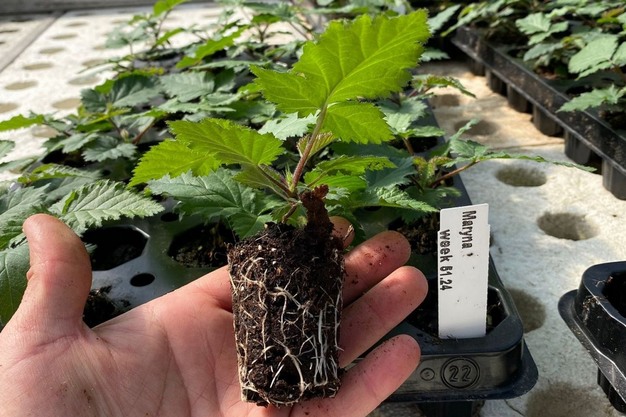
While Mei Ami is well established in the ornamental plant sector, it is the company's innovations in berry propagation, especially blueberries and raspberries, that have drawn attention in recent years. Over the past seven to eight years, Mei Ami has played a pivotal role in promoting a berry-growing industry in Israel that previously did not exist.
"It's growing very, very fast," Uriel shares. "Every year we see growth between 15 to 40 percent."
Yet the transition into berry production hasn't been without its complexities, especially due to unique religious regulations that shape agricultural practice in Israel. "According to Jewish religious law, berries like blueberries are classified as trees, not bushes. That classification brings with it a restriction: fruit from new plants cannot be harvested until three years after planting," Uriel notes.
To address this, Mei Ami has pioneered a different propagation system, as opposed to the more common tissue culture method. This approach allows the company to deliver kosher-compliant, early-yielding plants to growers, helping them reduce the waiting time to as little as one year.
"This is the only place in the world where we make berries from cuttings and not from tissue culture," he says. "It's all about shortening the process for the grower while respecting the regulations."
With access to Israel's highly diverse climate zones, ranging from snow-capped mountains in the north to desert valleys in the south, Mei Ami is able to propagate and supply varieties suited for off-season production, helping growers meet market demand even in winter.
 © Mei Ami
Small growers, big network
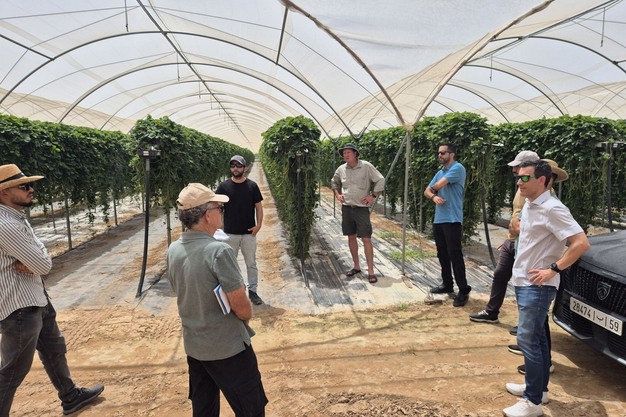
In Israel, over 90% of agricultural land is government-owned, and most growers operate on a small scale within kibbutzim or moshavim. That means Mei Ami serves a wide network of small-scale clients. "We have over 100 growers, but each of them may have less than half a hectare," he shares.
This fragmented customer base demands customised propagation systems, ongoing agronomic support, and high flexibility. Despite the logistical challenges, the company maintains international-grade quality and performance, supported by a dedicated team of internal agronomists and external advisors for each product category.
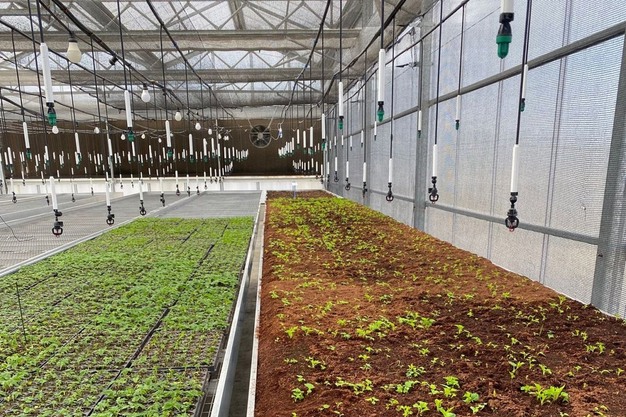
What's more, Mei Ami's own terrain presents its own difficulties. Located across two greenhouse sites with over 50 metres in elevation difference, the company manages around seven hectares of intensive greenhouse cultivation in a rugged mountain landscape.
 © Mei Ami
Closed varieties and high standards
A defining feature of Mei Ami's business model is its exclusive use of closed (protected) varieties: a deliberate choice that prioritises quality, consistency, and exclusivity.
"We don't work with open varieties at all," Uriel emphasises. "We are like the top of the pyramid. Our product may be more expensive, but it looks different. Customers buy with their eyes."
Whether it's a flowering Spathiphyllum, a vibrant Anthurium, or ornamental orchids, the company works only with genetically protected lines sourced from specialised breeding companies. Mei Ami collaborates with industry leaders such as Anthura, KP Holland, Dümmen Orange, and Beekenkamp, while also partnering with Israeli breeders like Danziger and Hishtil.
On their berry propagation line, they work with companies including Global Plant Genetics, Planasa, and Berrytech. "Our catalog is vast and dynamic, featuring over 300 ornamental and bedding plant products at any given time, changing with the seasons."
 © Mei Ami
Locked in, but looking out
Mei Ami's operations are currently confined to the Israeli market, but that wasn't always the plan. The company had started establishing relationships in Dubai for ornamental plants and was set to export raspberry and blueberry plants to Jordan, until regional conflict froze those opportunities.
The company however remains globally connected through its partnerships and sourcing networks across Europe and beyond. Mei Ami also regularly travels internationally, with recent trips including Morocco and South Africa, where the team studied climate and propagation trends in similar agricultural zones.
Industry changes and The Aalsmeer Trade Fair
Like many in the sector, Uriel has witnessed dramatic shifts in global horticulture, especially since COVID and the energy crisis triggered by the war in Ukraine.
"In the past, suppliers chased customers. Today, customers chase suppliers," he says. "There are fewer companies, reduced assortment, and much harsher price conditions."
To maintain relationships in this evolving landscape, Mei Ami continues to attend major trade events like the Aalsmeer Trade Fair in the Netherlands. "We go to renew personal relationships. After 40 years in the market, we know most players already. But the people change: where we used to work with the same contact for 20 years, now they change every six months."
Uriel expresses a particular appreciation for the Dutch market, which retains a culture of family-run horticultural businesses, even among large-scale players like Beekenkamp.
"It's still a family business, even though it's huge. That's rare these days," he says. "When companies grow too fast, they can lose the personal flavour of their products. That's something we always try to preserve."
"We come from a different generation," he reflects. "But we're learning how to navigate a new world while staying true to our values."
For more information:
Mei Ami Quality Plants
Uriel Ben Haim, CEO
[email protected]
www.meiami.co.il