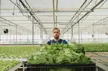
As a grower, Michelle Montgomery experienced first-hand the challenges of handling endless Excel files, manual data entry, and the mistakes that come with it. Now, she helps growers implement Source.ag's AI-driven solutions as an Artificial Intelligence Solutions Specialist for North America. "It's about being prepared instead of reacting afterward," she says.
During her time as a grower and later Head Grower in Kingsville Ontario, Michelle became familiar with data-driven cultivation but also saw its limitations. "We were very data-driven when we started," Michelle says. "But all of it was done in Excel sheets or Word files. We did crop registration, production tracking, and variety trials — at one point with about 150 varieties in the greenhouse — all in one file. It was very hard to analyze." The process also required extensive manual inputs. "We had people in the greenhouse weighing vegetables, writing everything down on paper, and then entering it into Excel. Human error was a huge issue. If you try to do it fast, mistakes happen."
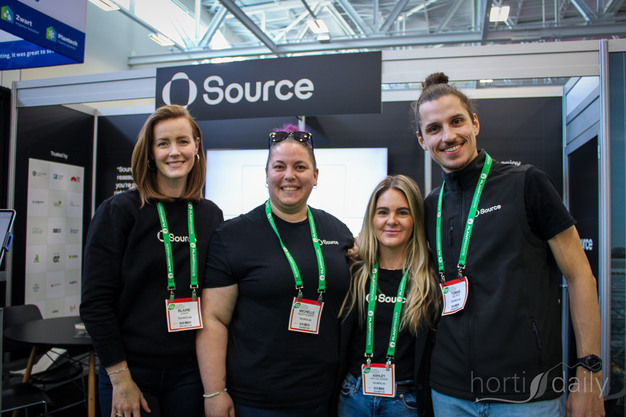 © Eelkje Pulley | HortiDaily.com
Her experience with these challenges shaped her interest in AI-based systems. "Part of why I joined Source.ag was the way the technology brings everything. Having one collective source of data allows you to look at every input — not just what the plants are doing, but how the environment and actions around them interact".
The software enables growers to integrate multiple streams of operational data — including environmental sensors, irrigation schedules, pruning activities, and harvest measurements — into a single platform. AI models analyze this data to predict plant responses to management decisions and external conditions. For example, the system can simulate how a change in fruit pruning strategy will affect plant growth and harvest timing, or how an upcoming heatwave might influence the fruit set and fruit weight.
"Instead of reacting after something happens, growers can forecast outcomes and make adjustments in advance," Michelle says. "If a particular approach isn't going to work, you can see what alternatives exist and plan accordingly."
The platform also supports continuous learning from past crop cycles. By tracking historical decisions alongside environmental and production outcomes, growers can identify patterns, avoid repeating mistakes, and adjust protocols for future crops. "It's about helping them be better and giving them a clearer view of what's happening in the crop."
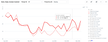
One of the applications of Source.ag's AI platform is harvest forecasting. By combining production data, real-time environmental measurements, and crop management inputs, the system can estimate the timing, volume, and fruit weight of upcoming harvests. This allows growers to plan labor, materials, and distribution more efficiently and anticipate fluctuations caused by weather events or crop interventions. "With Source Harvest Forecast, you can see up to 8 weeks in advance how your produce will develop and adjust your harvest schedules accordingly. It's about reducing surprises and making operational decisions based on data rather than guesswork, and using this information to be better prepared for the market."
In her role, Michelle helps growers integrate Source.ag's platform and interpret the data effectively. "My job is to make sure growers know how to gather information, look at it, and optimize it for their own use," she says. "It's not just another source of data; it's something that supports decision-making and operational planning." She emphasizes that the system is designed to complement, not replace, growers. "I always say that I'm a grower helping other growers. I know the frustrations. If I can take one small thing off their plate, or show them a better way to look at their data, that's what I want to do."
For more information:
Source.ag
[email protected]
https://www.source.ag/solutions