This study aimed to investigate the impact of various light spectra on the growth, physiology, and biochemistry of two lettuce cultivars under salinity and alkalinity stress in a Nutrient Film Technique (NFT) hydroponic system.
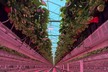
The experiment was conducted using a factorial design with a completely randomized approach. The factors considered in this study encompassed three different levels of light (supplementary red light, supplementary blue light, and ambient light), three levels of stress (10 mM NaHCO3, 10 mM NaCl, and a control without stress), and two lettuce cultivars. Light treatments were administered starting from the seedling transfer to the NFT system, while stress treatments were applied during the four-leaf stage of lettuce growth. The study observed that subjecting lettuce plants to salinity and alkalinity stress in the NFT system resulted in a decrease in various vegetative characteristics (such as shoot and root mass, root length, leaf number) as well as physiological and biochemical traits (including net photosynthesis, Fv/Fm, PI, LRWC, soluble sugars, soluble protein, and anthocyanin), photosynthetic pigments (chlorophyll a and b, total chlorophyll, and carotenoids), and leaf nutrient concentrations (K, Fe, Mn and Zn). However, the application of blue and red light spectra proved to be beneficial, as it led to enhanced growth, improved physiological and biochemical traits, increased nutrient content, higher photosynthetic pigments, and improved photosynthetic parameters in lettuce cultivars facing salinity and alkalinity stresses.
In conclusion, the findings highlight the positive impact of blue and red light spectra on lettuce plants subjected to salinity and alkalinity stress conditions, as observed through improved growth and various physiological and biochemical characteristics.
Roosta, H.R., Omidi, E., Esmaeilizadeh, M. et al. Supplemental red and blue LED light ameliorate the adverse effect of salinity and alkalinity stress in lettuce plants. Sci Rep 15, 36449 (2025). https://doi.org/10.1038/s41598-025-20444-5
Source: Nature Magazine