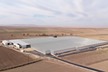
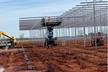
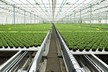
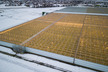
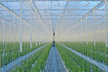
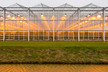
Greenhouse farming in India has advanced remarkably over the past five years, becoming a core component of modern horticulture, says Md. Rafiulla, Managing Director at HR Traders, a greenhouse design and construction company.
"Growers now understand that greenhouse design directly influences yield, quality, and crop longevity. Being growers ourselves through HR Floritech, we see every day how structural precision, ventilation, and fertigation efficiency impact real field performance," says Rafiulla.
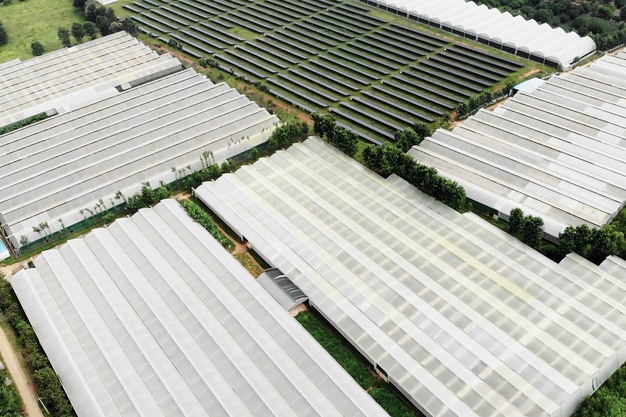 © HR Traders
According to him, HR Traders has grown in step with this changing mindset. "Earlier, the goal was simply crop protection; now it's about scientific design and crop-specific planning. The focus is on providing growers not just with a structure but with a complete growing environment that integrates design, fabrication, subsidy support, fertigation, and climate systems."
Crop diversification is also expanding as both floriculture and high-value produce adapt to greenhouse systems, adds Rafiulla. "Alongside gerbera and rose, growers are now investing in chrysanthemum, carnation, limonium, gypsophila, and a wide range of vegetables and fruits including capsicum, cucumber, tomato, chilli, watermelon, strawberry, and even blueberry."
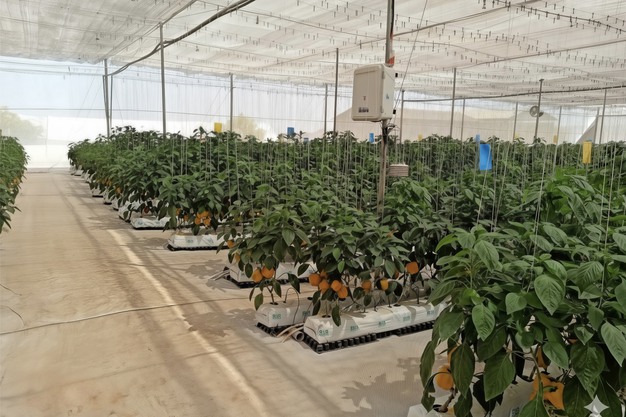 © HR Traders
Having built more than 70 acres of greenhouses across India this year, Rafiulla notes that while naturally ventilated structures remain the most practical for most regions, climate-controlled greenhouses are now vital in hotter zones and for sensitive crops. "Orientation, ventilation, and durability matter most, with success depending on starting out with the right design and materials," he emphasizes.
Still, Rafiulla acknowledges persistent challenges within India's greenhouse sector arising from limited design awareness and complex subsidy procedures to substandard construction by unqualified builders. "Nearly 70 percent of greenhouse problems start with incorrect design," he mentions, adding that "the structural science of height, airflow, and material strength must be addressed before thinking about automation or climate control."
 © HR Traders
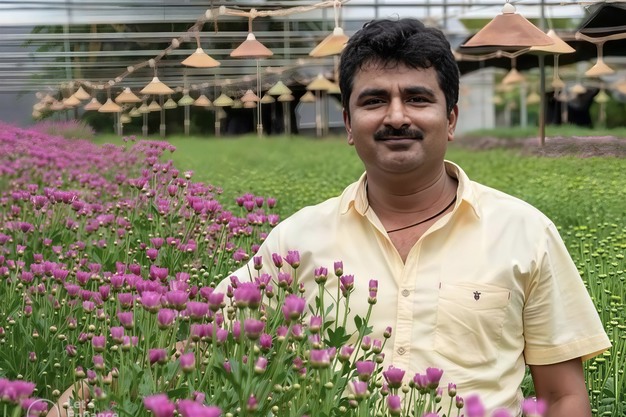
A recent flower-cultivation project in Karnataka highlights this approach: "We completed construction in under a month, integrating optimized natural ventilation and semi-automated fertigation. The grower achieved 25 percent water savings and better crop uniformity, recovering almost half the investment through subsidy," Rafiulla shares.
Looking ahead, Rafiulla expects India's greenhouse expansions to increasingly focus on good structural design and build quality, as these determine the long-term success of any agri-project. "Naturally ventilated structures will continue to lead, but climate-controlled systems will grow wherever temperature stability is crucial. Our role will be to keep building greenhouses that are structurally strong, scientifically efficient, subsidy-compliant, and adaptable for future upgrades from day one," he concludes.
For more information:
Md. Rafiulla
HR Traders
Tel: +91 98 45 216 175
Email: [email protected]