The Faculty of Agronomy and Veterinary Medicine at the Autonomous University of San Luis Potosí (UASLP) is developing a technological innovation project in vertical agriculture through greenhouse systems. The goal is to transform the future of food production with a sustainable, efficient, and competitive model capable of facing climate challenges such as water scarcity, while ensuring food security for both urban and rural communities. The project was presented by researcher Fernanda Quintero Castellanos.
 © UASLP
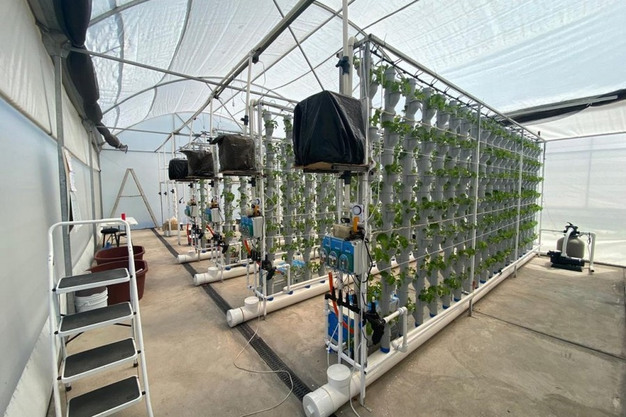
The initiative, known as GroVert, has been underway for three years and operates as a living laboratory within the Faculty. It covers 128 square meters and aims to integrate science, technology, and innovation to generate knowledge, train professionals, and create job opportunities.
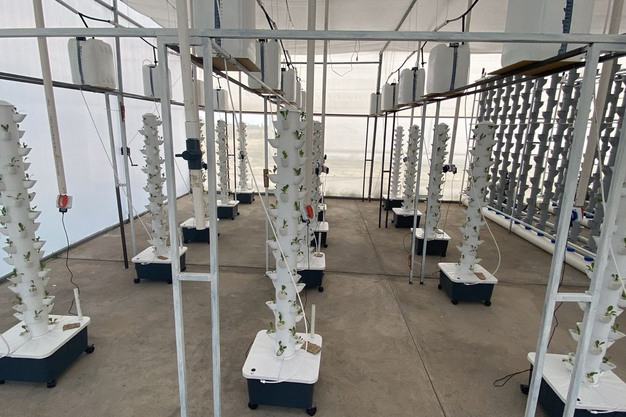
The tunnel-style greenhouse is equipped with environmental sensors, dataloggers, pyranometers, and an automatic weather station, allowing precise control of conditions and the collection of scientifically valuable data. The infrastructure includes GrowPipes vertical tower systems that can hold up to 300 plants per tower, as well as TIRUSS hydroponic towers optimized for fertigation and high-density production.
 © UASLP
The project aligns with the Sustainable Development Goals of the 2030 Agenda, particularly those related to zero hunger, clean water and sanitation, and responsible production and consumption. This model makes it possible to produce nutritious food while saving up to 90 percent of the water used in conventional agriculture.
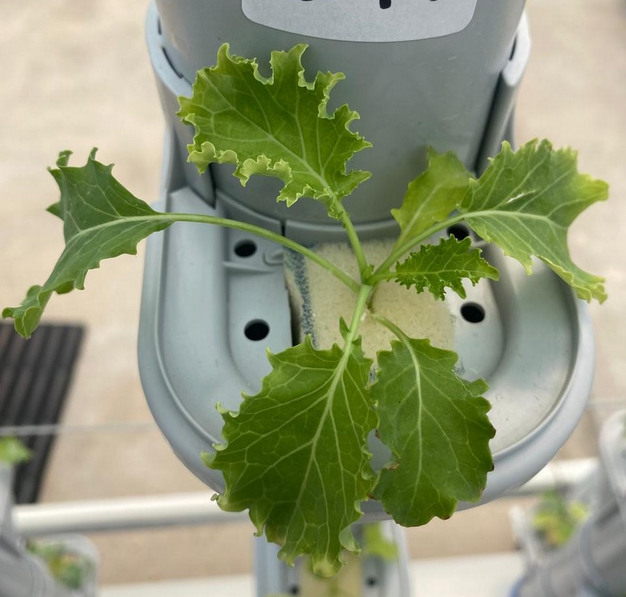
Fernanda explained that GroVert seeks to optimize space and reduce inputs. Its scientific goals include quantifying resource savings and production viability, determining optimal irrigation and fertigation conditions, and identifying biofortified nutraceutical crops, that is, basic foods intentionally enriched with vitamins and minerals to improve human health and nutrition.
The project also aims to develop mathematical models capable of predicting harvest times as well as water and fertilizer consumption.
 © UASLP
The greenhouse team includes internationally recognized and multidisciplinary researchers from Mexico, Colombia, and Spain. Working alongside Quintero Castellanos are Manuel F. López Mora from UASLP's Faculty of Agronomy and Veterinary Medicine, Miguel Guzmán from the University of Almería in Spain, and Carlos A. González Murillo from the National University of Colombia.
Together, they work to ensure a global vision and local application of the research carried out at the Faculty's Training Center for Protected Agriculture (CECAP).
The GroVert greenhouse has the potential to become a replicable model for schools, hospitals, and communities, promoting access to fresh food, green job creation, and sustainable entrepreneurship. Through this work, the Faculty of Agronomy and Veterinary Medicine and the UASLP strengthen their position as leaders in agri-food innovation and reaffirm their commitment to building a fairer, greener, and healthier future.
Source: uaslp.mx