Agri-PV, or agricultural photovoltaics, is no longer a theoretical concept—it is being implemented on farms today. In Senden, Germany, farmer Alexander Grothues is cultivating berries beneath solar modules that generate electricity while protecting crops from sun, rain, and hail. Some of the semi-transparent panels used in this installation were supplied by Brite Solar. This project offers valuable insights into how Agri-PV systems operate in open-field berry cultivation, their observed benefits and drawbacks, and what this might mean for broader adoption of the technology in open-field and berry farming.
Agri-PV, also known as agrivoltaics, refers to the dual use of agricultural land for crop cultivation and photovoltaic energy generation at the same time. Instead of converting farmland into solar parks, Agri-PV enables the same area to produce both food and renewable power. For such systems to succeed, several factors must be carefully balanced: ensuring that enough photosynthetically active radiation reaches the crops, designing the structures at the appropriate height and spacing, and selecting crop varieties that can tolerate partial shading. When these elements are managed effectively, Agri-PV increases land-use efficiency while providing crops with protection from climatic stressors.
 © Brite Solar Technologies
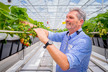
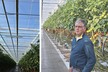
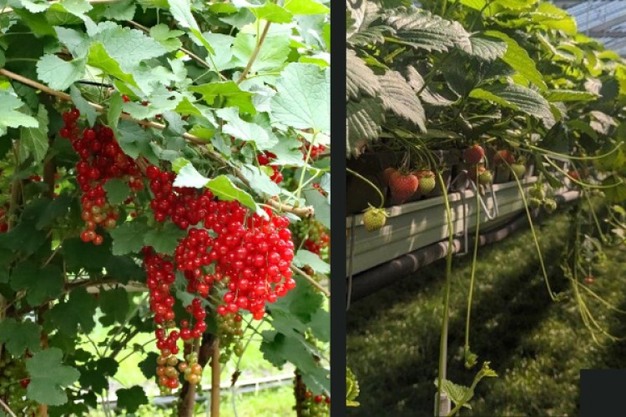
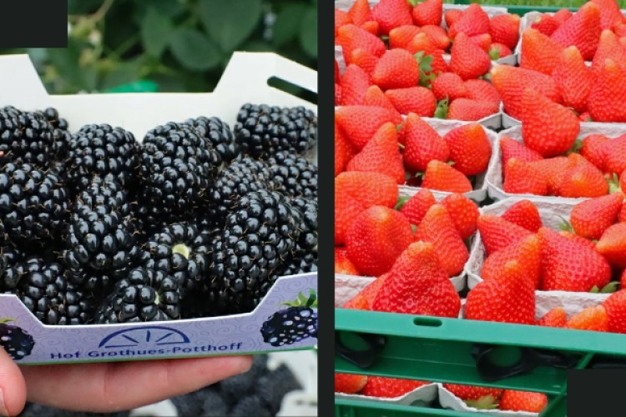
On the Grothues farm in Senden, two Agri-PV systems were installed to test dual land use with strawberries, raspberries, blackberries, and currants. The installation covers roughly 6,000 square meters, with some of the semi-transparent modules provided by Brite Solar. Between 2018 and 2021, open-field strawberry cultivation in Germany suffered losses of up to 50 percent due to extreme weather, including prolonged heat and heavy rainfall. According to farmer Alexander Grothues, growing strawberries under a protective structure helps reduce weather-related damage and makes harvests more predictable. The Agri-PV system was therefore installed to stabilize production while moving the farm toward energy independence. The electricity generated now powers the farm shop, café, and guesthouse, while surplus energy during the summer is fed into the local grid, offsetting lower winter production and providing a steady revenue stream. As Elmar Grothues, who oversees operations, noted, this setup allows the farm to plan energy costs for the next 20 years, independent of market price fluctuations.
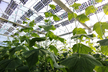
The design and technology of the Senden system reflect practical considerations. The solar roof is elevated—up to five meters in some areas—to allow machinery access and normal cultivation. Modules with varying transparency levels are being tested to determine the optimal balance between shading and light transmission. A network of sensors monitors light, temperature, humidity, and plant health, enabling ongoing adjustments to improve system performance.
 © Brite Solar Technologies
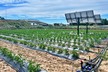
In the open-field trial, rows of berry plants were cultivated beneath solar roofs with differing transparency levels to compare growth outcomes. Multiple sensors measured light incidence and radiation in photosynthetically active wavelengths. According to local reports, farm staff, including an employee named Bakri, track humidity and temperature daily and inspect individual plants for quality. Harvests occur every three days, with yields carefully recorded. The farm reports that under the Agri-PV canopy, evaporation is lower, creating a more favorable microclimate. During hot summer months, such as those with temperatures reaching 40°C, the shaded conditions also reduced the need for mowing around the raspberries for several weeks.
The semi-transparent modules play a key role in managing light and photosynthesis. Brite Solar's panels use a nanotechnology coating that converts ultraviolet light into red light, helping to optimize the spectrum available for photosynthesis while still providing shading.
The farm has observed several benefits from the system. The Agri-PV installation protects berry crops from sun, rain, hail, and frost, reducing the risk of damage during extreme weather events. It also conserves water, with about 20 percent less water use due to reduced evaporation, and provides relief to plants during heatwaves. Crop quality has remained stable, with fewer sunburns and normal sugar and flavor levels. The farm anticipates a larger harvest compared to the previous year, indicating yield stability even under challenging conditions. Energy independence is another major advantage—the 6,000-square-meter system produces roughly 30 percent more electricity than the farm consumes annually, allowing the family to maintain long-term cost stability. The dual use of land enhances sustainability by allowing continued food production alongside renewable energy generation, reducing the farm's overall carbon footprint.
However, challenges remain. The total investment for the project reached €1.5 million, with 30 percent subsidized by the state. An additional €30,000 was required to purchase eco-points for compensation land, and the system remains capital-intensive. Bureaucratic hurdles also slowed progress, as multiple authorities had to approve the project, including permits for underground cables on private land. The team was further required to perform glass breakage tests to certify panel safety.
Overall, the Senden berry farm's Agri-PV installation demonstrates that renewable energy production and agriculture can successfully coexist, offering a model for sustainable, resilient food and energy systems in the face of climate change.
For more information:
Brite Solar Technologies
[email protected]
www.britesolar.com