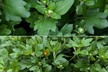
Agdia has announced the commercial launch of a field-deployable rapid molecular test kit on their AmplifyRP XRT platform for onsite detection of Cucurbit yellow stunting disorder virus (CYSDV).
For growers who prefer to send plant samples to Agdia for analysis, this product will also be used by their Testing Services diagnostic laboratory, where customers receive expert guidance on crop screening and rapid turnaround time of test results.
Cucurbit yellow stunting disorder virus is a plant pathogenic virus from the Crinivirus genus that primarily causes disease in cucurbits, but can also infect several other crops. First discovered in the Middle East in the late 1980s / early 1990s, it has since been detected across the Mediterranean region, Asia, several African countries, the United States and Mexico. It is transmitted primarily by several species of whiteflies (Bemisia tabaci / Bemisia argentifolii). While not spread mechanically nor through seed transmission, long-range spread of the virus can occur through transport of infected material (for example, seedling transplants).
 © Mike Matheron, University of Arizona, Bugwood.orgFigure 1. Symptoms of Cucurbit yellow stunting disorder virus infection
Cucurbit crops (melon, watermelon, squash, pumpkin, etc.) can be severely impacted by CYSDV. Infection often results in significant losses in fruit size, yield and quality (lower sugar content in fruit).
Symptoms often include chlorotic spots, mottling, interveinal chlorosis or yellowing (Figure 1). Such symptoms are nearly indistinguishable from those caused by other viruses such as Cucurbit chlorotic yellows virus (CCYV, Crinivirus), Cucurbit aphid-borne yellows virus (CABYV, Polerovirus) and certain nutrient deficiencies. Thus, diagnostic confirmation of the causal agent is a critical component of identifying disease management strategies to combat the virus and vector.
Various hosts have been reported to be infected with CYSDV. These include the common bean (Phaseolus vulgaris), shepherd's purse (Capsella bursa-pastoris), lettuce (Lactuca sativa), alfalfa (Medicago sativa), and Wright's ground cherry (Physalis wrightii), along with several other weed species.
Extensive validation studies were conducted to assess the effectiveness of a new molecular assay developed by Agdia for detecting CYSDV. These studies demonstrated that the diagnostic specificity of the assay is 100%, with 108 out of 108 true negatives accurately identified. During product validation, no cross-reactivity was observed with other pathogens. Additionally, the new assay successfully detected 143 out of 147 positive samples, achieving a diagnostic sensitivity of 97.3%. It was also effective in identifying all tested isolates, which included samples from the United States, the Middle East, Europe, and Africa.
For more information:
Agd ia
ia
52642 County Road 1
Elkhart, IN 46514
phone 1-574-264-2615
fax 1-574-264-2153
[email protected]
www.agdia.com