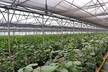
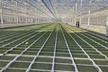
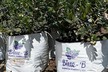
The European Union (EU) has launched Peatless, an initiative reinforcing its leading role in sustainability across the horticultural sector. The project aims to develop low-peat substrates for three key systems: mushrooms, seedlings, and ornamental plants.
"Low-peat materials with suitable qualities for various crops are already available on the market. Peatless wants to take this one step further, developing substrates and casing soils that meet the specific needs of seedling producers, ornamental growers, and mushroom cultivators," explains Innovarium, a partner in the Peatless consortium. "For this purpose, the project partners are currently evaluating a range of raw materials that could be integrated into these three production systems. The evaluation takes into account factors such as availability, cost, and physical-chemical properties," they add.
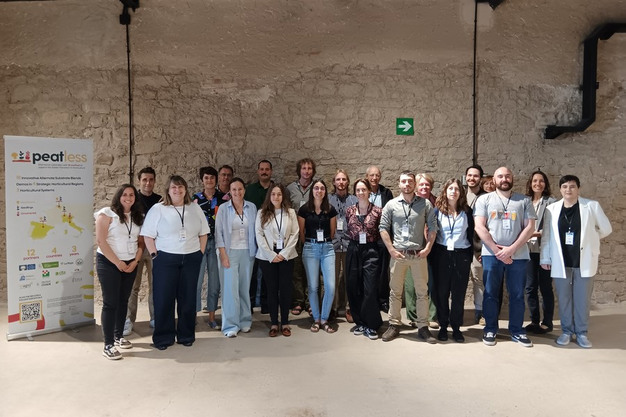 © Innovarium-Peatless
The project has just begun, and consortium members are now identifying the most promising materials. "One of the main aspects under study is the economic and environmental sustainability of the alternatives being assessed. Once the most suitable materials are selected, the first pilot-scale trials will be carried out, followed by commercial-scale testing."
To prove the viability of new substrates, the blends will be tested in commercial facilities across four key horticultural regions: La Rioja (Spain), Pistoia (Italy), Flanders (Belgium), and Seeland (Switzerland). A digital monitoring system will also be developed to track performance and support decision-making.
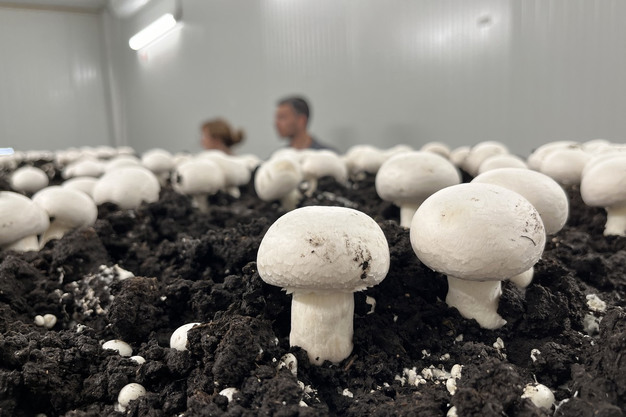 © Innovarium-Peatless
"The horticultural sector understands the need to reduce peat content in substrates and casing soils," Innovarium notes. "In the mushroom industry, for instance, some growers remain hesitant to use new materials due to the perception that low-peat casing soils yield less and are more expensive. However, there's a growing awareness that transitioning to lower-peat and more sustainable materials is essential, especially this year, as peat supplies are scarcer and costs have increased."
These technical, sociocultural, and economic barriers to adopting low-peat materials are among the challenges Peatless aims to overcome. "A first step was organizing several workshops across producing regions with growers and stakeholders, allowing them to share the benefits and concerns related to low-peat alternatives. These workshops gave us a comprehensive view of how different agricultural sectors perceive these materials."
Supporting the Green Transition in horticulture
The initiative aims to help 5,000 horticultural companies across 40 regions transition toward sustainable peat alternatives. Throughout the process, Peatless will deliver over 30 practical recommendations to make growing media more sustainable.
The project is still in its early stages, developing different work lines. "For now," Innovarium says, "we see agricultural waste reuse as the most promising approach. For example, tests are underway to reuse spent mushroom substrate (SPCH) as a substrate or casing soil. Many of the materials being assessed are byproducts from other agricultural industries."
*Peatless has received funding from the European Union's Horizon Europe program (GA No. 101216569) and the Swiss State Secretariat for Education, Research and Innovation (SERI). The views expressed are those of the Peatless project and do not necessarily reflect those of the EU or REA.
 © Innovarium-PeatlessFor more information, please contact
Innovarium
[email protected]
https://innovarum.es/
Peatless © Innovarium-PeatlessMargarita Pérez, CTICH
[email protected]
https://peatless.eu