After more than a decade in vertical farming, Reinier Donkersloot has learned that success depends on patience, engineering, and partnerships rather than plug-and-play promises. Speaking at the Vertical Farming World Congress 2025, Donkersloot, Business Development Manager for Airlux Technologies, shared a message grounded in engineering realism. "It's great to see how transparent and open the industry has become. We're moving beyond competition."
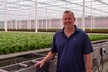
That openness, Donkersloot explained, shows how much the sector has changed. He recalled that when he entered the field, many people dismissed vertical farming as a passing trend that would never become a viable business, but he remained determined to prove otherwise. He began his career at Philips, then launched his own consultancy in 2016, advising both farm operators and system suppliers before joining Airlux Technologies earlier this year.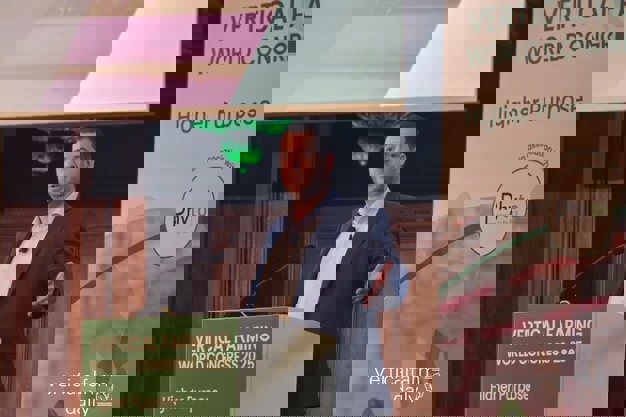 © Rebekka Boekhout | HortiDaily.com
Building farms that evolve, not install
At Airlux Technologies, Donkersloot helps to connect lighting and climate systems to the operational realities of indoor farms. "You don't just start, sell something, and walk away," he said. "You develop along the way." That view reflects a shift from product delivery to long-term co-creation. "I bring technical and operational expertise to projects that strengthen our customers' business cases."
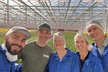
One example is the company's collaboration with Growy in Amsterdam, where Airlux Technologies supplies lighting systems for both current and future farms. The partnership illustrates what he describes as a "joint effort" between technology providers and growers. "You need to have the product in the market at an affordable price because that's what opens new markets again," he said. "People who might not be able to buy the produce at this moment will be able to in the future, and then the market really opens up."
Designing backwards for affordability
Achieving that affordability, Donkersloot argued, requires starting from the end goal and working backwards. "When I was an independent consultant, I used the principle of reverse engineering. It's really calculating backwards. What are you producing? What are your goals? Especially for startups, it's important to identify your goals because you will make very important decisions along the way that affect your financial results."
He added that vertical farming companies, in particular startups, should be lean and efficient. "Some people want to have all the C-levels in place before the first crop is even grown. But it's much better to build your company along the way. Sometimes you have to look for that first revenue to make it play."
The two biggest costs
"Energy and labor are two of the main cost items in a farm's profit and loss. An energy strategy starts with two things: efficiency and sourcing. Where does your energy come from, and what is its price?" Automation, he noted, affects both. "Automation is not only about cost, it's also about risk. Machinery is easier to maintain than people and generally makes fewer mistakes, so it's a risk-mitigation item as much as a cost item."
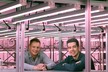
To support efficiency, Airlux Technologies integrates lighting and climate control under one modular platform. "If you change one, you need to change the other. Lighting and climate are very closely related. That's why we combine both, and if needed, we apply water cooling to reduce the heat within the system and the energy needed for cooling again."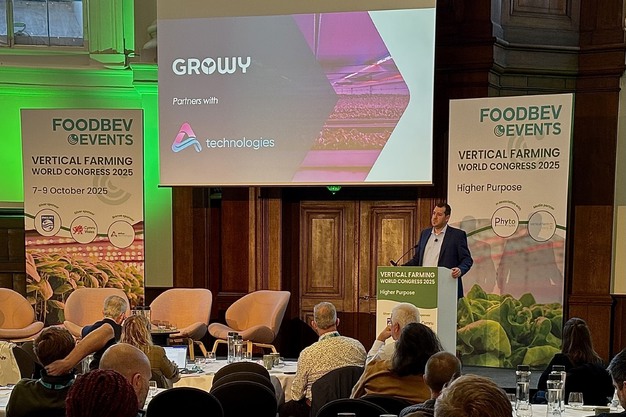 © Airlux Technologies
Customization over convenience
Airlux Technologies' model treats each farm as a tailored system rather than a standard product. "I always say we don't have a lighting product, we have a lighting platform. The partnership between us and the grower is that the grower decides what they want, in terms of spectrum, intensity, energy efficiency, and we adapt our products accordingly."
That modularity extends from in-store units to large-scale farms, allowing solutions to evolve as operations grow. "If people ask for a larger solution, we will engineer it in-house and produce it for our customers."
Creating cost parity
For Donkersloot, the future of vertical farming depends on reaching cost parity with conventional produce. "Cost parity should be the goal for vertical farming to drive the industry forward," he said. "We need to make this affordable."
Progress is visible, he noted, in the steady decline of capital costs. "We see CapEx levels now between 1,300 and 1,500 euros per square meter, which is significantly lower than what we saw ten or twelve years ago when 2,500 euros was a regular figure. The target should be 1,000 euros per square meter to really open that mainstream market."
For more information:
Airlux Technologies 
Reinier Donkersloot, Business Development Manager
[email protected]
airluxtechnologies.com