Tomato growers have long faced the costly lag between planting and first harvest. A horticultural innovation from New Zealand is addressing limitations in tomato propagation by delivering flowering, grafted plants that are ready to produce fruit as soon as they hit the soil.
Developed through a partnership between Zealandia Horticulture and Active Horti Limited, the Power Propagation System is a new way to grow plants and a comprehensive propagation platform that is driving higher yields, stronger crops, and faster returns for growers worldwide.
Innovation with deep roots
The concept behind Power Propagation began with Paul Wylaars of Zealandia Horticulture, whose vision and early trials laid the groundwork for what has now become an advanced propagation solution. With the backing of fellow Zealandia directors Vince Wylaars, Pedro Wylaars, and Graham Windross, Paul's initial idea evolved into a scalable system capable of serving high-tech growers at a commercial scale.
Progress accelerated when Jean-Claude Wex, a propagation specialist at Active Horti, joined the project. He brought both scientific insight and practical experience to the collaboration, contributing technical refinements that helped make the system internationally viable.
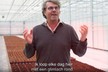
"The goal was always to bridge the gap between planting and harvest," he explains. "We wanted to eliminate wasted vegetative time and deliver a plant that is already on track for fruit production."
Flowering plants at delivery
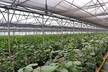
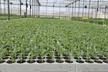
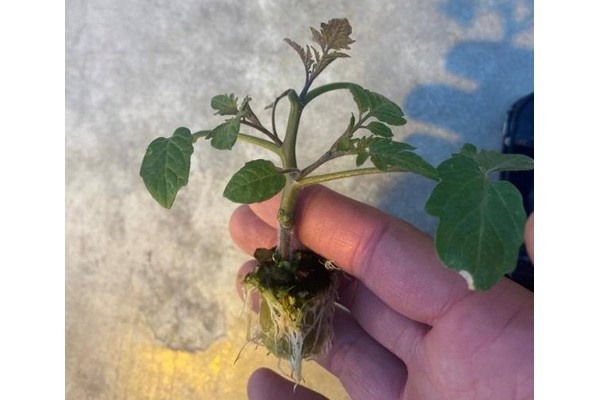
The Power Propagation System uses precise, data-driven techniques to produce young tomato plants that are already flowering and have truss sets in place at the time of delivery. This advancement significantly shortens the non-productive phase that typically follows transplanting, giving growers a critical head start in their production cycle.
"As a result, growers benefit from a reduced time to first harvest, more uniform crops, higher yields early in the season, and improved plant resilience. For commercial tomato operations, these gains translate directly into greater profitability and more efficient use of resources."
International expansion: Proven and adaptable
Though developed in New Zealand, the Power Propagation System has quickly gained traction in international markets. At Zealandia's 15-hectare propagation facility, growers from around the world are adopting and adapting the system to suit their local conditions.
In Australia, Flavorite Hydroponics in Victoria has incorporated the approach into its high-tech greenhouse operations.
In France, Thomas Plants has seen improvements in crop uniformity and overall performance. Meanwhile, in Asia, Jean-Claude and Vince are working closely with a leading vegetable producer to tailor the system to regional requirements.
"Each region presents different climate and disease challenges," Jean-Claude elaborates. "But the system is flexible. We've been able to fine-tune it while preserving the core benefits."
 © Zealandia
Grafted tomato plants in stonewool plugs exported to Tahiti
Tackling climate challenges in Tahiti
One of the most compelling recent applications of Power Propagation is in French Polynesia, where tomato production is hampered by extreme tropical conditions and persistent disease pressure.
At the Verdeen greenhouse facility in Tahiti, Thierry Guillaume manages 3 hectares of tomato crops across several compartments. Historically, he has propagated his own ungrafted plants, leaving them vulnerable to bacterial wilt and Tomato Yellow Leaf Curl Virus (TYLCV). In addition, the climate forces Verdeen to cycle through three crops per year, with significant production gaps between transitions.
Recognizing an opportunity, Jean-Claude proposed a new approach: shipping grafted tomato plugs from Zealandia, using the Power Propagation System.
"Reducing downtime between crops could make a huge difference, and switching to grafted plants helps protect against the common disease pressures here."
 © Zealandia
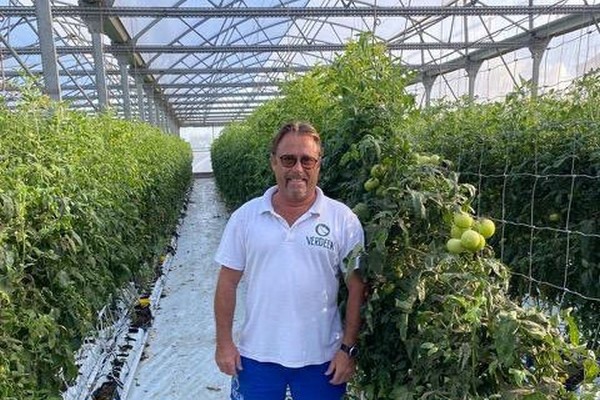
Thierry Guillaume (Verdeen) and his first grafted plants from Zealandia Horticulture
Trial results: A measurable success in the tropics
With regulatory support from MPI New Zealand and Biosecurity Tahiti (with special thanks to Laura Hartman), the first batch of grafted tomato plugs arrived in Tahiti. Thierry planted them immediately, and within weeks, the results were evident.
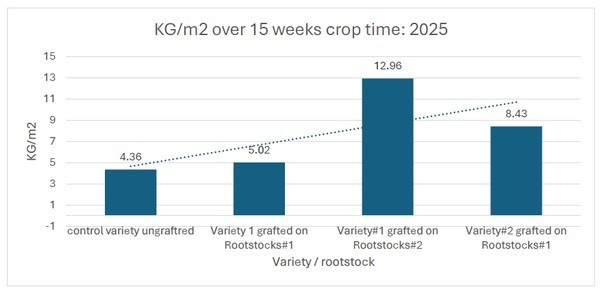
According to Jean-Claude, the initial results from the trial in Tahiti were striking. "The grafted tomato plants established quickly and began flowering earlier than expected. The first fruit harvest started one to two weeks ahead of the typical schedule seen with ungrafted plants. In addition to faster development, the plants also showed stronger resilience against common diseases. Most notably, the trial recorded a 102% increase in yield over a 15-week crop cycle."
Following this success, a second shipment of grafted plugs is already underway, specifically adapted for the warmer season in Tahiti.
"We've already moved beyond the trial phase. This is a working system, and the results speak for themselves."
The recent appointment of François Quillevere as Verdeen's new Chief Operating Officer adds further momentum to the project. With his extensive background in commercial tomato production in France, the team is confident about expanding the system's impact.
"We're already seeing up to 102% more yield with just two annual crops instead of three," he adds. "That's a game changer for this region."
 © Zealandia
Investing in the future: The Propagation Academy
Zealandia and Active Horti are also currently developing a Propagation Academy, which is a training initiative aimed at empowering the next generation of horticulturists.
"Strong propagation is the foundation of strong production," Jean-Claude says. "We need to train the talent that will drive this industry forward."
For more information:
Zealandia Horticulture
Jean-Claude Wex, Commercial Crops Manager
[email protected]
www.zealandia.co.nz
Propagation Academy
Karen Wylaars (HR)
[email protected]