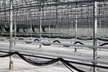
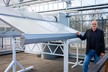
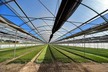
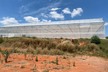
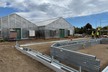
In Shymkent, southern Kazakhstan, NAVA Agro operates Central Asia's first commercial greenhouse dedicated to banana cultivation. After two years of production, the facility has reached full operational capacity and is now focusing on efficiency, market positioning, and gradual expansion.
The 5-hectare greenhouse maintains stable tropical conditions year-round, with temperatures from 22°C to 32°C and humidity levels of 60–80%. Winter remains the most critical period, as outdoor temperatures can drop to –25°C. Heating is provided by dual gas- and diesel-fired boilers that together consume as much energy as a whole village.
During summer, a fogging system reduces internal temperatures by 6–8°C, preventing stress and fruit deformation.
Each plant receives individually adjusted fertigation through a nutrient mixing unit. Monthly soil and tissue analyses determine exact mineral requirements, allowing the team to fine-tune plant nutrition. NAVA relies exclusively on biological crop protection methods, avoiding pesticides to maintain fruit quality and ensure visitor safety, since the site also hosts agro-tourism activities.
Bananas complete their growth cycle in 8 to 9 months. After six months, the plant flowers, and fruits mature over the following 75–80 days. Once harvested, the pseudostem is cut, and new suckers grow from the same root base, allowing up to 15 years of continuous production.
The average bunch weight is around 40 kg, though trials aim to reach 60–65 kg per bunch, similar to Turkish benchmarks. With 7,500 plants under cultivation, the operation employs 15 permanent staff, increasing during harvest peaks.
Harvested bananas are cleaned, disinfected with dioxide, rinsed, and air-dried. They are then sorted and placed into ethylene-gas ripening chambers at 13°C for 24 hours, followed by 4–5 days of ripening at 18°C. The process enables predictable coloring and market timing without compromising nutritional quality.
Product losses remain minimal, around 2–3%, primarily due to mechanical damage.
Because NAVA bananas are harvested later and travel only short distances to local markets, they retain higher moisture content and sweetness compared to imported fruit that spends over a month in transit. The company supplies both wholesale and retail markets at around $1.10 /kg wholesale and $2 /kg retail, currently undercutting imported Ecuadorian bananas by approximately 20%.
Kazakhstan consumes about 100–120 thousand tons of bananas annually, equivalent to 5 kg per person. NAVA's output covers roughly 0.5% of domestic demand. The company plans to double capacity to 10 ha, which would raise its market share to 1%. Despite strong regional interest from Russia, Kyrgyzstan, and Uzbekistan, NAVA prioritizes local distribution to stabilize supply and maintain quality.
In 2024, the project reached an annual turnover of $800,000, achieving its break-even point. The main cost drivers remain energy and labor, with winter heating alone costing around $20,000 per month. Ongoing efforts focus on optimizing energy consumption through improved pumps and climate systems.
Beyond production, the greenhouse attracts up to 100 visitors daily. Entry costs roughly $4 for adults and includes banana tastings. Each bunch is branded with a local NAVA sticker, supporting consumer awareness of domestic produce.
As CEO Maksim Topal notes, the team's main challenge, learning to manage a tropical crop in a continental climate, has now turned into a competitive advantage. With refined agronomy, stable yields, and a growing local market, Kazakhstan's first banana greenhouse demonstrates the potential of controlled-environment agriculture beyond traditional climatic limits.
Source: Разборщик