In South Africa, many commercial strawberry growers continue to purchase their seedlings from external nurseries. For some producers, this involves spending around R5 per plant at the start of the season. Certain large-scale farms invest up to R25 million on 5 million plants just to begin production.
To reduce starter costs, some growers are shifting toward establishing their own nurseries. By doing so, they can secure their plant supply, reduce long-term expenses, and take full control of plant timing and quality. Although strawberry propagation is complex and can take years to establish, it is achievable with the correct system in place.
Vegtech Netafim has assisted leading strawberry producers in building on-site nurseries capable of turning a single plant into millions. The company provides both engineering and agronomic expertise, helping farms design suitable infrastructure and meet the requirements of every phase of the strawberry lifecycle. For most farmers, this model typically pays for itself within four to five years.
Outsourcing seedlings may seem more convenient, but it introduces several risks that increase as demand grows. Rising plant prices quickly erode profit margins. Delays, early deliveries, and inconsistent quality from suppliers create uncertainty in production schedules. Relying on external nurseries also means growers depend on others for cost, timing, and plant quality — leaving their business exposed to supply chain fluctuations and market pressure. With local strawberry demand continuing to rise, this vulnerability is growing.
Building an on-site nursery is not only a financial decision but also a strategic one centered on control. By managing their own propagation, growers can determine plant quality, delivery timing, margins, and overall risk. This eliminates dependence on delayed shipments, variable quality, and unpredictable pricing.
The propagation process from a single plant to millions requires time, planning, and precision. Each stage must be completed correctly and in sequence.
The process begins with tissue cultures, where plant material is taken from a licensed variety and grown in sterile, climate-controlled conditions. This forms the genetic foundation of the nursery, ensuring virus- and mutation-free material.
During the pre-nucleus phase, clones are transferred into sterile perlite containers in a greenhouse. Over two seasons, their performance is tracked and only the most vigorous and stable plants advance.
In the nucleus phase, these top-performing plants are cloned again. Each plant produces approximately 500 to 600 daughter plants annually for the foundational nursery. This phase runs for four years before plants are replenished, forming the core of the entire system.
The foundation nursery follows, where selected nucleus daughters are moved into a separate nursery block. Each multiplies roughly 160 times, generating thousands of clean, strong mother plants under protected cover to prevent disease.
Next comes cooling and rooting preparation, during which the leaves of mother plants are removed, leaving only roots. These are chilled between July and September to synchronize growth cycles and preserve the best genetics for the following season.
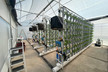
In the mother nursery, chilled plants are placed in hanging gutters to promote runner production. Warm temperatures and long daylight hours encourage each mother plant to produce around 125 daughters. This is the stage where scale increases dramatically, and precise management of light, airflow, and irrigation is essential.
The rooting nursery involves clipping the new daughter plants and planting them into seedling trays beneath the hanging gutters. They root for about a month before being ready for field planting in March.
Finally, in field planting, daughter plants are transplanted outdoors in late summer. They grow rapidly, flower early, and begin fruiting by autumn, providing a strong winter harvest when market prices are generally high.
This method succeeds because each stage builds systematically on the previous one. When executed correctly, it yields high-quality seedlings at the right time and in the right quantities. Skipping or rushing any phase compromises the entire crop.
For more information:
Vegtech Netafim
[email protected]
www.vegtechnetafim.com