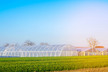
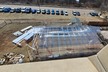
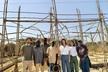
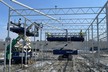
In Anikščiai, Lithuania, greenhouses have evolved from seasonal, small-scale operations into modern facilities that span several hectares, producing hundreds of tons of vegetables and berries each week. They supply local markets and export to Latvia, Estonia, Poland, the UK, and Scandinavia.
Paulius Andriavas, director of Anikščiai Greenhouses, explains that the enterprise operates on a "zero waste" principle. All harvested produce, including irregular vegetables, is processed into pickles and salads. "Everything grown here must be used. We produce organically with biological protection, and nothing should be lost," he says.
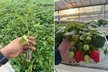
"We harvest 100 tons of short cucumbers weekly, about 20,000 long cucumbers daily, and around 100 tons of tomatoes each week. We employ 180 people year-round, offering good working conditions and a net salary of about €1,200," Andriavas says.
Automation runs throughout the facility: machines pack boxes, trolleys move produce, and climate control, irrigation, and lighting systems operate automatically.
The complex grows cucumbers and tomatoes using biological pest control. "Good insects spread naturally in the greenhouse. Our agronomist monitors pests and decides on biological protection. There are no chemical treatments, so cucumbers can be eaten right after picking," Andriavas explains.
The greenhouses were established ten years ago on a bare field in Kėdainiai. At that time, there was no electricity, water, or roads. ''To compete, you need quality, taste, and high volume," Andriavas recalls.
Initial investments covered three hectares, supported by nearly 50% EU funding, totaling €7 million, with €2.8 million allocated to modernization.
Electricity is generated from solar panels, while two biomass boilers, fueled by wood chips produced on-site from forest waste, provide 8.2 MW of heat, sufficient to meet all greenhouse heating needs.
Source: Liktv1