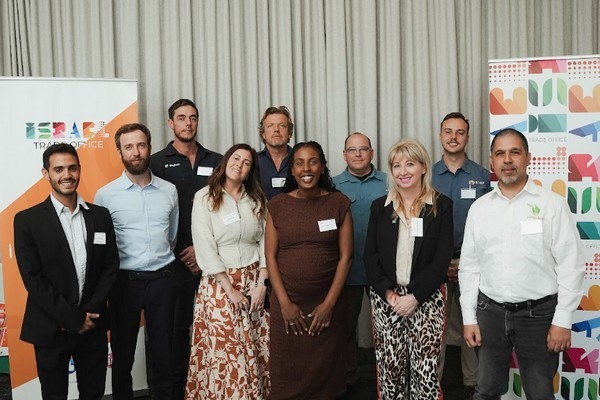
"Innovation in agriculture is no longer only a luxury." This sentiment set the tone at the Israel–South Africa agri-tech trade mission held in Stellenbosch early in September 2025, where eight Israeli companies showcased cutting-edge solutions for greenhouse growers and broader agricultural producers.
Israel's geographic location in the midst of a climate crisis has driven significant agricultural innovation, especially in water use efficiency, pest control, and data-driven farm management. This backdrop formed the foundation for showcasing technologies, many of which integrate hardware, such as sensors and drones, with advanced software platforms to provide automated, actionable insights for farmers. Additionally, export compliance and meeting regulatory standards were emphasized as key considerations shaping the adoption of new technologies.
 © Amandus Strydom – Aviemedia
Argos Greenhouse Solutions: Tailored climate-controlled greenhouses
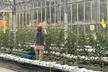
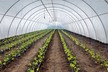
Argos Greenhouse Solutions specializes in turnkey greenhouse projects designed for extreme climates, including regions with temperatures ranging from -10°C to 50°C. The company provides climate control systems, greenhouse structures, and post-harvest packing facilities, supported by technical assistance throughout the growing season. Argos operates in markets such as Central Asia and South America, and is actively developing projects in South Africa. Their approach integrates local infrastructure challenges with rural development goals, providing employment opportunities alongside technology.
BioBee: Biological pest control and pollination solutions
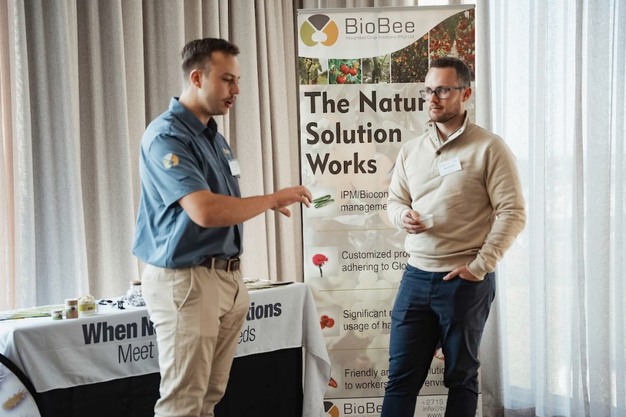
BioBee offers biological pest control products including beneficial insects, pheromone traps, nematodes, and mass-produced sterile fruit flies. Their solutions are designed to integrate with chemical pest management programs to reduce the use of harsh chemicals and lower chemical residues on fruits and vegetables. In collaboration with partners like BloomX, BioBee also addresses pollination challenges, providing artificial pollination methods in regions such as South Africa where traditional pollinators like bumblebees are not available. Their key markets include strawberries, blueberries, peppers, vegetables, and ornamentals.
 © Amandus Strydom – Aviemedia
CropX: Advanced soil sensing and irrigation management
CropX delivers a digital platform combining proprietary soil sensors and AI-driven analytics to optimize irrigation and crop protection. The company distinguishes itself by manufacturing the world's only sensor that measures actual evapotranspiration, water loss directly from crops, rather than relying on reference models. CropX's system supports the integration of third-party equipment and ensures detailed data logging to assist growers in meeting export compliance requirements. Its solutions target issues like nutrient leaching and salinity build-up in both open-field and protected agriculture.
Haifa Group: Pioneering controlled-release fertilizers and digital crop nutrition
Haifa Group is a global fertilizer manufacturer focusing on nutrient use efficiency and sustainability. Their portfolio includes controlled-release fertilizers under the Multicote™ brand, foliar nutrition products, and biostimulants. Haifa also develops digital tools such as Croptune, which uses smartphone images to analyze leaf color for crop health assessment, and NutriNet, a web platform offering personalized fertilization plans based on soil and water data. The company currently supplies approximately 30% of the global greenhouse crop nutrition market. Haifa emphasizes a 360-degree approach, combining product innovation, grower training, digital decision support, and sustainability metrics to help growers produce more with fewer resources.
 © Amandus Strydom – Aviemedia
PickApp: Revolutionizing workforce management on labor-intensive farms
PickApp provides farm management software tailored for labor-intensive crops such as berries, grapes, and vegetables. The platform enables real-time monitoring of workforce activities, including picking, pruning, and weeding, and offers full traceability through QR codes linked to specific workers, crops, and tasks. Reported benefits from current users include productivity improvements of 10–20% and product quality increases of 5–15%. PickApp is actively expanding into the South African market, leveraging its easy implementation and low hardware requirements to support growers seeking to improve workforce efficiency.
yieldsApp: AI-powered agronomic platform for precision crop management
yieldsApp is an AI-based agronomic platform that converts complex, multi-layered field data into practical, daily recommendations for irrigation, pest and disease management, and fertilization. It uses proprietary algorithms that integrate satellite imagery, drone photos, soil and climate data, and historical field records to support integrated pest management, organic and conventional crop protection, and regulatory compliance. The platform serves both large-scale farms and smallholder farmers, empowering users with insights and field-specific recommendations to improve yields, reduce agrochemical use, and minimize environmental impact.
Galcon: Integrated irrigation
Galcon, a subsidiary of PLASSON, offers irrigation and fertigation control solutions suitable for both open-field and greenhouse agriculture. Their Galileo Cloud platform enables remote control of irrigation valves, fertigation machines, and greenhouse climate systems such as heating, cooling, and ventilation, through web and mobile applications. Integration with Sentek soil profile probes provides real-time soil moisture monitoring, facilitating precise irrigation management. Their GSI Pro controller can manage up to 24 valves or outputs.
 © Amandus Strydom – Aviemedia
Industry insights and trends
The Israeli companies showcased at the trade mission highlight a consistent emphasis on sustainability, efficiency, and data-driven agriculture. Many solutions integrate multiple data streams, from soil moisture and nutrient sensors to satellite and drone imagery, into comprehensive platforms that enable precise, actionable recommendations.
Biological pest control and pollination solutions are positioned as crucial tools to reduce chemical residues and comply with increasingly stringent regulatory frameworks, especially for export-oriented growers. Controlled-release fertilizers and nutrient use efficiency are identified as key areas where innovation can reduce input costs and environmental impact.
A recurring theme is simplifying complex technologies to make them accessible and practical for growers of varying scales and expertise levels. This includes easy-to-use mobile apps, cloud platforms, and modular hardware systems designed for rapid deployment and integration with existing farm equipment.
Finally, the focus on compliance, traceability, and sustainability metrics reflects the global market's increasing demands for transparency and environmental responsibility in agriculture.