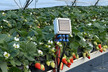
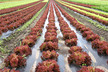
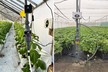
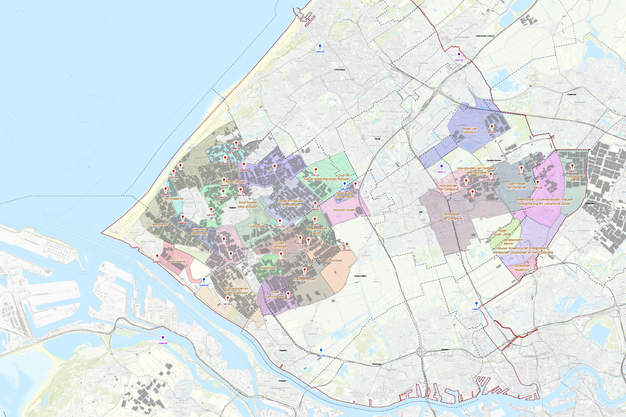
Delfland has charted the water quality in 26 greenhouse production areas and shared the results with all growers involved. Each company receives a letter with practical tips, including how to check their facilities for leaks.
 © Hoogheemraadschap van Delfland
Still much room for improvement
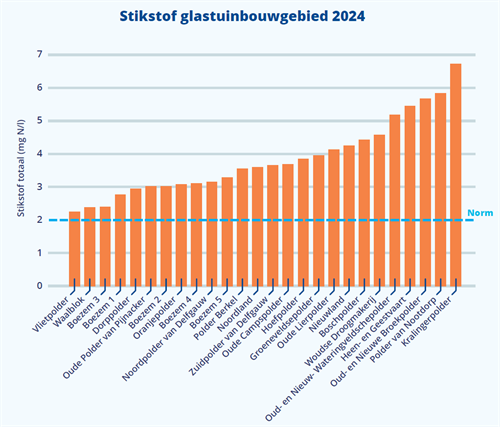
Measurements show that nitrogen levels in ditch water are too high in all 26 areas. In many cases, concentrations are more than double the legal limit. The Kralingerpolder, Polder van Nootdorp and Oud- en Nieuwe Broekpolder scored the worst on nitrogen levels.
On the positive side, the Vlietpolder and Waalblok were close to the standard, showing that good water management is possible.
 © Hoogheemraadschap van Delfland
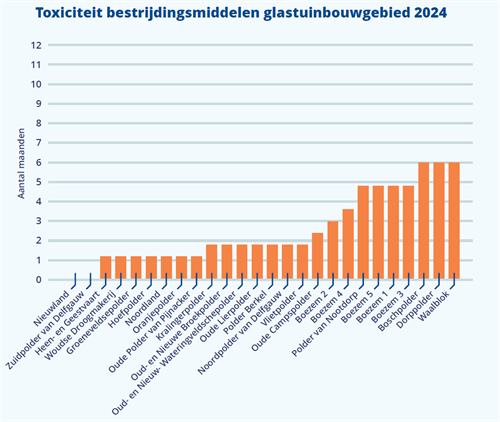
Residues of crop protection products are also regularly found in surface water, including products sold under brand names such as Afinto, Wopro Energy and Topaz 100 EC. The Dorppolder, Boschpolder and Waalblok performed worst here, with high to very high toxicity measured in 50% of water samples. In contrast, the Zuidpolder of Delfgauw and Nieuwland scored well, showing little to no toxicity.
 © Hoogheemraadschap van Delfland
Leakage check and water coaches
Many growers assume their water management is under control, yet visits from water coaches reveal that almost every business still has room for improvement. For this reason, Glastuinbouw Nederland and Delfland advise companies to carry out regular leakage checks. A practical checklist has been developed (link in Dutch), and growers seeking advice or hands-on support can contact Glastuinbouw Nederland's water coaches at +31 (0)85 003 64 00 or at [email protected]
Policy rule 'Duty of Care' for inspection
Delfland is tightening its approach to greenhouse water discharges. One measure is stricter enforcement of the legal "duty of care," which requires anyone working in or around water to take steps to prevent or limit environmental damage. In practice, this duty is not always clear for residents and businesses.
To help clarify, Delfland has drafted a new policy rule: Duty of Care for Discharge Activities in Greenhouses (link in Dutch). It explains what the duty means for growers, how to comply with it, and the potential impact of their activities on local water quality.
The draft policy is available for public consultation for six weeks. Stakeholders can submit their views during this period. Delfland aims to implement the rule at the next crop change in November.
Collectively responsible
Despite intensive cooperation between municipalities, environmental agencies, entrepreneurs, Glastuinbouw Nederland and Delfland, water quality has not yet improved sufficiently. Delfland emphasizes that the greenhouse sector carries a clear responsibility for maintaining a clean and healthy environment around the greenhouse.
Improving water quality is a shared task, but growers themselves play the largest role in achieving results—and in strengthening the image of the sector. With Delfland's expertise, businesses can take action to demonstrate that emission-free cultivation is possible. Growers with questions about the measurements or the results can contact Delfland directly.
Source: Hoogheemraadschap van Delfland