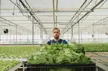
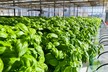
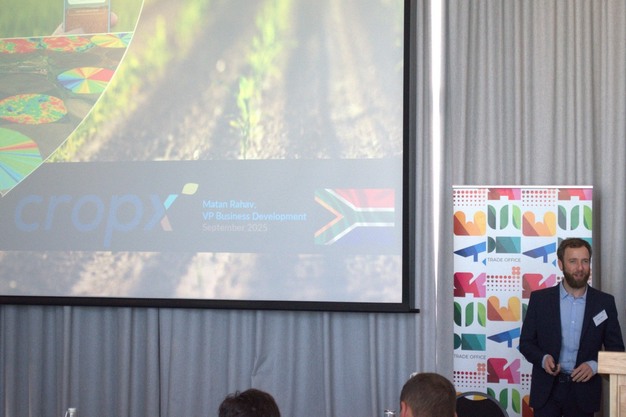
Speaking at the recent Israel Agri Tech event in Stellenbosch, South Africa, Matan Rahav, Director of Business Development at CropX, outlined how comprehensive farm management systems are helping growers make data-driven decisions without needing advanced technical expertise.
"We provide the raw data that agronomists can act upon, but we also deliver very simple-to-follow bottom-line recommendations that you don't need a PhD in order to follow."
He elaborates that they cover everything needed to manage a farm, from irrigation, nutrition, crop protection, weather forecasting, and even compliance."
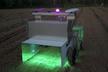
The CropX platform integrates hardware and software, with in-house manufactured soil sensors, weather stations, and even a patented evapotranspiration (ET) sensor that, uniquely, measures actual ET rather than relying on reference models.
"If you have a weather station that has an ET component, that's not actual ET. That's reference ET," he notes. "We manufacture the world's only actual evapotranspiration sensor that measures the evapotranspiration of your crop, not an estimate."
 © HortiDaily
Data, models, and machine learning
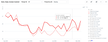
Collected data from sensors including soil moisture, temperature, weather conditions, and irrigation equipment, is processed in the cloud using AI-driven crop models.
"All of those various pieces of data get crunched with very sophisticated crop models, disease prediction models, hydraulic models that we develop in-house," he shares.
Growers receive precise, crop-specific recommendations on when, where, and how much to irrigate or apply nutrients and sprays, tailored to growth stage, soil type, and weather.
"These recommendations can be followed by anyone in the app that's available on Android," he adds.
Demonstrated results across crops
He reports that the platform has been used successfully in nearly 80 crop types, leading to significant environmental and economic benefits.
"We have demonstrated up to 50% water savings with additional reductions in agrochemicals, fungicides, manual labour, and energy. This helps the entire supply chain become more sustainable by reducing nutrient leaching, soil degradation, and surface runoff."
Compliance with export and environmental regulations
For greenhouse growers exporting to Europe or other markets with strict requirements, tools that support traceability and compliance are becoming essential.
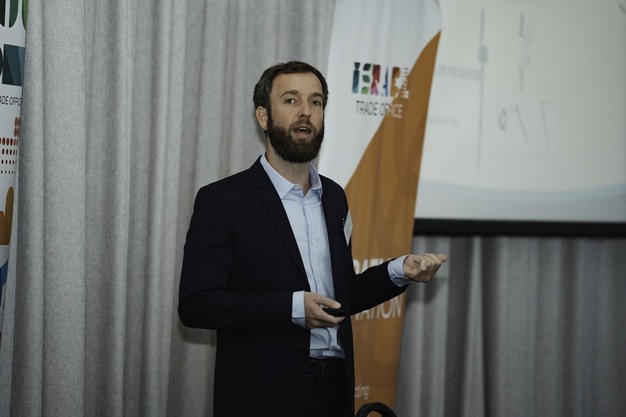
"You have to have very detailed logs," he mentions, referring to compliance needs in South Africa for EU exports. "That is also available in our platform."
 © Israel Trade Office
Technology consolidation through acquisitions
CropX has accelerated its growth through strategic mergers and acquisitions, having already absorbed seven companies, including CropMetrics (irrigation platform, U.S.), Regioneer (dairy effluent management, New Zealand), DAPBOOM (disease prediction models, Netherlands), Tule Technologies (evapotranspiration sensing, California) and Agnitask (supply chain optimization).
"We're trying to consolidate this overly fragmented industry," he stresses as he adds that you cannot specialize in only one item in the industry anymore.
Backed by industry and research leaders
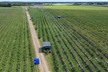
He shares that the company's tools are now used on 3 to 4 million hectares across over 70 countries, with clients ranging from NASA and Google to multinational agribusinesses.
"NASA uses our soil data to train their own models, and Google also."
While much of the platform's historic use has been in large open-field farms, its modular and scalable architecture is becoming increasingly relevant for greenhouse growers, especially those aiming to optimise irrigation and nutrient application, reduce input waste and runoff, meet international compliance standards, integrate existing data from sensors and third-party devices, and respond quickly to emerging pest or disease threats.
"We believe that adoption of technology is already very challenging for farmers," he concludes. "That's why we aim to simplify as much as possible, so anyone can use it."
For more information:
CropX
cropx.com