Innovation in horticulture often follows crisis. Many solutions now standard in greenhouses were originally developed in response to urgent challenges. Energy screens are one example. Widely used today, they trace back 50 years to the 1973 energy crisis. Reimann Textiles was involved from the start. The German weaving company had already produced greenhouse textiles for 2 decades, but the energy crisis prompted the development of energy screens, marking a turning point for the family-owned business.
 © Reimann Textiles
 © Reimann Textiles
Longer history
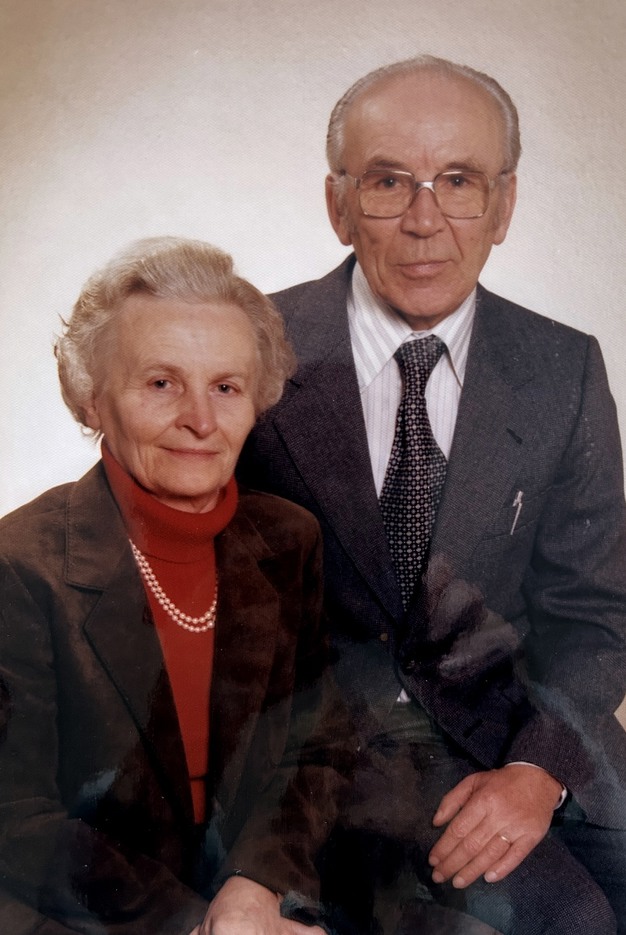
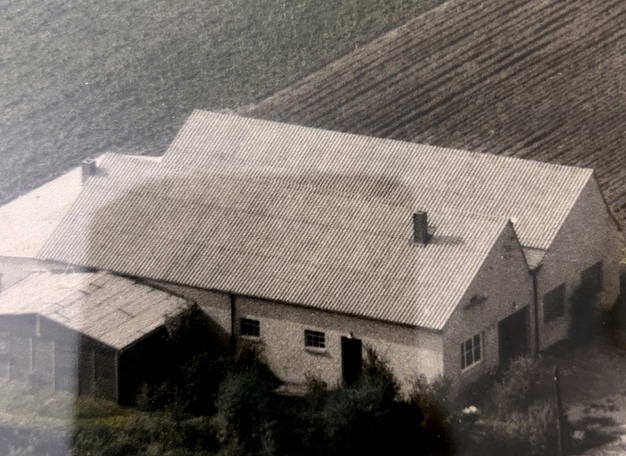
Reimann Textiles itself has a longer history. Founded 73 years ago by Wilhelm Reimann, the company began with weaving jute for tree nurseries. "The first materials we wove were for tree nurseries – that's how my father started the business," says Monika Reimann, who represents the second generation in the company. "He developed a special fabric for rootball wrapping of field-grown trees. Later, he combined jute with synthetic yarns, making it stronger and lasting longer than one selling period."
The shift to synthetics opened new possibilities. In the early 1960s, Reimann began weaving purely synthetic materials that were introduced as shading cloths. These could be hung inside greenhouses as fixed installations. "In 1963 already the shading screens were retractable," Monika recalls. "That was the beginning of professional shading with the types of cloths my father made." These early products were used across flower and vegetable production, young plant propagation, and tree nurseries.
 © Reimann Textiles
The 1973 energy crisis
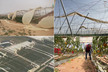
The real change came in 1973, when an energy crisis hit growers. At that time, greenhouses were heated with oil, coal, or wood, and large amounts of energy were lost through roofs and walls of the glass construction. With energy prices rising, growers sought ways to reduce consumption.
Since shading screens already existed, they became the starting point for energy-saving applications. "These cloths were woven more densely, so it was like a closed screen. The warm air was stopped from leaving the greenhouse," Monika explains. Installations were also adapted, with no gaps between screen sections. The first combined shading and energy screens were introduced under the name Isocryl, short for Isolation and Acrylic.
By then, Reimann was exporting materials to the Netherlands and Denmark in addition to the German market. "It has been the start for energy-saving screens in the greenhouse industry," Monika says.
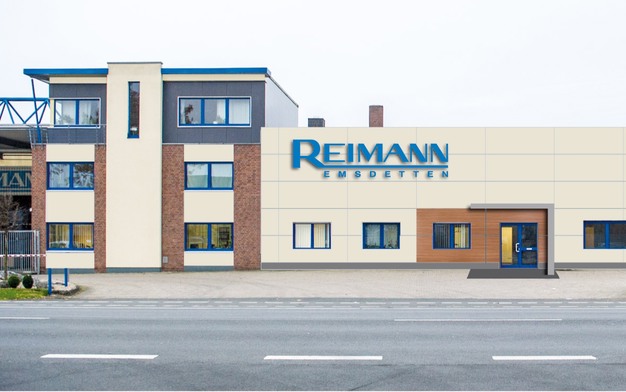
She explains, her father entered the industry in 1952 without horticultural experience. "He had no background in horticulture, but he had an innovative mind and, to support his family, he started a weaving company, although he had never seen a weaving machine before," Monika explains. His approach was to identify where improvements could be made for customers and adapt materials accordingly. At that time, greenhouse shading options were limited to straw matting or chalk to cover the greenhouses. The first woven shading cloths offered a new alternative.
 © Reimann Textiles
Product diversification
It's this innovative mindset, combined with the close connection to growers, that has characterized the company ever since. Customers have always played a role in shaping product development.
Product diversification followed trends in greenhouse construction. Screens were made in different colors, such as white, grey, and green and orange, and in different widths to match greenhouse structures with width of 3.00 meters, others 4 meters, or smaller custom sizes.
"The users of our products come to us with their problems, and together we find a solution, and that's how we develop new products," Monika summarizes, giving the capillary matting as another example. A grower once asked for a custom 2x5 meter mat for a tree nursery exhibition. Reimann combined three layers – a plastic film to hold water, a permeable sheet as ground cover, and a capillary mat to spread the water – and sewed them together. Other growers saw the product and requested similar solutions. Initially made by hand, the mats later shifted to industrial production. "Now we sell this material all over the world," Monika says, noting exports from Japan to Australia to America.
"We didn't even know when our first US clients started working with our screens," she recalls. "One of our customers bought it and sent it forward, as nothing similar was available in the market there." Later Reimann Textiles started supplying the US market directly. Today, European markets remain most important, with the US continuing to play a role and global expansion continuing.
In addition to regular shading and energy screens, the company has developed flame retardant screens. In 2006, in response to insurance requirements for fire safety, it introduced flame-retardant textiles for use in production greenhouses. The Pyrotex range has been in production since then, continuing a line of flame-retardant fabrics the company began developing more than 25 years ago for garden centers and retailers.
 © Reimann Textiles
 © Reimann Textiles
Family and continuity
The markets have changed since the early days. Crops that were once grown in soil are now cultivated on substrates. Greenhouses are larger, and energy crises have returned in different forms. Yet the principle of reducing energy loss through greenhouse coverings remains. Monika stresses that her goal has always been to make materials with longevity. "My goal is to make materials that last long, that do not have to be changed after some years, but last longer. When we produce screens, these materials should be very effective and also last very long."
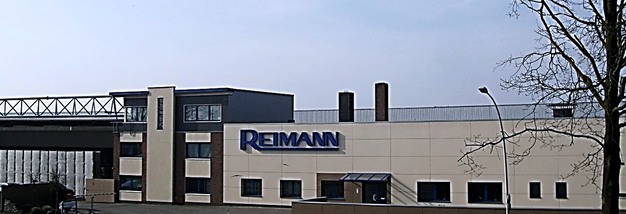
This is also why production has always remained in Germany, near the Dutch border. Transferring production abroad is an ongoing question in the industry, but Monika emphasizes the company's decision to stay local, despite the higher production costs. "It's a big challenge, but we point out our quality and consistency. It pays back over time, and our customers know that," she says.
Looking back, looking forward
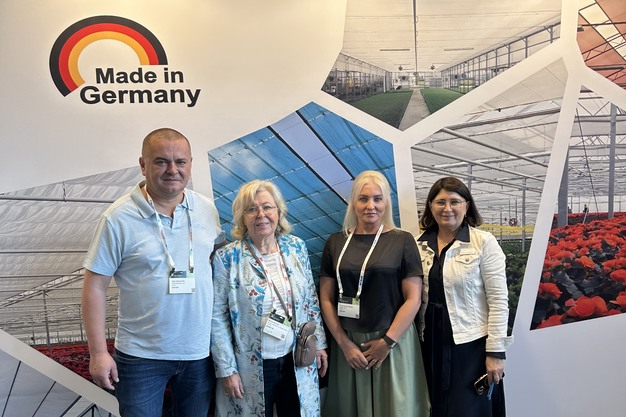
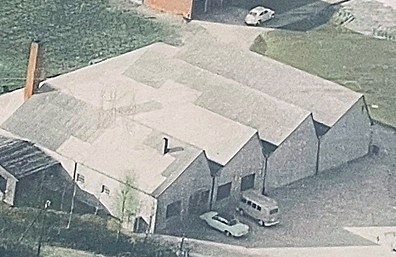
Wilhelm Reimann passed away in 1996, but the company continued as a family-owned business. Monika grew up within the company. She describes a close relationship with employees. "My relations to my people working for me are very close. I always feel responsible for my people and their families," she says.
From weaving jute for tree nurseries to producing synthetic energy-saving and flame-retardant screens, Reimann Textiles' history mirrors developments in greenhouse technology. For 50 years, energy screens have been part of that story, starting with the energy crisis of 1973 and continuing through today's focus on energy use and efficiency.
"We need to keep innovating in products, but also in production methods," Monika says. "It's the only answer to a challenging market." For Reimann Textiles, that innovation has always come from the combination of weaving expertise, family continuity, and direct input from growers.
For more information: REIMANN Spinnerei und Weberei GmbH
Grevener Damm 227-231
48282 Emsdetten
Germany
Ph.: +49 2572 96033 0
Fax: +49 2572 96033 66
Email: [email protected]
www.reimanntextiles.com