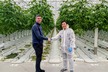
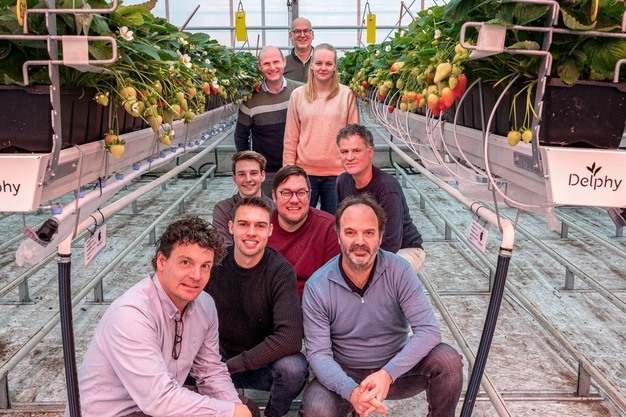
Reaping the benefits of collaboration. That is what Yield Computer, VDL ETG Projects, Delphy Digital, and Growficient are doing with the support of OP Zuid. Together, they are exploring how soft fruit cultivation can become more predictable and how growers can reduce some of their workload.
Production planning, retailer contracts, irrigation strategy, and labor: many aspects of soft fruit cultivation are based on forecasts. The more accurately you can predict crop development, the greater your gains. Yet, a large part of harvested soft fruit never reaches consumers. This not only causes significant financial losses but also contributes to unnecessary food waste.
The four partners in the project "Reaping the benefits of autonomous cultivation" believe this can be improved. Together, they are investigating how autonomous and data-driven technologies can make the soft fruit sector more efficient, sustainable, and future-proof.
 © Growficient
No sustainable approach
One of the partners in the partnership is Yield Computer, which develops software that predicts growth developments and harvest amount using image analysis. Theo Slaats, founder of Yield Computer, explains how the idea for this project started: "In soft fruit cultivation, resources like water, fertilizers, and plant material are used. If a larger share of the yield actually reaches the consumer, we can feed the same number of people with fewer resources."
"In addition to resource use, large numbers of workers are required to harvest soft fruit," Theo continues. "These workers are often recruited from low-wage countries, which brings additional challenges. That is not a sustainable approach in the long term."
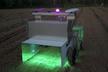
That is why VDL ETG Projects is involved. They build robots to take over labor-intensive tasks in greenhouse horticulture. Harrie Schonewille, managing director at VDL ETG Projects, says: "Together with our partners, we are developing agricultural robots, with our autonomous mobile platform as a key component. These robots will soon be able to work autonomously in greenhouses, for example by picking leaves and scouting with cameras and sensors. This makes them highly versatile and helps relieve some of the workload of growers."
More control over cultivation
To make the dream of autonomous cultivation a reality, knowledge of crops is essential. That is where Delphy Digital comes in. Klaas van Egmond, manager at Delphy Digital, explains:
"Based on data, we help growers substantiate their cultivation decisions. The more they know about plant and fruit development, the better they can steer. By supporting forecasts with data, growers gain more control over their crop development."
A crucial element of cultivation is irrigation. Growficient develops sensors that provide insight into irrigation strategies for soft fruit. Dennis Steentjes, Grower Success Manager at Growficient, explains: "Our goal is to develop an autonomous irrigation model that ensures plants automatically receive the optimal amount of water when needed. Before we get there, we need to put several puzzle pieces together. That's what makes this project so interesting: we combine expertise from four different angles."
Successful trials
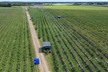
The project has now been running for over a year, with several trials already completed. Dennis gives an example: "Together with Delphy, we conducted field trials to improve the predicted start and stop times of our autonomous irrigation model. We can now also predict irrigation volumes and timing based on smart algorithms and historical data, and are currently in the testing phase of our prediction module. This will give growers increasingly better tools to determine and ultimately automate their optimal cultivation strategy."
Various tests are also underway with VDL's robots. Harrie says: "All versions of our robots are already being tested at growers' facilities. We continue to test them until they operate reliably. Ultimately, we want robots to work faster and more accurately than people. That's when they truly add value."
Accurate predictions
With this project, the four partners aim to make a real difference for growers. Theo says:
"The more accurate the yield forecasts, the better the contracts growers can sign with retailers. They literally and figuratively reap the benefits. They no longer have surplus crops they need to sell at low prices, nor shortages that force them to buy at high prices from competitors. That makes a world of difference."
Beyond efficiency, Klaas sees another advantage of autonomous cultivation: "Dutch growers have significantly expanded in recent years. Worldwide, there is great interest in greenhouse horticulture. But to grow successfully, you need a lot of expertise. By leveraging technology and data, you become less dependent on human experience and can manage larger areas more easily. That will only become more valuable for the sector."
The Netherlands at the forefront
The EU also recognizes this value and supports the project through the OPZuid EFRO program, with additional support from the Province of Noord Brabant. Dennis explains how this collaboration encourages innovation: "By working with multiple partners, you get input from different perspectives. That not only leads to new insights but also makes you think more broadly about your own product. We all benefit from that. And ultimately, so does the sector."
Looking ahead, automation is crucial for the future of horticulture. Theo concludes:
"The Netherlands is seen worldwide as a leader in greenhouse horticulture. If we want to maintain that leading position, it's essential to enhance growers' expertise with state-of-the-art technology. This will only succeed if growers and technology providers work closely together in the long term. That's how we build a sustainable future."
You can learn more about Op-Zuid at the link here (link in Dutch).
For more information:
Growficient
[email protected]
www.growficient.com
VDL Groep
[email protected]
https://www.vdlgroep.com/en
Delphy
[email protected]
https://delphy.nl
Yield Computer
yieldcomputer.com/