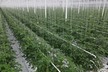
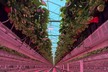
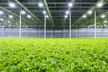
Tomato is one of the world's most widely consumed vegetables, but its production is resource-intensive. Researchers led by Professor Wataru Yamori at the University of Tokyo have successfully cultivated both large tomatoes and cherry tomatoes under fully controlled conditions using LED lighting. Their study showed that large tomatoes maintained higher vitamin C levels, while cherry tomatoes improved in flavor and texture. The findings are considered promising for the development of climate-resilient urban agriculture.
Tomato production comes with its challenges: a long crop cycle and high requirements for light and water. Climate change exacerbates these issues, threatening production stability. Traditional greenhouses provide some relief, but their reliance on sunlight limits effectiveness in regions with low natural radiation.
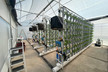
This is where vertical farms and plant factories (ALPF) come in, allowing growers to control every variable. Yet high energy consumption, especially for lighting, has long been a bottleneck. LEDs were initially reserved for low-light-demand crops, but Yamori's team tested their viability on high-demand crops like tomatoes.
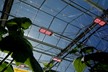
The trial was conducted in a closed environment using high-efficiency LED systems. Two lighting setups were tested: vertical lighting for large tomatoes, and a vertical/side "S-shaped" lighting system for cherry tomatoes. Growth and quality parameters were monitored for a full year and compared against greenhouse-grown crops.
Results were encouraging: large tomatoes grew steadily while maintaining higher vitamin C levels, and cherry tomatoes not only matched but in some cases surpassed greenhouse crops in yield and sensory quality. They also reached fruiting faster. According to Yamori, the study demonstrates that LED-based facilities can sustain demanding crops like tomatoes, offering consistency and nutritional value that in some aspects surpass traditional greenhouse production.
Still, the researchers caution that challenges remain, particularly in optimizing light environments to meet plants' energy needs throughout growth and maturation. Balancing light, temperature, humidity, and nutrients requires extensive fine-tuning.
Overall, the study reinforces that controlled-environment agriculture with LED lighting could transform tomato production, paving the way for urban farming that ensures stable quality, high nutritional value, and reduced dependence on climate conditions.
Source: smart-lighting.es